
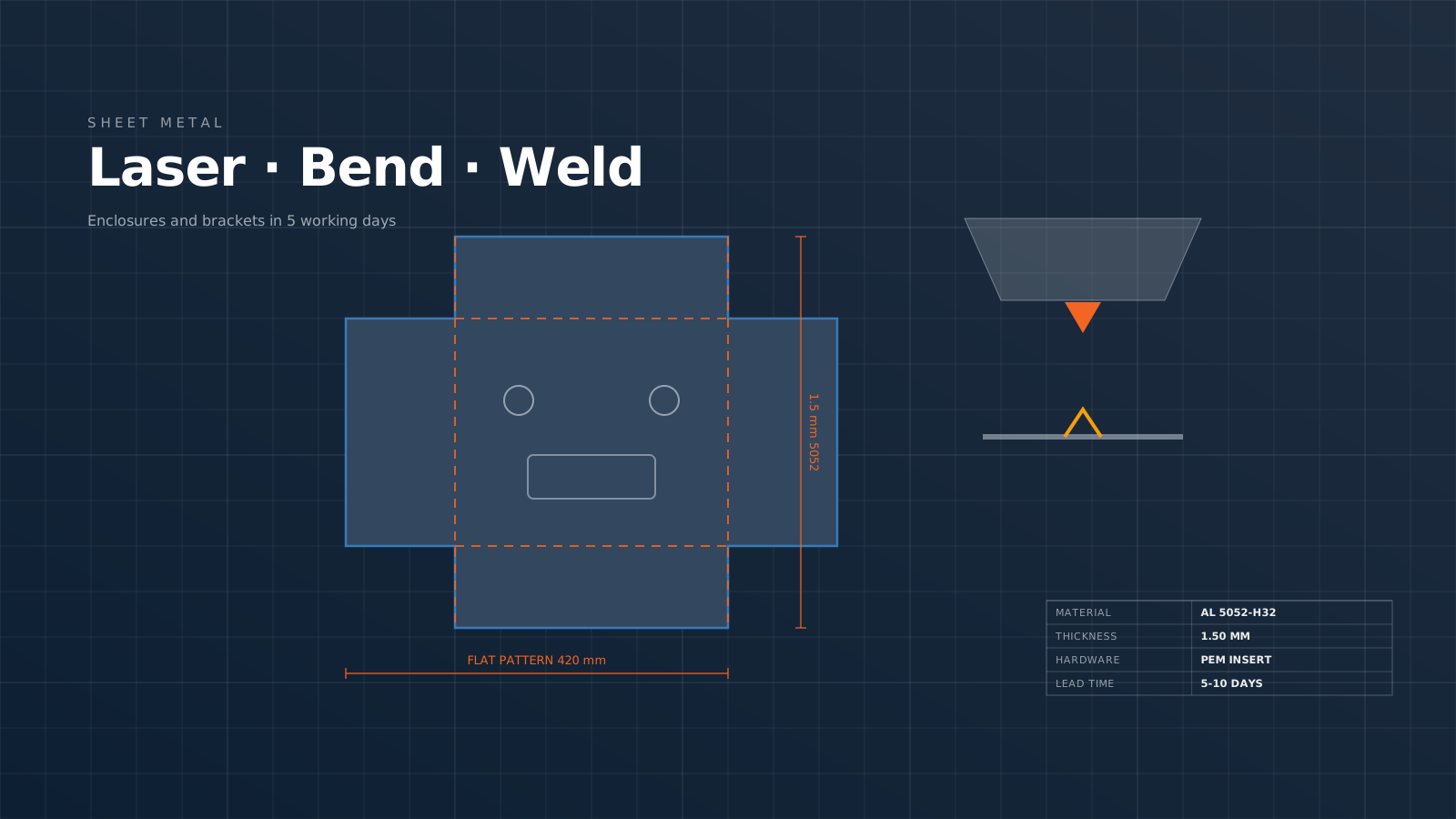
Thick plate. Fast cutting. Cost effective.
CNC plasma cutting for thick steel and aluminum plate up to 50 mm. Faster and cheaper than laser for heavy plate work. Standard for structural steel components, industrial fabrication, heavy equipment, shipbuilding hardware.

Plasma cutting
Plasma cutting uses a high-temperature ionized gas (plasma) jet to melt and blow away metal from a conductive workpiece. An electrical arc passes through compressed gas (air, nitrogen, or argon) inside a constricted nozzle, creating plasma at 20,000–30,000 °C that cuts through metal like a hot knife
How Plasma Cutting works.
Plasma cutting uses a high-temperature ionized gas (plasma) jet to melt and blow away metal from a conductive workpiece. An electrical arc passes through compressed gas (air, nitrogen, or argon) inside a constricted nozzle, creating plasma at 20,000–30,000 °C that cuts through metal like a hot knife through butter.
CNC plasma combines the plasma torch with computer-controlled XY motion, enabling precise cutting of complex 2D profiles from thick plate. Modern high-definition plasma systems achieve ±0.5 mm precision — approaching laser cut quality at a fraction of the cost.
Primary advantages over laser: much thicker material capability (50 mm+ steel vs 20 mm laser limit), lower equipment cost, faster on heavy plate, accepts rusty or painted material. Primary disadvantages: wider kerf, larger heat-affected zone, rougher edge finish. Use plasma for structural steel and heavy plate; use laser for thin sheet and precision work.
Capability specs.
High-definition plasma cuts carbon steel up to 50 mm. Stainless up to 40 mm. Aluminum up to 35 mm.
High-definition plasma achieves ±0.5 mm typical. Standard plasma: ±1.0 mm. Not as precise as laser
Typical plasma kerf. Wider than laser (0.2 mm) but narrower than waterjet (1.5 mm)
Cut edge is rough with some dross. Requires deburring for downstream assembly
Heat-affected zone visible near cut. May require grinding if that area is functional
Cost per linear meter of cut — much cheaper than laser or waterjet for thick material
Steel, stainless, aluminum, copper, brass — any electrically conductive metal
10,000 mm/min on thin steel, 500 mm/min on 50 mm steel — faster than waterjet on thick
Where Plasma Cutting excels.
Structural steel
I-beams, channels, plate for structural frames — typical steel fab shop work
Heavy equipment
Construction equipment plate components — bucket walls, mining wear plates, agricultural
Shipbuilding hardware
Ship hull plate, structural plates, bulkheads — thick steel marine construction
Pressure vessel plates
Plate for pressure vessel walls, storage tanks — cut and then welded
Industrial fabrication
Welded frames, weldments for industrial machinery — cost-effective plate work
Trailer & truck
Flatbed trailer frames, dump truck beds, heavy-duty vehicle structural
Equipment brackets
Heavy equipment mounting brackets, structural gussets
Pre-rough cuts
Roughing cuts before final CNC machining — save machining time on large parts
Steel artwork
Decorative steel art, architectural steel features — cost-effective thick-plate cutting
Not suitable for:
Every process has its limits. Being honest about where Plasma Cutting isn\'t the right answer saves time and money.
- Thin sheet metal below 2 mm — laser is cleaner and more precise
- Precision parts with tolerances tighter than ±0.5 mm
- Non-conductive materials (stone, glass, composites) — use waterjet
- Applications requiring smooth clean edges without secondary processing
- Small parts (below 50 mm) where kerf width is significant relative to feature size
- Parts with heat-sensitive hardening that would be affected by HAZ
Get an instant quote
Send your CAD — we reply with detailed pricing, lead time, and DFM feedback within 4 working hours.
Talk to an engineer
WhatsApp our team directly. Most messages answered within 12 minutes during work hours.
Explore all services
CNC, 3D printing, injection molding, sheet metal, casting, finishing — one quality system, one partner.
Thick plate — questions
Plasma vs laser — when to choose?
Thin material (< 8 mm): laser is faster, cleaner, more precise. Medium material (8–20 mm): laser and plasma compete, laser usually wins on quality. Thick material (> 20 mm): plasma is faster, much cheaper. Very thick (> 25 mm steel): plasma is the right answer — laser can't practically cut this thick. For sheet metal enclosure fabrication: laser. For structural steel: plasma.
Plasma vs waterjet for thick material?
Both cut thick material. Plasma: faster, cheaper, heat-affected zone. Waterjet: slower, more expensive, no heat, can cut any material. For thick steel where HAZ doesn't matter: plasma wins. For thick material where HAZ is problematic (aerospace aluminum, heat-sensitive alloys): waterjet is the safer choice.
Edge quality — how much cleanup needed?
Plasma leaves some dross (melted metal beads) on the exit side of cut. High-definition plasma minimizes dross. For welded applications, minimal cleanup needed — welding fills the HAZ. For painted or coated applications, light grinding removes dross. For exposed finished edges, post-grinding or oxide removal typically required.
Can you cut rusty or painted material?
Yes — plasma is tolerant of surface conditions. Can cut rusty steel, painted steel, galvanized steel (though galvanize creates zinc fumes requiring ventilation). This tolerance is a practical advantage for field repair and recycled material work. Laser requires clean surfaces; plasma doesn't.
Size capacity?
Standard plasma table: 2000 × 6000 mm. Large-format: up to 3000 × 12000 mm. This makes plasma ideal for shipbuilding and structural work where material size is large. Laser tables typically smaller (2000 × 4000 mm max), limiting laser's reach on structural work.
Typical lead times?
Plasma cutting: 3–7 business days typical. For cut-only orders (no additional processing): 2–3 days. Welded assemblies starting from plasma-cut plates: 7–14 days. Powder coating or painting adds 3–5 days. For structural and industrial work, plasma is a fast process — plate material and welding typically drive lead time, not the cutting step.
Keep reading
Quote
Get a free CNC machining, 3D printing, injection molding quote from PifyC. Send CAD via WhatsApp or email — q…
Read more →Sheet metal & fabricationSheet metal
Precision sheet metal fabrication from Wuxi: 4 kW fiber laser cutting, Amada press brake bending (±0.1 mm), TIG/…
Read more →MachiningCNC machine
ISO 9001 certified CNC machining in Wuxi, China. 3, 4 and 5-axis milling, Swiss turning, 40+ materials, ±0.01 mm…
Read more →Additive manufacturing3D printing service
Industrial-grade 3D printing from Wuxi, Jiangsu, China: SLA, SLS, MJF and DMLS metal. Functional prototypes and …
Read more →Moulding & castingInjection molding
Plastic injection molding from China: rapid aluminum tooling in 14 days for 500–10,000 parts, production P20/H13…
Read more →Finishing & treatmentFinishing services
Complete in-house surface finishing: Type II/III anodize, powder coating, electroplating, passivation, bead blas…
Read more →PifyCMaterials
PifyC's 50+ production-grade materials: aluminum, stainless steel, titanium, brass, copper, and engineering p…
Read more →Sheet metal & fabricationWaterjet cutting
CNC waterjet cutting: no heat-affected zone, cuts any material, thick plate capability. Stone, glass, composites…
Read more →
Send a CAD file. Get an engineering-reviewed quote.
No minimum quantity, free DFM feedback from a senior manufacturing engineer, and an NDA signed before file review on request.