
The prototype progression.
3D print (SLA/MJF)
1-5 units. Visual and ergonomic validation. SLA for fine detail + looks, MJF for functional feel. Lead time 2-5 days. Cost $50-500 per unit.
CNC or urethane
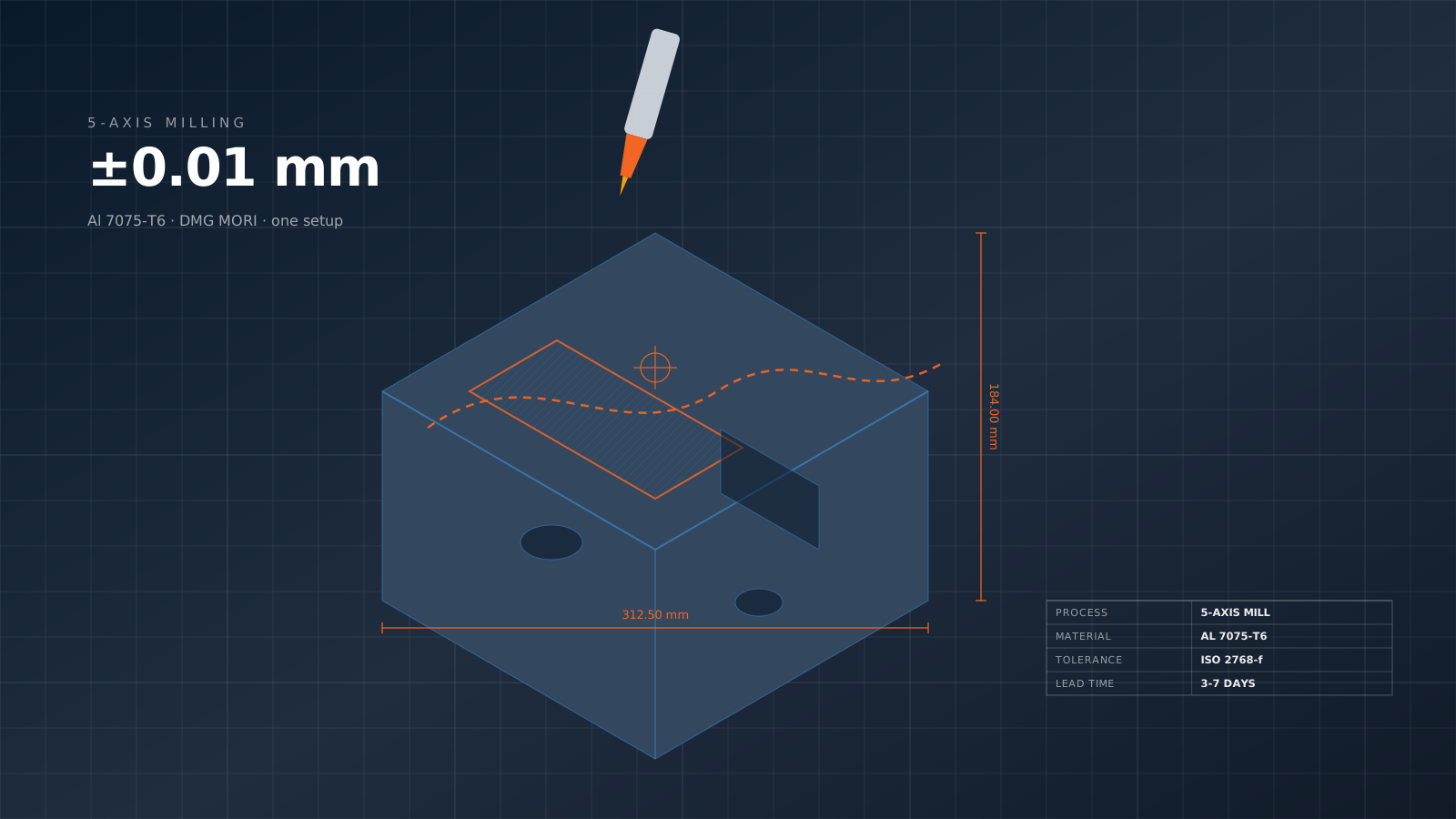
5-50 units. Mechanical testing, fit verification, failure analysis. CNC for metal/engineering plastic, urethane casting for production-like plastic. Lead time 1-3 weeks. Cost $100-2,000 per unit.
Rapid tooling / MJF
50-500 units. User testing, regulatory samples, pilot market. Aluminum injection tooling (14 days, 5-20K shot life) or MJF 3D printing. Cost $3,000-15,000 setup.
Steel tooling
5,000+ units. Commercial production. Steel injection tool (6-10 weeks, 500K+ shots) or high-volume CNC. Cost $20,000-100,000 tooling.
When OK
Low-risk designs can skip stages. Proven design similar to existing product: skip concept, go direct to pilot. High-risk or novel: move through all stages — investment de-risking.
How many loops
Each stage typically has 1-3 design iterations. Concept: many quick iterations. Functional: validate then refine. Pilot: minor refinements. Production: no changes (tool expensive to modify).
Match process to goal.
| Goal | Best process | Quantity | Time | Cost per part |
|---|---|---|---|---|
| Look and feel | SLA 3D print | 1-10 | 2-4 days | $30-300 |
| Functional test (plastic) | MJF 3D print | 1-50 | 3-7 days | $30-200 |
| Functional test (metal) | CNC machining | 1-50 | 5-14 days | $50-1,000 |
| Production-grade plastic | Urethane casting | 10-50 | 2-3 weeks | $30-300 |
| Production-grade plastic | Rapid injection | 100-5,000 | 4-5 weeks | $3-30 |
| Long-life plastic parts | Production tooling | 5,000+ | 8-12 weeks | $0.50-5 |
| Complex metal geometry | DMLS 3D print | 1-50 | 2-3 weeks | $500-5,000 |
| Production metal parts | CNC production | 50-10,000 | 3-6 weeks | $10-200 |
| Visual anatomy | PolyJet 3D print | 1-20 | 3-5 days | $100-2,000 |
| Multi-material | PolyJet 3D print | 1-20 | 4-7 days | $200-3,000 |
Prototyping mistakes we see.
Mistakes
Best practice
What prototyping actually costs.
Typical prototype budget by program size: Small consumer product (projected 10K units lifetime): $5,000-15,000 prototype investment. Medium consumer product (100K units): $15,000-50,000. Complex consumer product or medical device (50K+ units with regulation): $50,000-200,000. Industrial equipment (low volume, high complexity): $30,000-150,000. These are rough guides — actual depends on complexity, validation requirements, regulatory.
Value of iteration: Design issues caught at concept stage cost $500-2,000 to fix (change CAD, reprint). Same issue caught at pilot production: $5,000-20,000 (modify aluminum tool, rebuild test fixtures). Caught at production: $50,000-500,000 (modify steel tool, recall parts, schedule delays). Each stage catches issues 10× cheaper than next stage.
Time value: Prototype stages take time. Concept 1-2 weeks. Functional 2-4 weeks. Pilot 4-8 weeks. Production 8-16 weeks. Total 16-30 weeks typical for thorough program. Rushing stages compromises validation — may succeed, often causes expensive rework. For market-window-critical products, consider parallel tracks: continue design iteration while production tool builds.
When to invest more in prototypes: Novel technology, untried combinations, regulatory pathway, safety-critical, high production tool cost, long lead time for production tool. Investment in prototyping is cheap insurance against expensive production problems.
When to invest less: Evolution of existing product, proven design approach, low production tool cost, market validated, simple design. Minimal prototyping acceptable — maybe just 1 functional prototype before production.
Our role: We partner through complete prototype programs. Same shop, same designers, same quality system from concept through production. Reduces handoff risks. Our experience with specific processes lets us recommend the right process at each stage — avoids typical prototype strategy mistakes.
FAQ
For simple designs that are refinements of existing products: yes. Skip 3D printing, go directly to CNC prototype for functional validation. For complex novel designs: 3D print first for rapid iteration, then CNC prototype for functional validation. The 3D print stage takes $500-2,000 and 1 week — usually cheap insurance to catch obvious issues before more expensive CNC work.
Concept stage: 3-10 iterations typical, might be 1-3 units per iteration. Functional stage: 5-20 units across 1-3 iterations. Pilot stage: 100-500 units for user testing, regulatory, market trial. Production stage: no prototypes, but first articles from production tooling for approval. More prototypes at concept stage (cheap, learn fast), fewer at later stages (expensive, specific validation questions).
From the start. DFM (Design for Manufacturability) feedback is most valuable early — changes are cheap. By concept stage CAD, manufacturing should review for obvious issues. By functional prototype, DFM should be driving design decisions. By pilot, design should be production-ready. Late-stage DFM feedback requires redesign at maximum cost. Our practice: free DFM review on all quote requests.
Medical device, aerospace, automotive regulatory processes often require specific prototype stages. Medical device: design freeze samples for FDA 510(k), clinical trial samples. Aerospace: qualification test articles. Automotive: pre-production samples for PPAP. These have specific documentation requirements — work with customer on specific regulatory path. We support with appropriate documentation and traceability.
For most prototypes, production quality not required — validation is the point, not perfect parts. Exceptions: (1) Regulatory prototypes (must match production quality). (2) Customer-facing demos (represent final product appearance). (3) Performance testing (must behave like production). For engineering validation, good enough prototypes are faster and cheaper — don't over-engineer prototypes.
Simple consumer product: 3-6 months from concept to production-ready. Complex consumer or industrial: 6-12 months. Medical device with clinical trial: 2-3 years. Aerospace component: 2-5 years. Simple engineering prototype: 4-8 weeks. Quote expected timeline for your specific needs — we can often suggest timeline optimizations.
Get an instant quote
Send your CAD — we reply with detailed pricing, lead time, and DFM feedback within 4 working hours.
Talk to an engineer
WhatsApp our team directly. Most messages answered within 12 minutes during work hours.
Explore all services
CNC, 3D printing, injection molding, sheet metal, casting, finishing — one quality system, one partner.
Working on a live project? Send the STEP file and the two or three features you are unsure about — an engineer replies with DFM notes and a price, usually within four working hours.