
ISO 9001:2015ITAR RegisteredRoHS · REACHLead time from 3 business daysMOQ = 1 part
PifyC
Services
Materials
Industries
Applications
Resources
Locations
Company
Request a quote
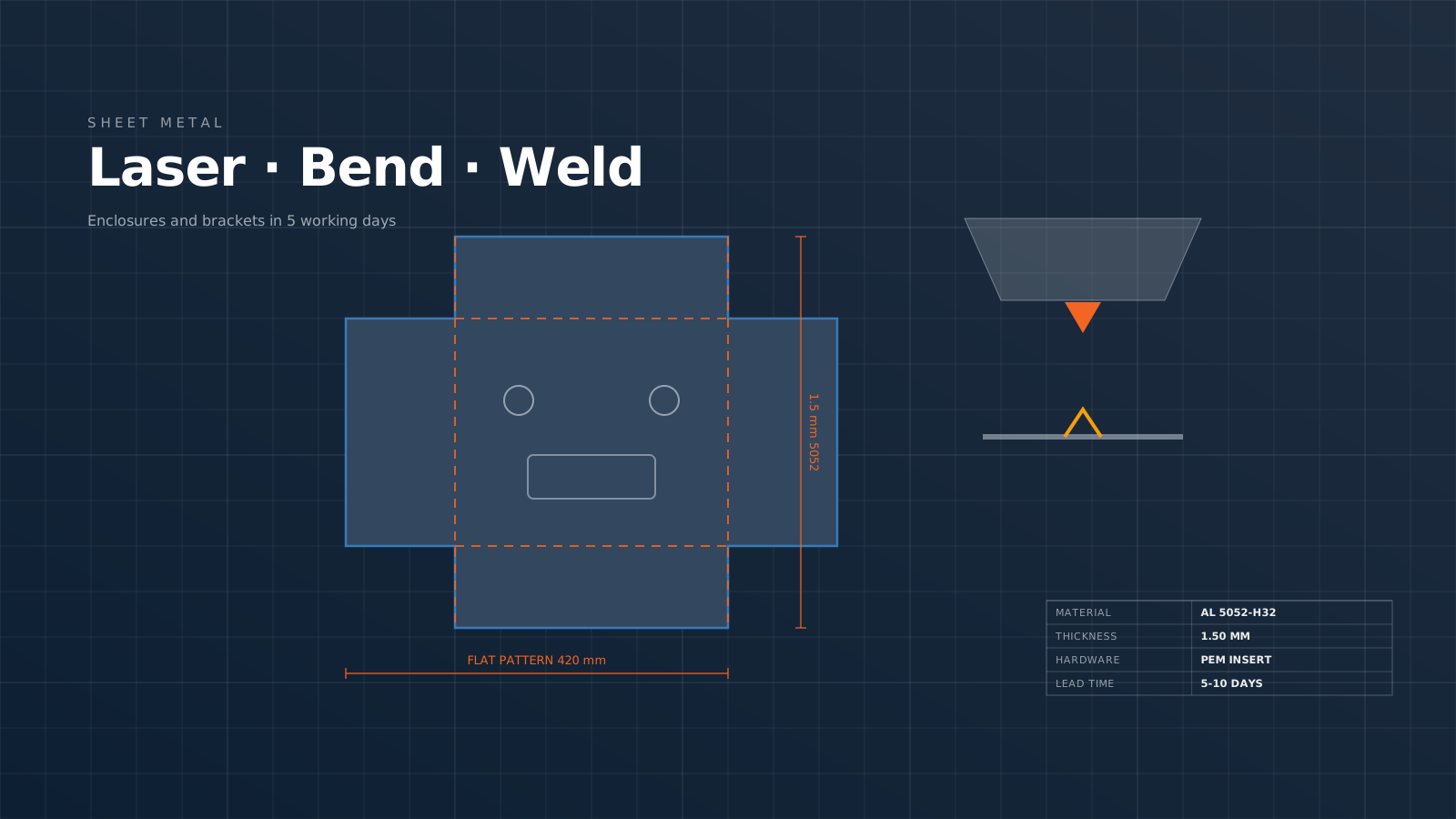
Sheet metal drawing: flat pattern with bend lines and press brake tooling
MIG vs TIG Welding

Fast production. Or precision finish. Pick by priority.

MIG welding (GMAW) is the production workhorse — fast, cost-effective, adequate quality. TIG welding (GTAW) is slower and more skilled — produces clean, precise, cosmetic welds. Both have specific right-applications. Here's the decision guide.

Process comparisonsWuxi, ChinaMOQ 1 partDFM review included

Side-by-side summary.

MIG Welding (GMAW)

Gas Metal Arc Welding. Continuously-fed wire electrode. Fast deposition, semi-automatic, lower operator skill requirement. Standard for production welding of steel and thicker aluminum.

TIG Welding (GTAW)

Gas Tungsten Arc Welding. Non-consumable tungsten electrode, separate filler rod. Slower, precise, clean welds, requires operator skill. Standard for aluminum thin sections, stainless, titanium, cosmetic welds.

Feature-by-feature breakdown.

AttributeMIG (GMAW)TIG (GTAW)
Deposition rate2–5 kg/hr (fast)0.5–1.5 kg/hr (slow)
Operator skillModerate (semi-automatic)High (manual filler + torch)
Weld appearanceAcceptable (sometimes spatter)Clean, uniform, cosmetic
Heat inputHigher (more distortion)Lower (less distortion)
Thin section capability> 2 mm typicallyDown to 0.5 mm aluminum, 0.3 mm steel
Aluminum suitabilityOK for thick (> 3 mm)Excellent for all aluminum
Stainless suitabilityOKExcellent (standard choice)
Titanium suitabilityNot recommendedExcellent (with purge)
Steel suitabilityExcellent (preferred)Good but slower
Cost (per linear cm of weld)LowHigher
Setup complexitySimpleMore complex (purge gas, rod selection)
Position flexibilityCan weld out-of-positionBest in flat position
Porosity riskHigher (wire contamination possible)Low (cleaner process)
Best forProduction steel weldments, thick aluminumAerospace, medical, stainless, aluminum cosmetic

When to choose each.

Choose MIG Welding (GMAW) when:

Choose TIG Welding (GTAW) when:

Get an instant quote

Send your CAD — we reply with detailed pricing, lead time, and DFM feedback within 4 working hours.

Talk to an engineer

WhatsApp our team directly. Most messages answered within 12 minutes during work hours.

Explore all services

CNC, 3D printing, injection molding, sheet metal, casting, finishing — one quality system, one partner.

Working on a live project? Send the STEP file and the two or three features you are unsure about — an engineer replies with DFM notes and a price, usually within four working hours.
FAQ

Fast production — questions

Can you MIG weld aluminum?

Yes, but with considerations. Aluminum MIG (often called "push-pull" MIG with special wire feed) works well for aluminum 3 mm and thicker. For thinner aluminum, TIG is preferred due to better heat control. For production aluminum welding (truck trailers, EV battery trays), aluminum MIG is standard and fast. For aerospace or cosmetic aluminum, TIG is the default choice.

Is TIG always better quality?

For thin sections, non-ferrous metals, and cosmetic welds — yes. For structural steel where appearance doesn't matter — MIG is equally strong if welder is skilled. Both can achieve full weld strength when performed correctly. TIG advantages: less spatter, better appearance, more heat control. MIG advantages: faster, easier, less expensive. Quality is equivalent for structural purposes; TIG wins on appearance and precision.

Which for stainless steel?

TIG is the default for stainless. Why: stainless's reactive surface benefits from TIG's clean, low-contamination weld, especially for sanitary applications (food, pharma, medical) where interior weld smoothness matters. MIG stainless is possible for structural, but cross-contamination and spatter make it less common. For sanitary welds with Ra 0.4 µm interior requirement, TIG is mandatory.

Which is more skilled?

TIG requires more skill. TIG welder must coordinate: torch position, filler rod feed, foot pedal amperage control, gas coverage — all simultaneously. Years of practice required. MIG welder manages: torch position and travel speed, with wire feed automatic. Easier to learn and perform consistently. For production hiring, MIG welders are more available. For specialty work, TIG welders command higher rates.

Cost per inch of weld?

MIG: roughly $2–5 per linear foot of steel weld (typical). TIG: $6–12 per linear foot for steel, $8–15 per linear foot for aluminum. TIG is 2–3× more expensive per length due to slower travel speed and higher operator skill. For large production welding runs, the MIG premium pays off. For specialty or cosmetic work, TIG is the only appropriate choice despite higher cost.

What about laser welding as a third option?

Laser welding is becoming increasingly common for production (especially thin section and EV battery pack welding). Advantages: minimal distortion, very narrow weld, fast, automated. Disadvantages: expensive equipment, requires precise fit-up. For production thin-section (< 3 mm) welding at high volume, laser welding often wins vs both MIG and TIG. For prototypes or one-off welds, MIG and TIG remain the practical choices.

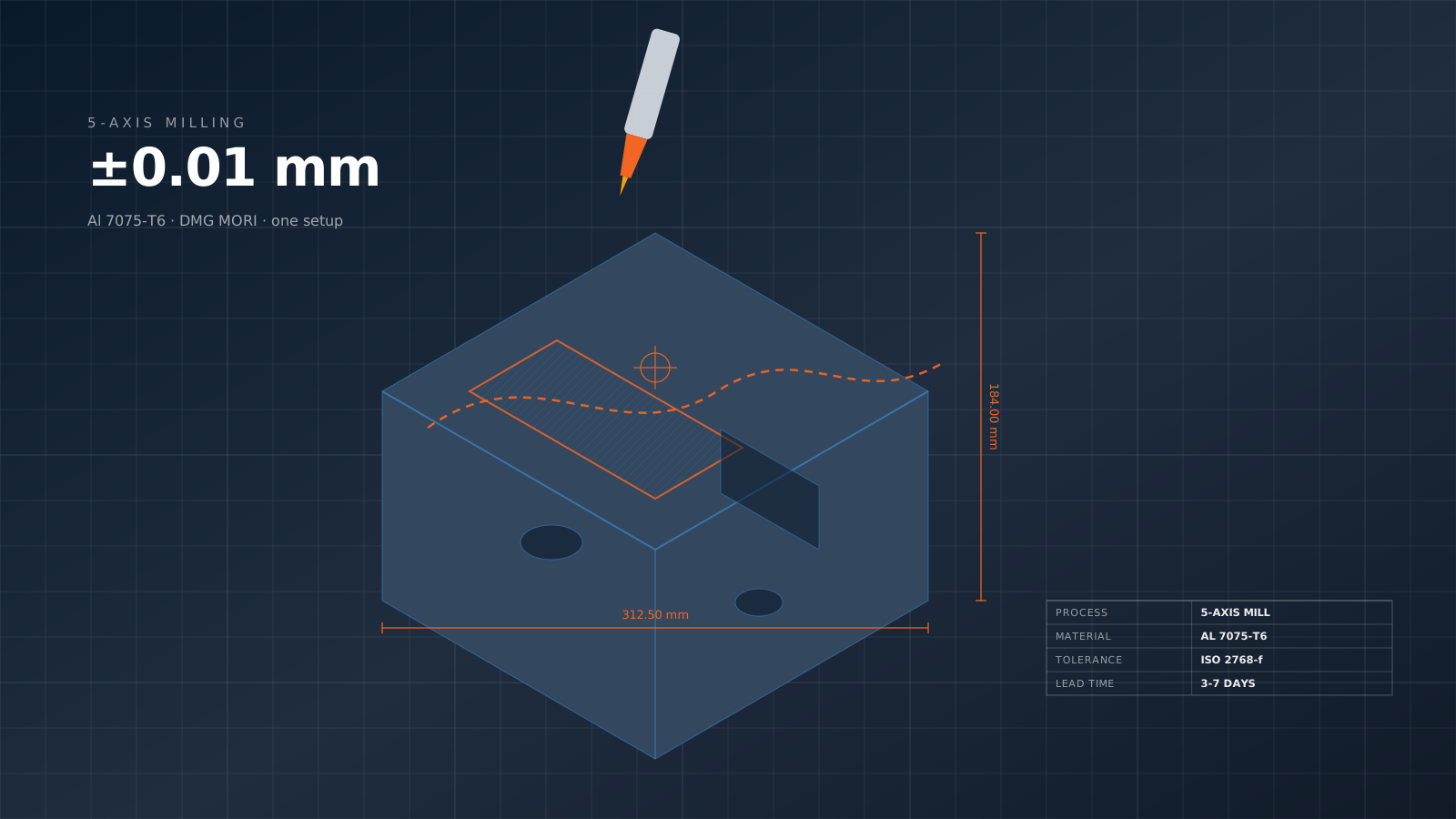
5-axis CNC milling drawing: Al 7075-T6 block with pockets, toolpath and dimensions

Send a CAD file. Get an engineering-reviewed quote.

No minimum quantity, free DFM feedback from a senior manufacturing engineer, and an NDA signed before file review on request.