
ISO 9001:2015ITAR RegisteredRoHS · REACHLead time from 3 business daysMOQ = 1 part
PifyC
Services
Materials
Industries
Applications
Resources
Locations
Company
Request a quote
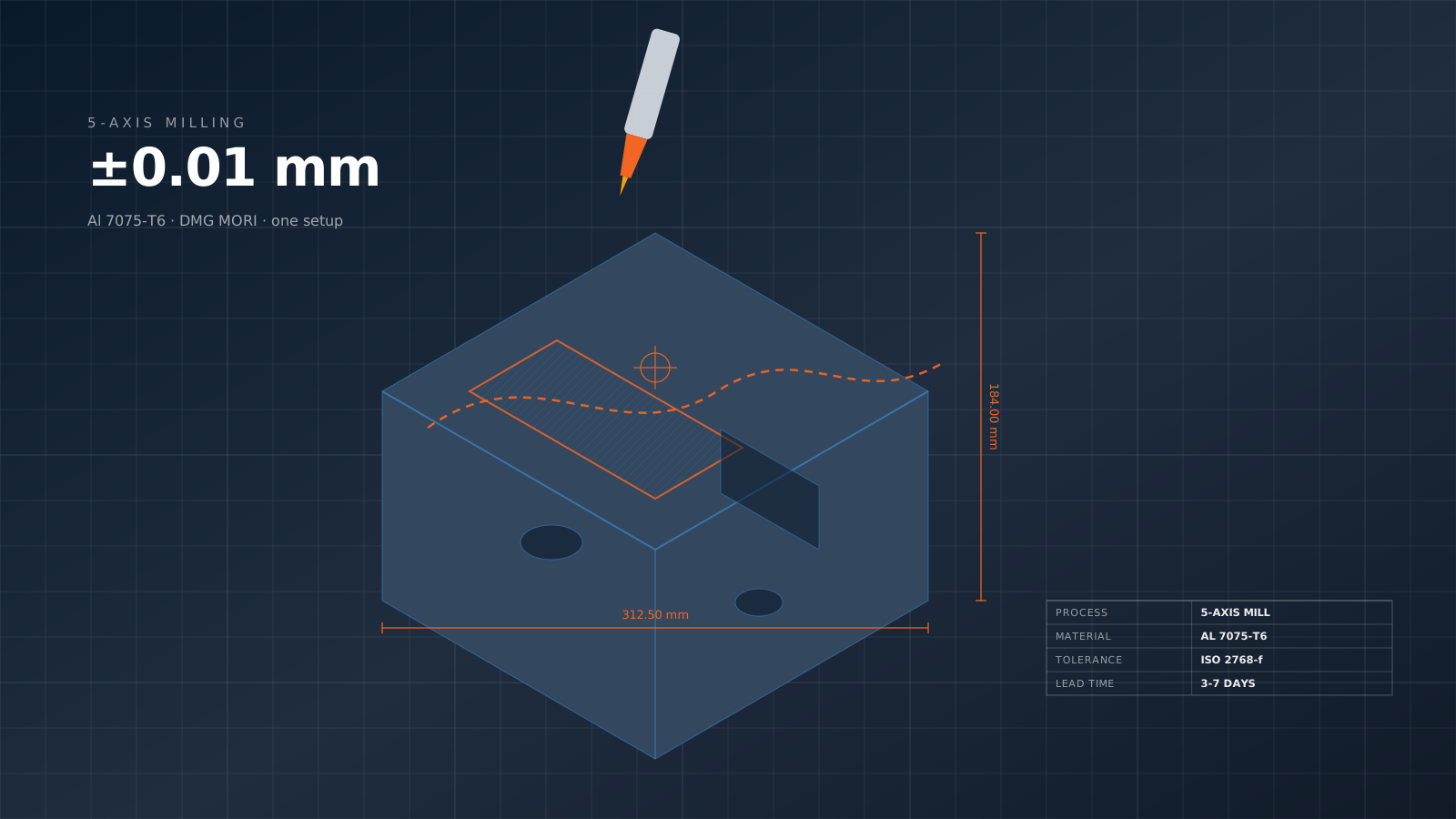
5-axis CNC milling drawing: Al 7075-T6 block with pockets, toolpath and dimensions
PVD vs DLC

Ceramic hard. Or ultra-slick. Both thin films.

Both PVD and DLC are thin-film coatings applied by vapor deposition. PVD (titanium nitride family) creates hard ceramic surfaces. DLC creates low-friction diamond-like carbon. Different physics, different applications.

Surfaces & finishingWuxi, ChinaMOQ 1 partDFM review included

Side-by-side summary.

PVD (TiN/AlTiN/CrN)

Physical Vapor Deposition of metal nitrides or carbides. TiN gold, AlTiN violet-black, CrN silver. 2-5 µm thick, 2000-3000 HV. Standard for cutting tools, premium cosmetic.

DLC (Diamond-Like Carbon)

Amorphous carbon film with diamond-like properties. Matte black appearance. 1-5 µm thick, 2000-4000 HV. Ultra-low friction coefficient (0.05-0.15). Automotive, firearms, wearables.

Feature-by-feature breakdown.

AttributePVD (TiAlN)DLC
Typical thickness2-5 µm1-5 µm
Hardness2500-3500 HV2000-4000 HV
Friction coefficient0.4-0.60.05-0.15
ColorVarious (gold, violet, black)Matte black
Temperature limit800°C+ (TiAlN)250-400°C
Substrate temperature300-500°C150-250°C
Substrate compatibilitySteel, carbide, ceramicSteel, plastic, other
Wear against metalVery goodExcellent
Chemical resistanceGoodExcellent
Cost per part$20-150$30-200
Production complexityEstablishedSpecialty
Typical applicationsCutting tools, moldsEngine components, firearms, watches

When to choose each.

Choose PVD (TiN/AlTiN/CrN) when:

Choose DLC (Diamond-Like Carbon) when:

Get an instant quote

Send your CAD — we reply with detailed pricing, lead time, and DFM feedback within 4 working hours.

Talk to an engineer

WhatsApp our team directly. Most messages answered within 12 minutes during work hours.

Explore all services

CNC, 3D printing, injection molding, sheet metal, casting, finishing — one quality system, one partner.

Working on a live project? Send the STEP file and the two or three features you are unsure about — an engineer replies with DFM notes and a price, usually within four working hours.

FAQ

Ceramic hard — questions

What makes DLC "diamond-like"?

DLC has sp3 bonding similar to diamond (as opposed to sp2 bonding of graphite). Result: extreme hardness (approaching diamond), chemical inertness, low friction. But amorphous (non-crystalline) — not actually diamond. Can be deposited at lower temperatures than crystalline coatings, compatible with heat-sensitive substrates. Trade-off: temperature limit around 300°C vs diamond's 700°C stability.

Which cutting tool coating?

TiN (gold): older, lower cost, general steel machining. 2500 HV. TiCN (gray): harder than TiN, for abrasive materials. 3000 HV. TiAlN (violet-black): better at high temperature, standard for aerospace machining. 3500 HV, stable to 800°C. AlTiN: modified TiAlN with higher aluminum — better oxidation resistance. For tough materials (stainless, Inconel): AlTiN. For general steel: TiCN or TiN. For aluminum: diamond-like or uncoated (ceramic coatings can weld to aluminum).

DLC on plastics possible?

Yes — DLC low-temperature deposition (150-250°C) compatible with many plastics and other heat-sensitive substrates. Standard PVD typically requires 400°C+, damaging plastics. DLC used for: plastic optics (scratch-resistant coating on sunglasses), plastic consumer products (wear-resistant surfaces), medical plastics. Specialty application but growing market.

Can I coat complex geometry?

Both PVD and DLC are line-of-sight processes — coating deposits preferentially on surfaces facing the source. Complex internal geometry: incomplete coverage. Workarounds: (1) Part rotation during deposition for better uniformity. (2) Multiple sources in chamber. (3) For critical internal coverage, different process (electroless nickel for uniform coverage). For mostly-external-surface parts: PVD and DLC work well.

Cost economics?

PVD: established process, many vendors, competitive pricing. Small parts: $20-50. Large parts: $50-150. DLC: specialty process, fewer vendors, higher cost. Small parts: $40-100. Large parts: $80-200. Both add 50-200% to base part cost. Justified when: tool life improvement, premium product differentiation, specific performance requirement. Not economical for general industrial.

Lead times?

PVD: 5-10 days typical. DLC: 7-14 days. Both require shipping to coating vendor and back — plan into project timeline. For urgent orders, air freight between coater and customer reduces transit time. Some PVD shops offer 3-day rush service at premium. DLC rarely has rush availability.

5-axis CNC milling drawing: Al 7075-T6 block with pockets, toolpath and dimensions

Send a CAD file. Get an engineering-reviewed quote.

No minimum quantity, free DFM feedback from a senior manufacturing engineer, and an NDA signed before file review on request.