
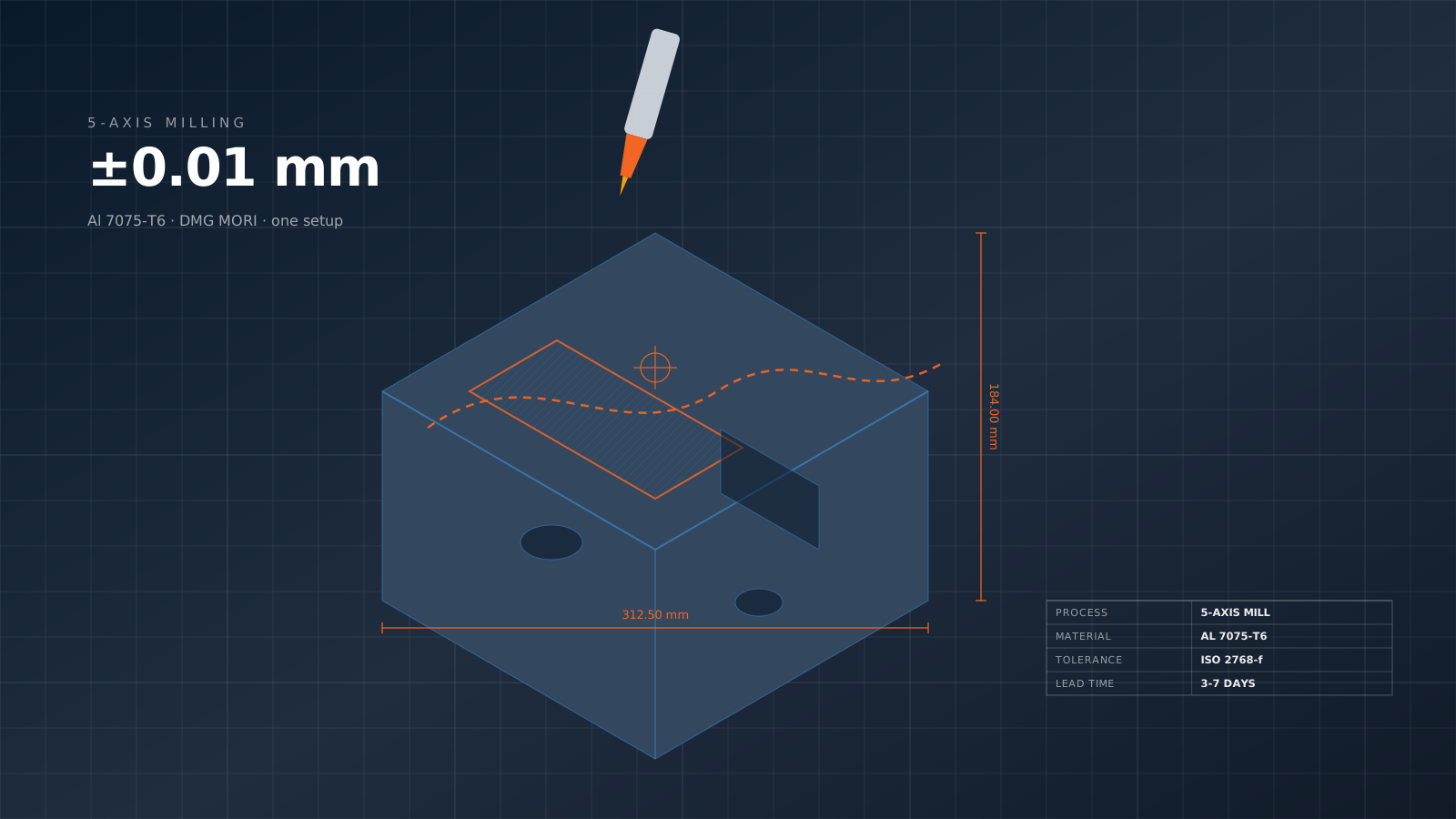
Each process has its own rules.
CNC Machining
3D Printing
Injection Molding
Sheet Metal
General DFM principles apply across all processes, but the specific constraints differ dramatically. Design rules for CNC are completely different from injection molding or sheet metal.
DFM rules that always apply.
Specify tolerance by function, not habit
Default to ISO 2768-m (±0.1 mm) unless the feature mates with another part or affects performance. Every ±0.01 mm callout adds $30–80 per part. Tight tolerances should appear on < 10% of features on most drawings.
Keep wall thickness uniform
For injection-molded parts, wall thickness variation > 10% causes warp, sink marks, and ejection problems. For CNC, thin walls (<1 mm) deflect under cutting forces. Aim for constant wall thickness throughout the part.
Avoid sharp internal corners
Internal sharp corners concentrate stress, trap chips in CNC, and require EDM or expensive micro-tools to produce. Use fillets with R ≥ 0.5× wall thickness as a default.
Minimize setups
Every CNC setup costs time and introduces tolerance stack-up. A part machinable in one or two setups is dramatically cheaper than one requiring five setups. Use 4- or 5-axis machining to consolidate setups when cost-effective.
Use standard sizes
Standard fastener sizes, bearing bores, and common stock materials are cheaper and faster. An Ø 10 mm bore is standard; an Ø 10.47 mm bore requires custom tooling or interpolation.
Design for inspection
Features hidden from CMM probes require teardown inspection or special tooling. Leave reference surfaces, add datum features, ensure critical dimensions are accessible for measurement.
Consider assembly
Parts that assemble themselves (self-piloting features, bolt-through holes with chamfers, captive fasteners) save 30–60% of assembly time over parts requiring alignment and care.
These seven principles work across every manufacturing process. Internalize them, and you\'ll be a better hardware designer regardless of production method.
Deeper technical references.
Surface Finish Guide
Ra values, finish callouts, and what each finish actually looks like.
Material Selection Guide
Decision matrix for picking the right alloy or plastic for your application.
Tolerance Guide
ISO 2768 classes, GD&T primer, and how tolerance drives cost.
Material Properties
Side-by-side mechanical property comparison of common engineering materials.
Working on a live project? Send the STEP file and the two or three features you are unsure about — an engineer replies with DFM notes and a price, usually within four working hours.