
ISO 9001:2015ITAR RegisteredRoHS · REACHLead time from 3 business daysMOQ = 1 part
PifyC
Services
Materials
Industries
Applications
Resources
Locations
Company
Request a quote
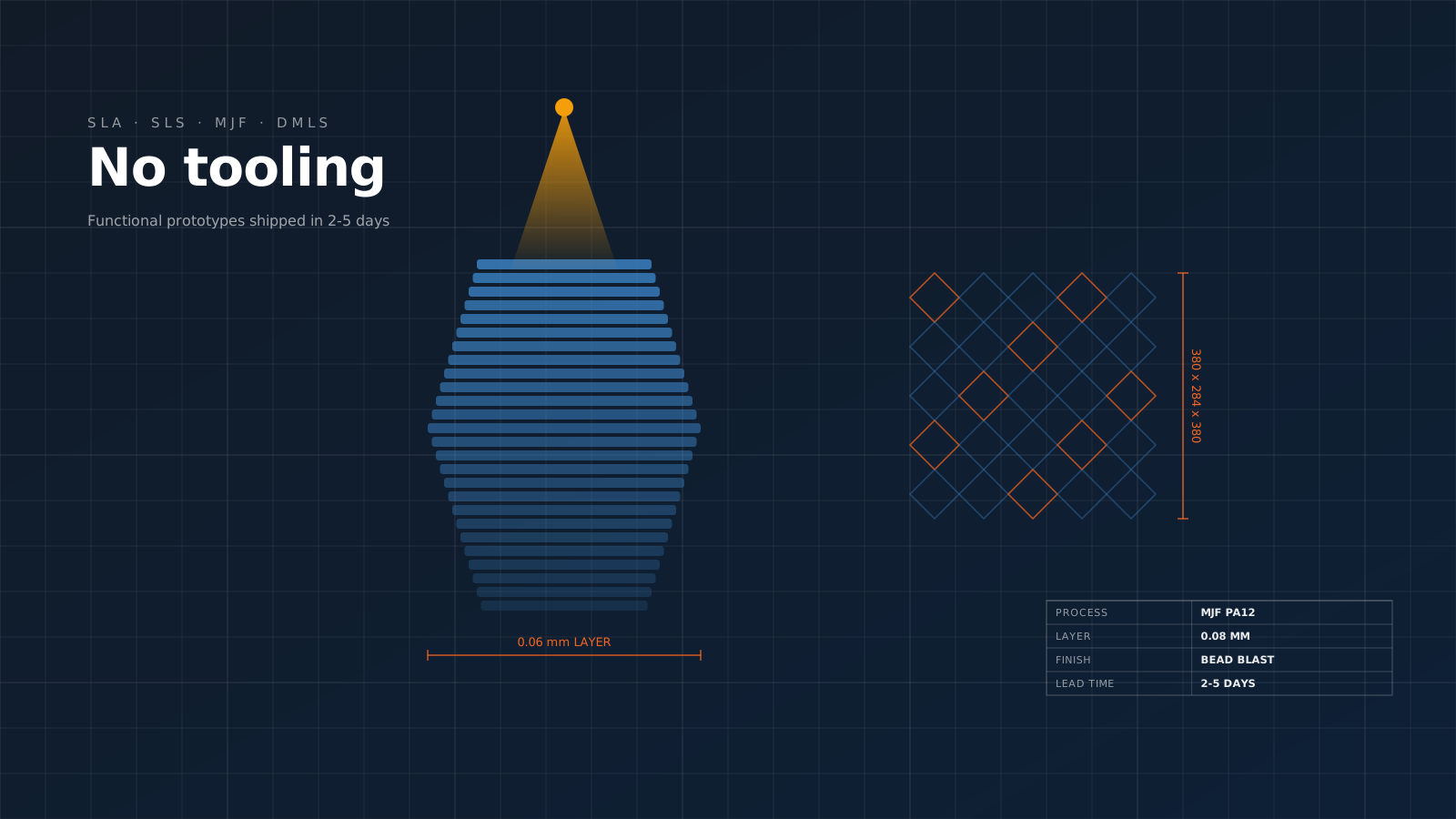
Additive manufacturing drawing: MJF layer stack, laser beam and lattice structure
3D Print Post-Processing

Vapor smoothed. Painted. Presentation quality.

Post-processing services to turn 3D printed prototypes into presentation-quality finished parts. Vapor smoothing for SLS/MJF nylon, bead blasting for uniform matte, painting and priming, CNC machining of critical features, dyeing for color.

Process guidesWuxi, ChinaMOQ 1 partDFM review included

Common 3D print post-processing.

Vapor smoothing

Chemical vapor process fuses surface particles — nearly injection-molded appearance. Best for SLS/MJF nylon.

Bead blasting

Glass bead or aluminum oxide blasting — uniform matte finish. Standard for production appearance.

Tumbling

Vibratory tumbling with abrasive media — smoother than as-printed, good for high-volume finishing.

Dyeing

Vat dyeing of porous SLS/MJF nylon parts. Black most common, colors available. Color penetrates surface.

Painting

Primer + topcoat painting for any color. Pantone matching available. Durable finish for end-use parts.

UV coating

Clear UV-cured coating for protection and gloss. Preserves original color while adding durability.

CNC finishing

CNC machining of specific features (bearing bores, mating surfaces) to CNC tolerance after 3D printing.

Threading

Installing brass heat-set inserts for strong threaded features in 3D printed parts.

Different finishing techniques solve different problems — smoothing surface, adding color, achieving tolerance. Match technique to your requirement.

When to specify post-processing.

Customer demos

Presentation prototypes requiring smooth cosmetic finish for customer meetings

Marketing photos

Product photography quality — smooth painted finish photographs well

Trade show displays

Trade show prototypes need professional appearance

Functional testing

Sealed surfaces for fluid testing, smooth interior surfaces for flow testing

End-use production

Low-volume end-use parts with production-quality finish

Painting preparation

Primer for subsequent painting — smooth base required

Consistency

Multiple parts from same model must match — finishing reduces variation

Premium branding

Premium consumer products require consistent high-quality finish

Medical devices

Medical device external parts — specific cosmetic requirements

Get an instant quote

Send your CAD — we reply with detailed pricing, lead time, and DFM feedback within 4 working hours.

Talk to an engineer

WhatsApp our team directly. Most messages answered within 12 minutes during work hours.

Explore all services

CNC, 3D printing, injection molding, sheet metal, casting, finishing — one quality system, one partner.

Working on a live project? Send the STEP file and the two or three features you are unsure about — an engineer replies with DFM notes and a price, usually within four working hours.
FAQ

Vapor smoothed — questions

Vapor smoothing — what exactly happens?

Chemical vapor (typically specific solvent vapor) temporarily softens the surface of SLS/MJF nylon parts. Surface particles flow and fuse, creating a smooth glossy surface. Process takes 20-40 minutes. Result: nearly injection-molded appearance. Limitations: affects dimensional accuracy slightly (0.05-0.1 mm typical), interior surfaces harder to smooth, not all geometry suitable.

Dyeing vs painting?

Dyeing: color penetrates into surface layers of porous SLS/MJF nylon. Cannot be scratched off — color is in the material. Standard for most SLS/MJF production. Limited color range (black primary, some standard colors). Painting: applied coating layer on surface. Wide color range including Pantone matching. Can scratch or wear. Required for: custom brand colors, specific sheen (gloss/matte), FDM parts (don't accept dye well). Typical: dye for standard coloring, paint for custom branding.

CNC finishing cost vs value?

CNC finishing of 3D printed parts adds $20-100 per part depending on features. Worth it when: bearing fits required (3DP accuracy inadequate for smooth running), mating surfaces must meet tolerance, threaded features need full thread strength. Not worth for: cosmetic surfaces (paint is cheaper), internal features (CNC access limited). Common hybrid workflow: 3D print complex geometry + CNC finish critical features + paint.

Heat-set insert installation?

Brass heat-set inserts pressed into 3D printed parts via ultrasonic or heated installer. Creates strong threaded connections in plastic parts. Typical install cost: $2-5 per insert. Strong pull-out strength (500+ N for M4 insert). Better than tapping directly into 3DP plastic (which strips easily). Standard practice for 3DP parts with functional threaded features.

Lead time impact?

Simple bead blasting / tumbling: 1-2 days. Dyeing: 2-3 days. Vapor smoothing: 2-3 days. Painting (with drying/curing): 3-5 days. CNC finishing: 3-7 days. Complete finished prototype with multiple processes: 5-10 days total beyond 3D printing. Plan post-processing into project timeline.

Cost economics?

Typical post-processing cost: 30-100% of base 3D printing cost depending on finishing level. For prototype meetings and design reviews, basic finishing adequate (bead blast + dye = 30% premium). For presentation quality painted finish with CNC features: 80-150% premium. For end-use production parts, finishing cost often exceeds printing cost. Budget accordingly based on quality requirements.

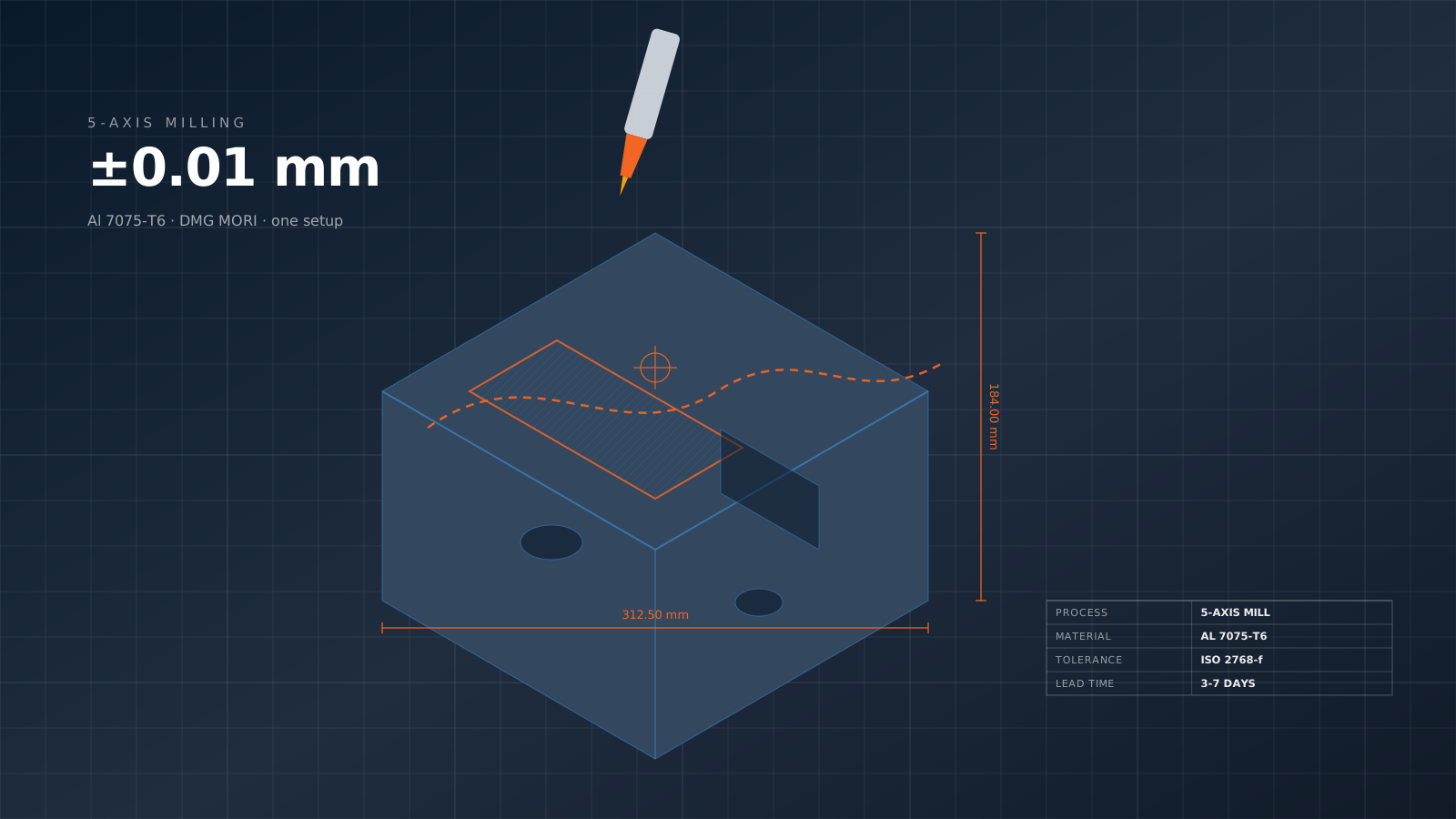
5-axis CNC milling drawing: Al 7075-T6 block with pockets, toolpath and dimensions

Send a CAD file. Get an engineering-reviewed quote.

No minimum quantity, free DFM feedback from a senior manufacturing engineer, and an NDA signed before file review on request.