
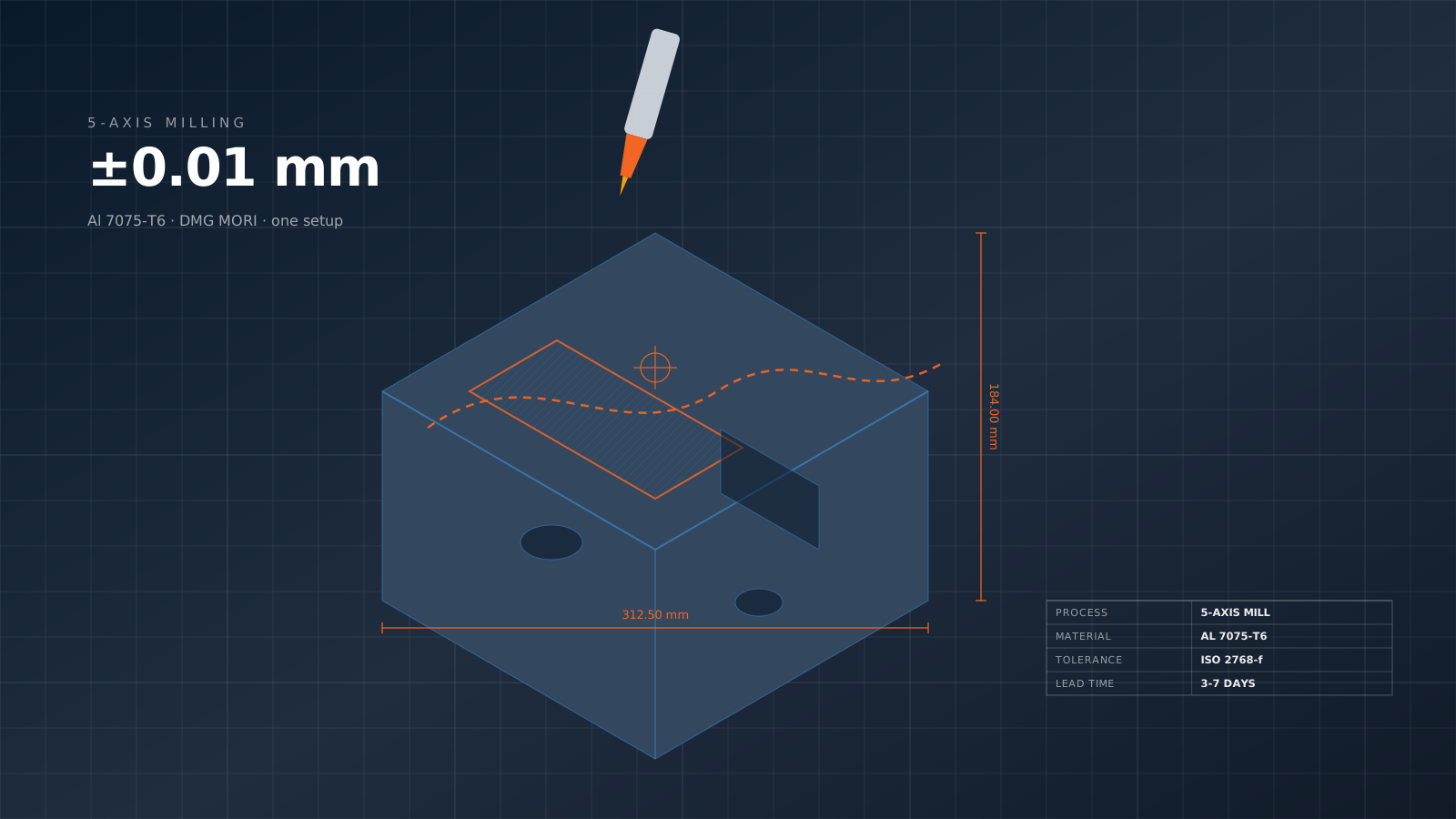
Medical implants. Aerospace bearings. Chemical resistance.
Unfilled PEEK for chemistry. Medical PEEK-OPTIMA for implants. PEEK-GF30 structural. PEEK-CF30 for wear and electrical conductivity. 260 °C continuous service, USP Class VI biocompatibility, FDA 21 CFR 177.2415 food-contact compliance.
Custom PEEK parts
One engineer owns the job from quote to dock: DFM review before cutting, inspection through the run, and an inspection report in the box.
Which PEEK grade.
Unfilled PEEK
Natural off-white. Chemical processing, food contact (FDA compliant). Highest ductility, best translucency.
PEEK-OPTIMA (Medical)
Invibio medical-grade. USP Class VI, ISO 10993. Implantable bone plates, spine cages, dental healing abutments.
PEEK-GF30
180 MPa tensile. Structural applications, aerospace brackets, industrial fixtures. Better stiffness than unfilled.
PEEK-CF30
30% carbon fiber. Low CTE, ESD-dissipative. Semiconductor wafer handling, precision instruments, bearings.
Custom PEEK parts we ship.
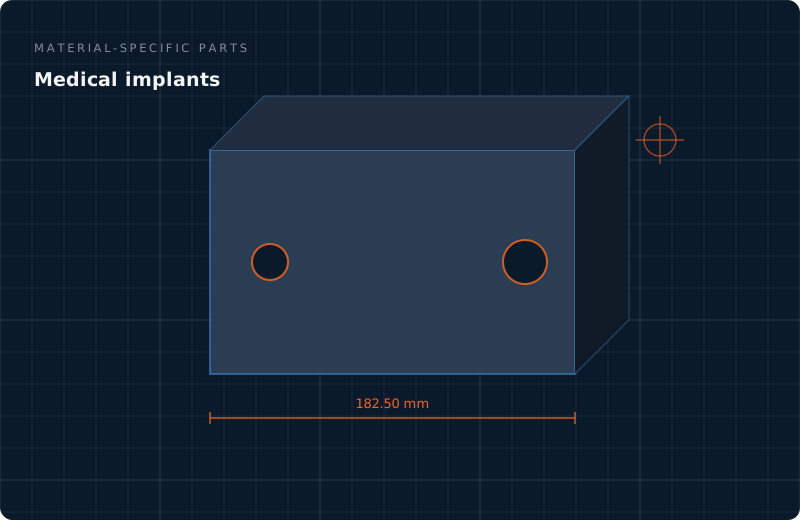
Medical implants
Spine cages, bone plates, dental abutments — prototype through clinical trial support
Surgical instruments
Reusable surgical instrument components — autoclave sterilization compatible
Pump impellers
Chemical processing pump impellers, housings — corrosion + temperature resistance
Aerospace bearings
Self-lubricating aerospace bearing bushings — no grease required, ITAR-compliant
Semiconductor handling
Wafer handling fixtures, end-effectors, test sockets — ESD-dissipative
Valve seats
High-temperature chemical valve seats, flow control hardware
Electrical connectors
High-temperature electrical insulators, connector bodies
Fluid handling
Fittings, manifolds for HPLC and analytical instruments
Cable management
Downhole cable support in oil and gas applications — high temperature
Medical implants — questions
Why is PEEK so expensive vs other engineering plastics?
PEEK raw material: $120–180/kg for unfilled, $200–400/kg for medical-grade (Invibio PEEK-OPTIMA). Compare to nylon at $8/kg or Delrin at $12/kg. The premium reflects PEEK's unique combination of properties — continuous service to 260 °C, FDA biocompatibility in medical grades, chemical resistance approaching PTFE, and mechanical strength matching aluminum. Use PEEK when the application genuinely requires these properties; otherwise choose Ultem, PPS, or PPSU.
Which PEEK grade for my application?
Unfilled PEEK: chemical processing, food contact, transparent applications. Medical-grade PEEK (Invibio PEEK-OPTIMA): implantable medical devices with FDA/CE compliance. PEEK-GF30 (30% glass): structural applications, better strength and stiffness. PEEK-CF30 (30% carbon): electrical conductivity, lowest thermal expansion, best wear resistance. Contact us for DFM review to confirm grade selection.
Can you machine medical-grade PEEK for implants?
Yes, for prototypes and pre-production samples in Invibio PEEK-OPTIMA LT1 (Implantable). For commercial-scale implantable devices, final production typically moves to FDA-registered implant manufacturers due to QSR requirements. We support the prototype-through-clinical-trial journey with documented traceability, machining-only contact (no secondary contamination), and USP Class VI compliant handling.
What tolerances can you hold on PEEK?
General PEEK: ±0.05 mm standard, ±0.025 mm precision with CMM verification. Medical precision PEEK: ±0.01 mm achievable on critical features. Surface finish Ra 0.8 µm single-pass on unfilled PEEK, Ra 1.6 µm typical on glass/carbon-filled grades (glass fibers affect finish). Polished PEEK: Ra 0.2 µm achievable for cosmetic or optical applications.
How fast can you ship custom PEEK parts?
Unfilled PEEK in stock: 5–7 business days typical. Medical-grade PEEK-OPTIMA: 7–14 days due to material lead time from Invibio (reserved inventory). Glass-filled PEEK-GF30: 7 days with stock, 14 days if material must be ordered. Carbon-filled PEEK-CF30: similar to GF30. For urgent orders, specialty-material expediting available at premium cost.
Can PEEK replace stainless steel in my application?
Sometimes — but with caveats. PEEK strength (yield ~96 MPa) is lower than stainless (yield ~200 MPa for 316L). Where PEEK wins: weight (1.3 g/cc vs 8 g/cc), magnetic-free, lower thermal conductivity (for thermal isolation), no galling in sliding applications. Where stainless wins: mechanical load, cost, weldability. Common replacement: stainless bearings on rotating shafts → PEEK bushings (no lubrication needed, runs dry against steel).
Keep reading
Quote
Get a free CNC machining, 3D printing, injection molding quote from PifyC. Send CAD via WhatsApp or email — q…
Read more →Engineering plasticsPEEK plastic
Precision CNC machining of PEEK (polyether ether ketone) — unfilled, carbon-filled, glass-filled. USP Class VI b…
Read more →Material-specific partsCustom copper parts
Custom copper parts: OFE copper C101 for electrical conductivity, C110 for general copper, C17200 BeCu for sprin…
Read more →Material-specific partsCustom carbon fiber parts
Custom carbon fiber parts: CNC machined carbon fiber plate, filled-thermoplastic carbon composites (PEEK-CF30, n…
Read more →Material-specific partsCNC for audio equipment
CNC machining for premium audio equipment: unibody aluminum enclosures for DACs, amplifiers, turntables. Premium…
Read more →Material-specific partsCustom brass parts
Precision custom brass parts: C360 free-machining brass for screw machine parts, C260 yellow brass for decorativ…
Read more →Material-specific partsCNC machining for EV
CNC machining for electric vehicle and battery manufacturing. Copper busbars, battery pack enclosures, motor hou…
Read more →Material-specific partsCNC machining for aerospace
CNC machining for aerospace primes and Tier-2/3 suppliers. AS9100 workflow, ITAR registered, AMS material certif…
Read more →Send a CAD file. Get an engineering-reviewed quote.
No minimum quantity, free DFM feedback from a senior manufacturing engineer, and an NDA signed before file review on request.