
ISO 9001:2015ITAR RegisteredRoHS · REACHLead time from 3 business daysMOQ = 1 part
PifyC
Services
Materials
Industries
Applications
Resources
Locations
Company
Request a quote
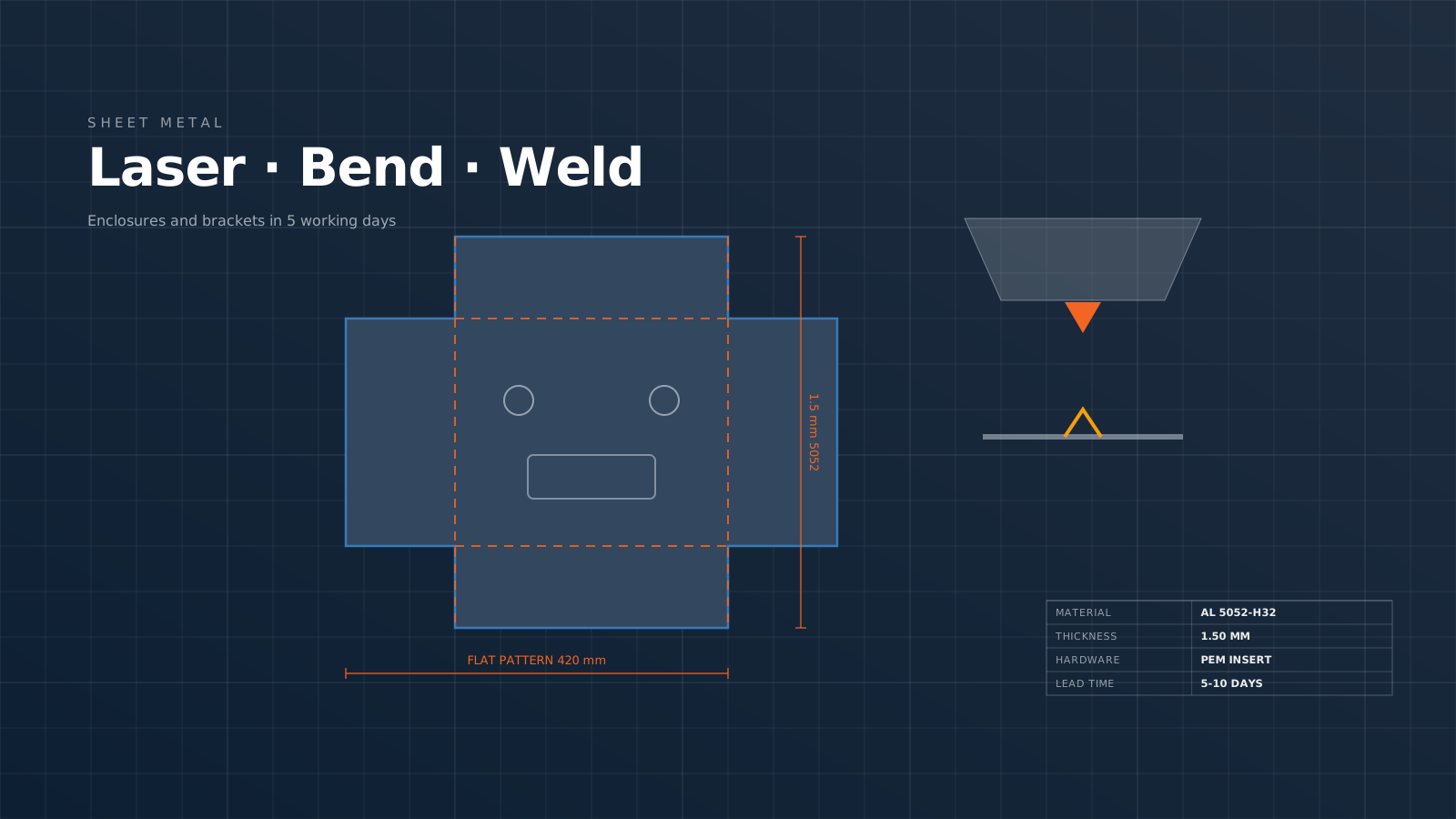
Sheet metal drawing: flat pattern with bend lines and press brake tooling
TIG vs Laser

Arc vs photons. Skilled hand vs automation. Both make great welds.

TIG produces excellent welds by experienced welders. Laser welding produces similar quality via automation with less distortion and narrower heat-affected zone. Each has economic and technical sweet spots.

Process comparisonsWuxi, ChinaMOQ 1 partDFM review included

Side-by-side summary.

TIG Welding (GTAW)

Gas Tungsten Arc Welding. Non-consumable tungsten electrode, inert gas shielding, optional filler rod. Manual or automated. Workhorse for precision welding of stainless, aluminum, specialty alloys.

Laser Welding

High-power laser (fiber or CO2) provides focused energy for welding. Narrow heat-affected zone, minimal distortion, very fast. Automated with robotic handling. Premium process.

Feature-by-feature breakdown.

AttributeTIG WeldingLaser Welding
Energy sourceArc (electrical)Laser beam
Heat inputModerateLow (concentrated)
Heat-affected zone2-5 mm wide0.3-1 mm wide
DistortionModerateMinimal
Speed (1mm stainless)100-200 mm/min2000-8000 mm/min
Weld appearanceClean with craftsmanshipVery uniform and consistent
Penetration depthUp to 6-8 mmUp to 10-15 mm (keyhole)
Operator skill requiredHigh (manual)Programming skill (automated)
Equipment cost$2K-30K$200K-2M+
Setup per partMinimalFixturing + programming
Economic break-evenLow-volumeHigh-volume (1000+ parts)
Typical applicationsAerospace, prototype, customAutomotive, medical device, battery

When to choose each.

Choose TIG Welding (GTAW) when:

Choose Laser Welding when:

Get an instant quote

Send your CAD — we reply with detailed pricing, lead time, and DFM feedback within 4 working hours.

Talk to an engineer

WhatsApp our team directly. Most messages answered within 12 minutes during work hours.

Explore all services

CNC, 3D printing, injection molding, sheet metal, casting, finishing — one quality system, one partner.

Working on a live project? Send the STEP file and the two or three features you are unsure about — an engineer replies with DFM notes and a price, usually within four working hours.
FAQ

Arc vs photons — questions

Why does laser welding have less distortion?

Laser concentrates high energy in small area — creates narrow weld with minimal heat spreading into base material. Heat-affected zone 0.3-1mm wide vs TIG's 2-5mm. Less heat expansion of surrounding material means less cooling shrinkage and less distortion. For precision post-weld dimensions, laser often enables welded parts that don't need post-weld machining.

Which produces stronger welds?

Properly executed, both produce full-strength welds matching base material. Differences: TIG weld bead typically has slower cooling rate, more ductile weld metal. Laser weld with keyhole mode has rapid solidification — can be harder, potentially more brittle. Proper post-weld treatment (stress relief, heat treatment) normalizes differences. For critical welds, test per application — both processes capable of meeting aerospace/medical requirements.

Cost comparison realistic?

TIG economics: low equipment cost, higher per-weld labor. At $50/hour labor and 2 minutes per weld = $1.67 per weld + setup. Laser: high equipment cost amortized, low per-weld. At fully-automated $200K laser, 10-second welds × 10,000 welds per day = $0.50 per weld after depreciation. Break-even around 1,000-5,000 parts per year depending on weld complexity. Below that, TIG wins; above that, laser wins.

Can laser weld dissimilar metals?

Better than TIG for many dissimilar combinations. Narrow HAZ limits intermetallic formation. Copper-aluminum (battery tabs): laser welding standard, nearly impossible with TIG. Aluminum-steel: possible with laser using specific parameters. For complex metallurgical combinations, laser often enables welds TIG cannot make.

Laser welding limitations?

Fit-up critical: laser has small working tolerance (0.1-0.2mm joint gap maximum). TIG tolerates 0.5-1mm gap with filler. Reflective materials (copper, gold): fiber laser works but requires specific parameters. Complex 3D geometry: requires 5-axis robotic integration. For custom or poor-fit-up welding, TIG is more forgiving and appropriate.

Our capabilities?

TIG welding: extensive in-house capability, multiple welders qualified for various materials. Aluminum 5052/6061/7075, stainless 304/316L, Inconel 718, titanium Ti Gr.5. Laser welding: we partner with specialty laser welding shops for production work. Integrated workflow — we handle machining, welding partner handles welding, we finish. For prototype or complex 3D welding, we keep TIG work in-house for fastest turnaround.

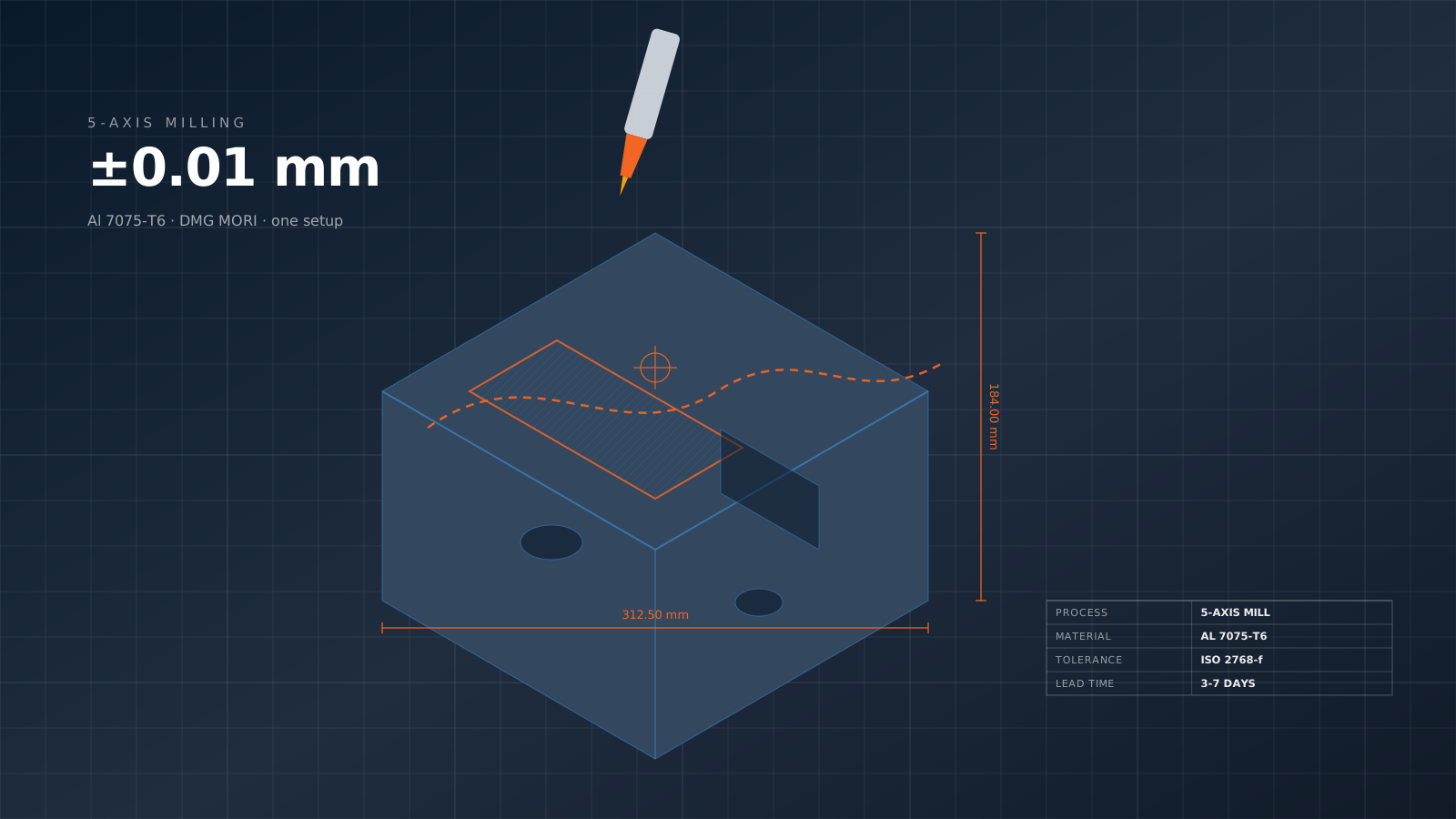
5-axis CNC milling drawing: Al 7075-T6 block with pockets, toolpath and dimensions

Send a CAD file. Get an engineering-reviewed quote.

No minimum quantity, free DFM feedback from a senior manufacturing engineer, and an NDA signed before file review on request.