
ISO 9001:2015ITAR RegisteredRoHS · REACHLead time from 3 business daysMOQ = 1 part
PifyC
Services
Materials
Industries
Applications
Resources
Locations
Company
Request a quote
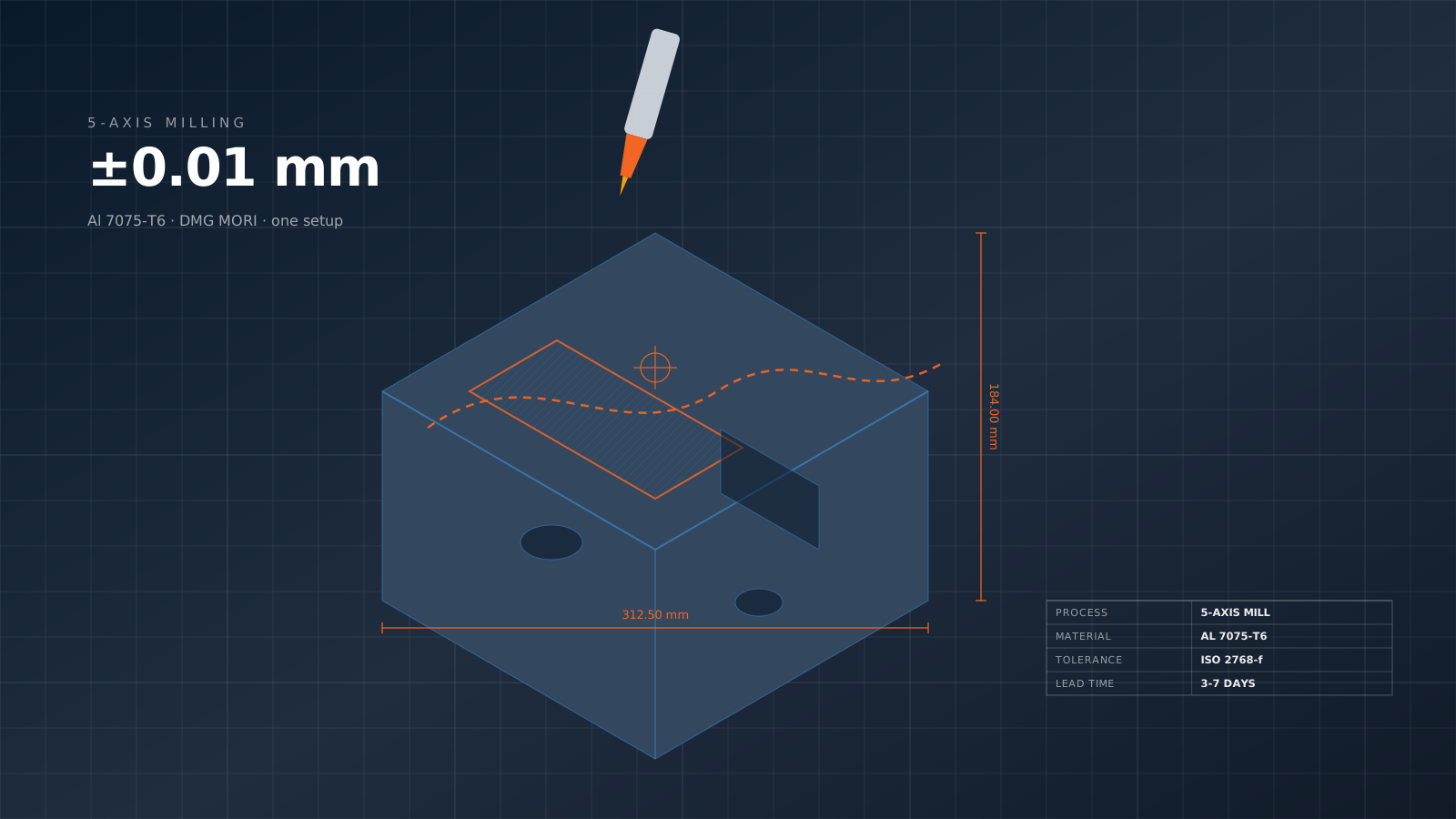
5-axis CNC milling drawing: Al 7075-T6 block with pockets, toolpath and dimensions
Swiss vs CNC Lathe

Sliding headstock. Fixed chuck. Different physics.

Swiss-type (sliding headstock) and conventional CNC lathes both produce turned parts. But they're optimized for very different geometries. Swiss excels at long slender precision parts; conventional lathes handle larger diameters and shorter parts.

Process comparisonsWuxi, ChinaMOQ 1 partDFM review included

Side-by-side summary.

Swiss-Type Turning

Sliding headstock feeds barstock through guide bushing. Cutting happens close to bushing support — enables long thin parts without deflection. Small-diameter precision specialty.

Conventional CNC Lathe

Chuck grips workpiece, tool approaches. Standard turning method. Handles wide diameter range. Less suited to long slender parts (deflection) but better for larger work.

Feature-by-feature breakdown.

AttributeSwiss TurningConventional Lathe
Max diameter32-38 mm typical100-500+ mm
Max lengthL/D up to 20:1+L/D up to 3:1 (without support)
Typical tolerance±0.005 mm±0.025 mm
Cycle time (small parts)FastModerate
Surface finishRa 0.8 µmRa 0.8-3.2 µm
Production rateHigh (hundreds/day)Moderate
Setup timeHigherLower
Suitable volume500+ parts10-10,000 parts
Machine cost$200-500K$50-300K
Typical materialsAny bar-formable materialAny turnable form
Live toolingStandardOptional (costly)
Typical applicationsMedical screws, connector pins, watchesHubs, flanges, housings, pulleys

When to choose each.

Choose Swiss-Type Turning when:

Choose Conventional CNC Lathe when:

Get an instant quote

Send your CAD — we reply with detailed pricing, lead time, and DFM feedback within 4 working hours.

Talk to an engineer

WhatsApp our team directly. Most messages answered within 12 minutes during work hours.

Explore all services

CNC, 3D printing, injection molding, sheet metal, casting, finishing — one quality system, one partner.

Working on a live project? Send the STEP file and the two or three features you are unsure about — an engineer replies with DFM notes and a price, usually within four working hours.

FAQ

Sliding headstock — questions

Why Swiss for small long parts?

Swiss guide bushing supports workpiece close to cutting point (within 1-3 mm). Deflection under cutting force is minimal because bushing supports almost at cutting edge. Conventional lathe: workpiece extends from chuck, deflection increases with length. For L/D > 3:1, conventional lathe needs steady rest or tailstock. Swiss machine handles L/D 20:1+ routinely. 100mm long × 5mm diameter precision part: Swiss territory.

Swiss production economics?

Swiss cycle time advantage compounds at volume. Small screws: Swiss produces at 2-5 seconds per part, conventional at 30-60 seconds. For 10,000 parts: Swiss 10 hours, conventional 100+ hours. Break-even volume: typically 200-500 parts. Below: conventional CNC more economical. Above: Swiss pays back its higher setup cost. Some Swiss parts are only economical as Swiss — conventional alternative wouldn't meet cost target.

Can Swiss make large parts?

No — physical limit of Swiss machines. Typical maximum: 32-38mm diameter bar. Up to 50mm with specialty machines. Above that, parts don't fit through guide bushing. For mixed-size production, shops maintain both Swiss and conventional CNC lathes.

Swiss setup time?

Swiss setup is more complex: guide bushing sizing, program tooling sequence, verify first part to tolerance. Typical setup 2-6 hours for complex part. Conventional CNC: 30min-2 hours. Setup overhead means Swiss needs 200+ parts to amortize setup. For 50 parts: conventional usually cheaper even with slower per-part cycle.

Live tooling (rotating tools on Swiss)?

Modern Swiss machines have live tooling — secondary spindles, cross-drilling, milling features on turned parts. Enables complex parts made complete in one setup. Old Swiss: turning only. Modern Swiss with live tooling: produce complete finished parts with threading, cross-holes, milling, all without secondary operations. Our Swiss capability includes live tooling for complex precision parts.

Material options for Swiss?

Any material that's available as bar stock and can be turned: aluminum, brass, steel, stainless, titanium, plastics (Delrin, PEEK). Specific for Swiss: bar tolerance and straightness matter more than conventional — slightly bent bar won't feed through guide bushing. Specify ground bar stock or better for precision Swiss work. Medical grade PEEK bar, implant-grade Ti bar all available for medical Swiss work.

5-axis CNC milling drawing: Al 7075-T6 block with pockets, toolpath and dimensions

Send a CAD file. Get an engineering-reviewed quote.

No minimum quantity, free DFM feedback from a senior manufacturing engineer, and an NDA signed before file review on request.