
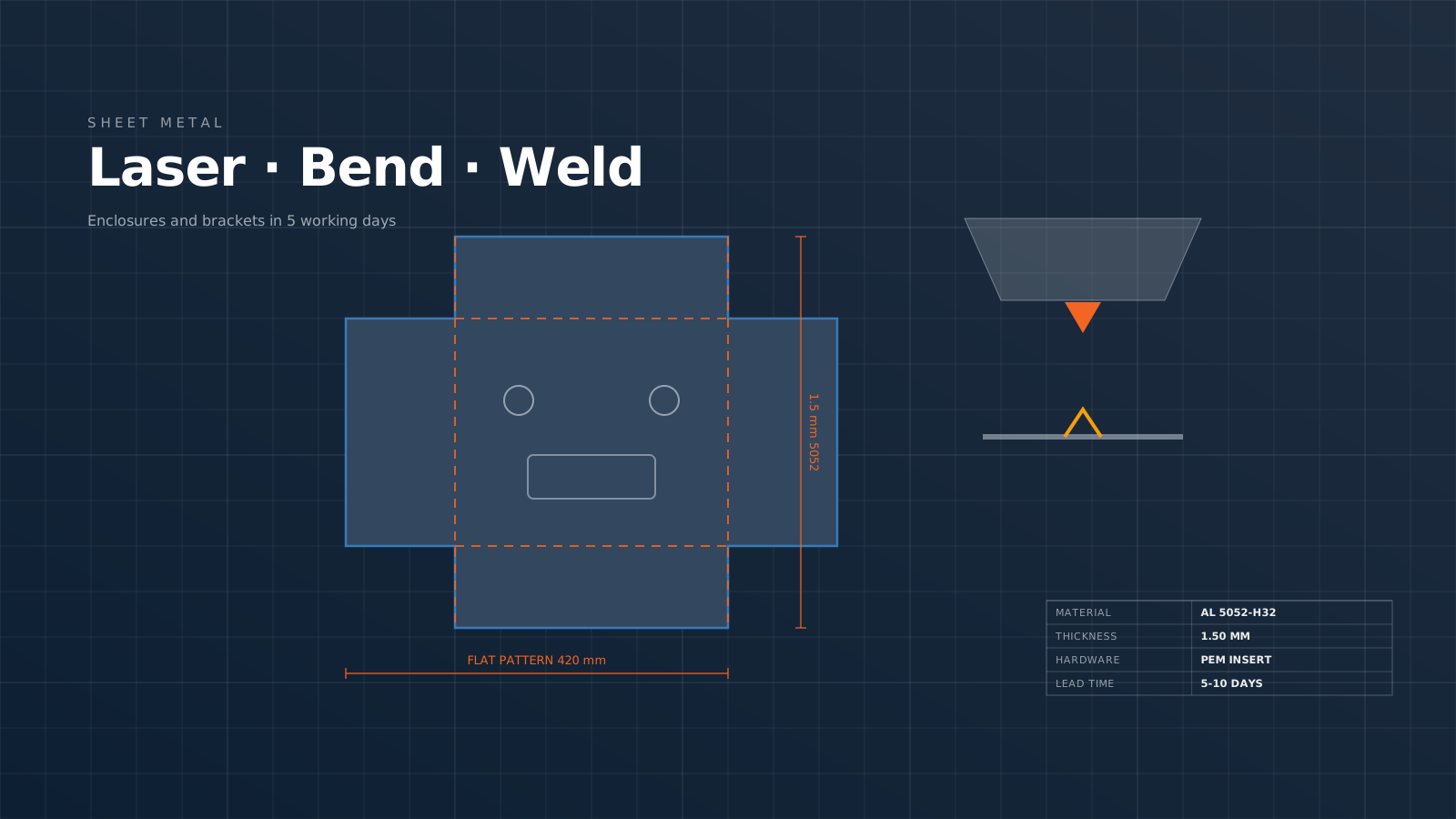
Bent & welded. Or machined from solid. Very different results.
Sheet metal enclosures are cost-effective, accept larger sizes, standard industrial approach. CNC unibody enclosures are premium, single-piece, cosmetic-grade for consumer electronics. The choice depends on volume, size, budget, and brand positioning.

Sheet metal vs CNC enclosure
Send your CAD — we reply with detailed pricing, lead time, and DFM feedback within 4 working hours.
Side-by-side summary.
Sheet Metal Enclosure
Laser cut + CNC press-brake bent + welded + powder coated. Multi-piece construction with PEM hardware. Standard industrial approach. Cost-effective, handles large sizes, flexible.
CNC Unibody Enclosure
Single-piece enclosure machined from solid aluminum billet. Premium cosmetic appearance, perfect EMI continuity, tight tolerances. Expensive, size-limited. Consumer electronics grade.
Feature-by-feature breakdown.
| Attribute | Sheet Metal | CNC Unibody |
|---|---|---|
| Construction | Multiple pieces assembled | Single piece from solid |
| Max practical size | 1500 × 800 × 2000 mm | 300 × 200 × 100 mm |
| Cost (100 × 100 × 50 mm) | $25–50 per unit | $150–400 per unit |
| Cost (large enclosure) | $60–250 per unit | Impossible / impractical |
| Cosmetic grade | Industrial to premium | Premium (Apple-class) |
| EMI continuity | Good with gasketing | Perfect (single piece) |
| Weight | Lower (hollow construction) | Higher (solid machined) |
| Thermal performance | Limited (assembled joints) | Excellent (integrated heat path) |
| Lead time (prototype) | 5–10 days | 7–14 days |
| Lead time (production) | 3–4 weeks per 100 | 4–6 weeks per 100 |
| Materials | Al, steel, stainless, zinc | Al typically (others possible) |
| IP rating achievable | Up to IP66 with gasketing | Up to IP68 with gaskets |
| Design changes | Easy (adjust bend lines) | Requires re-programming |
| Typical use | Industrial equipment, cabinets, larger | Premium consumer electronics |
When to choose each.
Choose Sheet Metal Enclosure when:
Choose CNC Unibody Enclosure when:
Get an instant quote
Send your CAD — we reply with detailed pricing, lead time, and DFM feedback within 4 working hours.
Talk to an engineer
WhatsApp our team directly. Most messages answered within 12 minutes during work hours.
Explore all services
CNC, 3D printing, injection molding, sheet metal, casting, finishing — one quality system, one partner.
Bent & welded — questions
Cost difference explained?
For small enclosure (100 × 100 × 50 mm): sheet metal $25–50 per unit vs CNC unibody $150–400. Sheet metal is 3–6× cheaper due to: starting from flat sheet (cheaper raw material), less machining time (mostly laser cutting + bending vs extensive milling), better material utilization. CNC unibody starts from solid billet — 70–90% of material becomes chips. For high-volume, this cost gap widens.
When does unibody make sense despite cost?
When brand positioning demands premium appearance (Apple, high-end audio, luxury wearables). When perfect EMI integrity matters (sensitive RF equipment). When thermal management is critical and heat sink integration makes sense. When weight matters and hollow geometry enables weight savings despite solid starting block. For most industrial and mid-market applications, sheet metal is the right choice.
Hybrid approaches?
Common. Example: CNC-machined front panel with precision cutouts for displays and controls, sheet metal body with PEM hardware, overall assembly with fasteners. This gives premium appearance on visible surfaces with cost-effective construction on back. Another approach: CNC unibody top shell + sheet metal bottom pan. Balances premium look with cost.
IP rating differences?
Sheet metal: IP66 achievable with proper gasketing. Compression gaskets between panels, sealed cable glands, edge-sealed fasteners. IP68 (continuous immersion) possible but requires careful design. CNC unibody: IP68 easier because fewer sealing joints. Single gasket between body and lid. For submersible products, unibody has inherent advantages in sealing integrity.
Customization flexibility?
Sheet metal: easy to modify cutout patterns, add/remove PEM holes, change bend locations. Design changes accept same laser program + adjusted bend setup. Fast iteration between versions. CNC unibody: requires CAM reprogramming for design changes. More expensive to iterate. For products expected to change frequently, sheet metal wins on development cost.
Production volume considerations?
Sheet metal: linear scaling — 1000 enclosures is 10× the cost of 100, minus modest learning curve. CNC unibody: similar linear scaling since no tooling. For very high volumes (10,000+), both processes remain viable. Sheet metal at extreme volume may transition to progressive die stamping for cost reduction. CNC unibody at extreme volume typically stays CNC or transitions to die casting (aluminum cast with machined features).
Keep reading
Quote
Get a free CNC machining, 3D printing, injection molding quote from PifyC. Send CAD via WhatsApp or email — q…
Read more →Design for manufacturingDFM overview
Complete DFM guide for CNC machining, sheet metal fabrication, injection molding and 3D printing. Design rules, …
Read more →MachiningCNC machine
ISO 9001 certified CNC machining in Wuxi, China. 3, 4 and 5-axis milling, Swiss turning, 40+ materials, ±0.01 mm…
Read more →Additive manufacturing3D printing service
Industrial-grade 3D printing from Wuxi, Jiangsu, China: SLA, SLS, MJF and DMLS metal. Functional prototypes and …
Read more →Moulding & castingInjection molding
Plastic injection molding from China: rapid aluminum tooling in 14 days for 500–10,000 parts, production P20/H13…
Read more →Sheet metal & fabricationSheet metal
Precision sheet metal fabrication from Wuxi: 4 kW fiber laser cutting, Amada press brake bending (±0.1 mm), TIG/…
Read more →Finishing & treatmentFinishing services
Complete in-house surface finishing: Type II/III anodize, powder coating, electroplating, passivation, bead blas…
Read more →PifyCMaterials
PifyC's 50+ production-grade materials: aluminum, stainless steel, titanium, brass, copper, and engineering p…
Read more →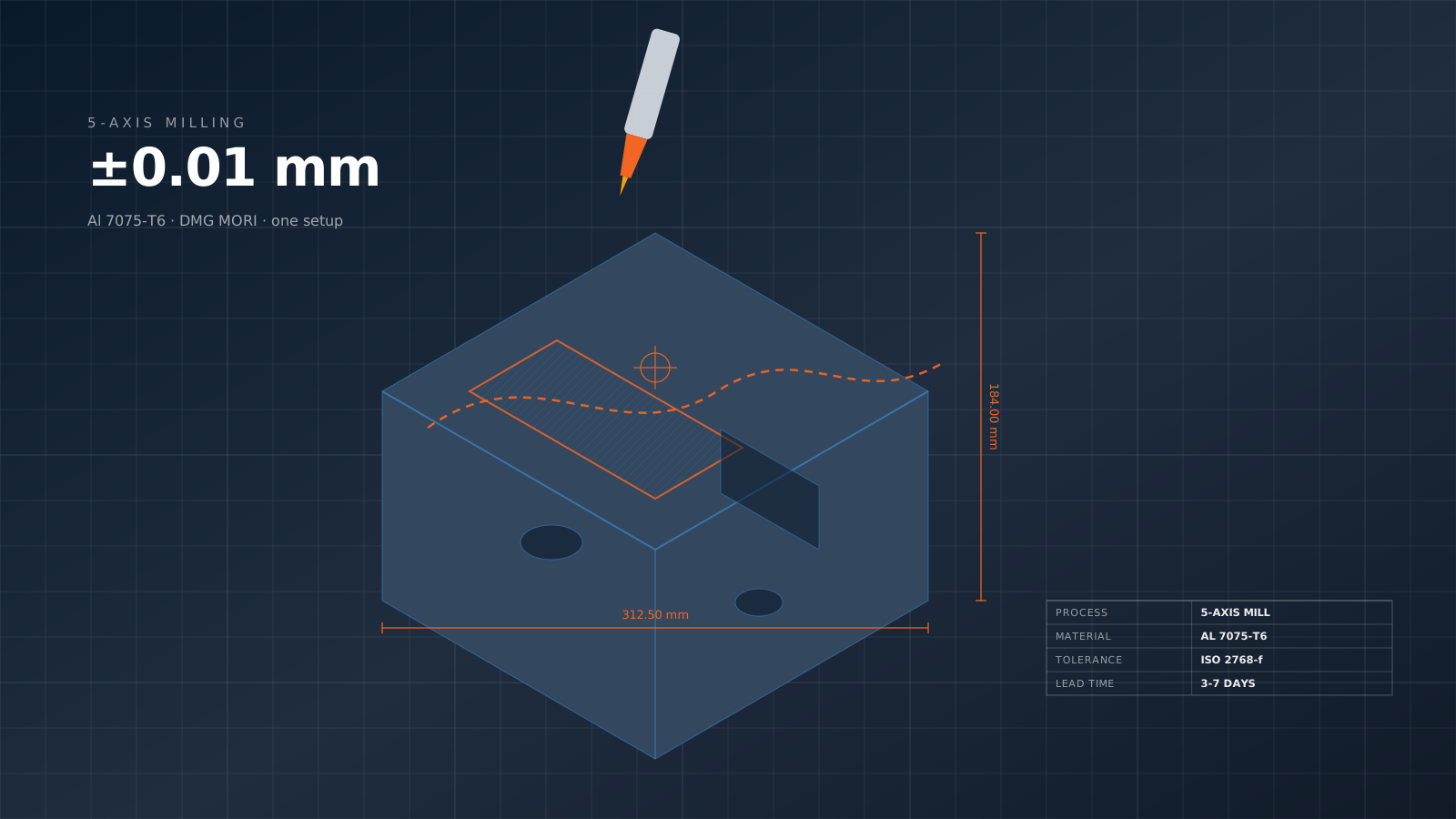
Send a CAD file. Get an engineering-reviewed quote.
No minimum quantity, free DFM feedback from a senior manufacturing engineer, and an NDA signed before file review on request.