
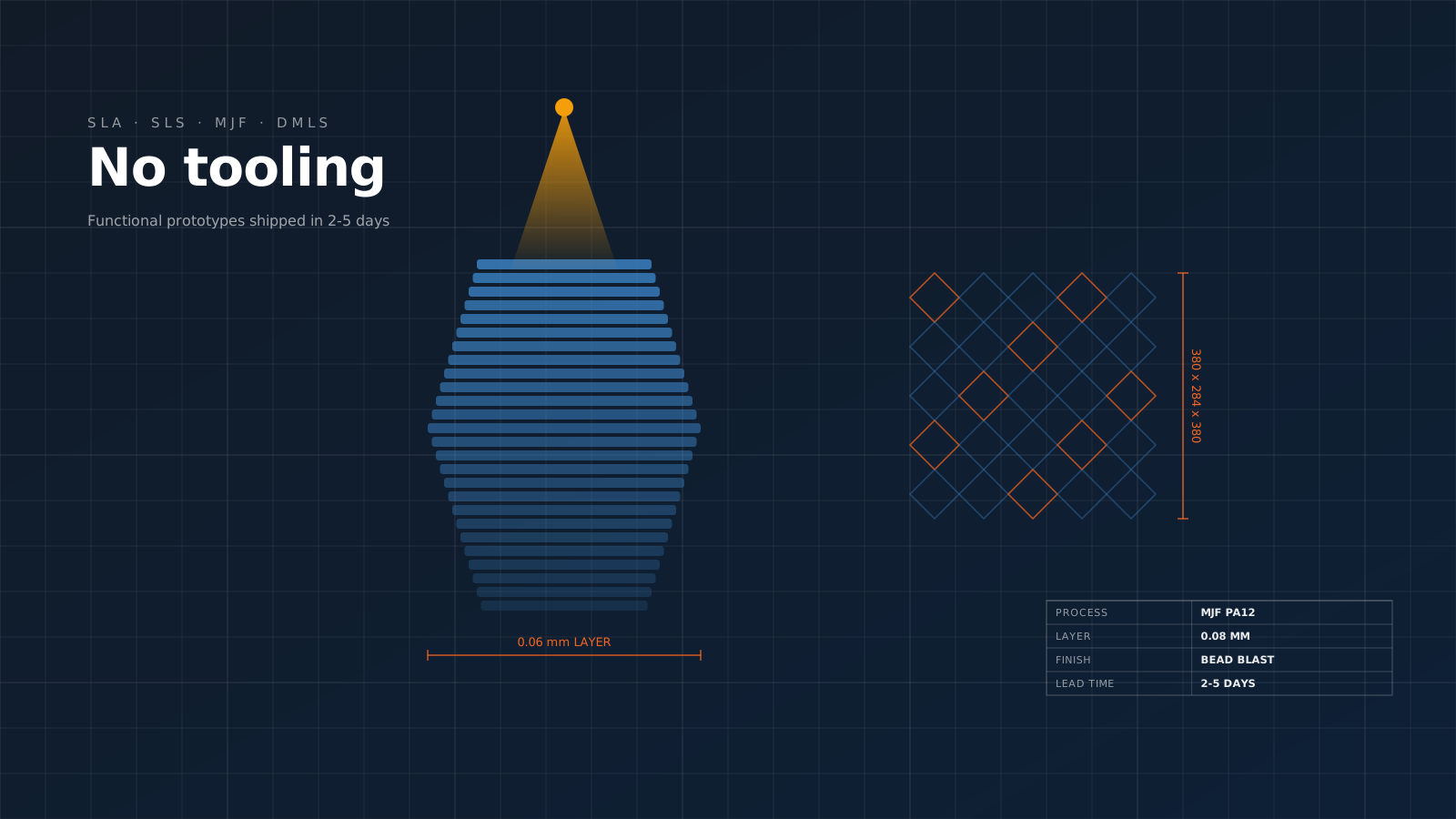
Full color. Multi-material. Photorealistic.
Stratasys PolyJet 3D printing: photorealistic full-color parts, multi-material single-print (rigid + rubber together), texture simulation. For medical anatomical models, consumer product concept models, multi-color graphic parts, specialty mockups.
Polyjet 3D printing
PolyJet can do things no other 3D printing process can: full color with graphics, multiple materials in single part, texture simulation.
What PolyJet uniquely does.
Full color
Photorealistic color across entire part — graphics, gradients, logos printed directly into part.
Multi-material single print
Rigid ABS-like + flexible rubber-like in single print. No assembly needed.
Texture simulation
Print different hardness zones: firm grip area, soft cushion, rigid structure — all one part.
Clear transparent
Transparent resin prints for optical parts, medical anatomical visualization.
Fine detail
Finest layer thickness of any 3D printing — 14 µm layers for extreme detail.
Dental / medical
Biocompatible PolyJet resins for dental models, orthodontic appliances, surgical guides.
Overmolding simulation
Test multi-material overmold designs before injection tool investment.
Consumer product models
Presentation-quality prototypes with color graphics for marketing and customer demos.
PolyJet can do things no other 3D printing process can: full color with graphics, multiple materials in single part, texture simulation.
Where PolyJet wins.
Anatomical models
Photorealistic patient-specific anatomy from CT/MRI imaging — for surgical planning
Multi-material prototypes
Shoes with rigid sole + flexible upper — single-print prototype for design review
Consumer electronics prototypes
Device prototypes with color graphics, logos, labels printed directly
Packaging mockups
Full-color packaging mockups for marketing and customer presentations
Character figures
Photorealistic characters with detailed features and colors
Medical training
Life-like training models for medical education
Architectural models
Full-color architectural presentation models
Dental models
Dental models with gum-colored tissue and tooth-colored teeth
Jewelry prototypes
Concept jewelry models with multiple material simulation
Get an instant quote
Send your CAD — we reply with detailed pricing, lead time, and DFM feedback within 4 working hours.
Talk to an engineer
WhatsApp our team directly. Most messages answered within 12 minutes during work hours.
Explore all services
CNC, 3D printing, injection molding, sheet metal, casting, finishing — one quality system, one partner.
Full color — questions
Multi-material — how many materials in one part?
Stratasys J750/J850 PolyJet printers: up to 6 materials simultaneously. Create gradient hardness (90 Shore A at one end, 90 Shore D at other), blend colors across a part, combine rigid structure with flexible features. Complexity limited by software and design, not the machine. Color blending: 500,000+ distinct colors achievable.
Are PolyJet parts functional?
Limited. PolyJet materials approximate mechanical properties of thermoplastics and rubber, but don't match production materials. Rigid PolyJet: similar to ABS appearance but more brittle, lower temperature service. Rubber-like PolyJet: similar feel to elastomer but different mechanical. For functional validation, use SLS/MJF or actual production material. For concept validation and appearance review, PolyJet is excellent.
Clear/transparent parts?
PolyJet Vero Clear resin: near-water-clear transparent. Best transparency of any 3D printing. Great for: anatomical models showing internal structure, optical concept demonstrations, light pipes, transparent product prototypes. Surface must be polished (fine sanding + polishing) for full optical clarity. As-printed has slight surface texture.
Cost per part?
PolyJet is expensive. Small multi-color part: $200-500. Medium: $500-2,000. Large: $2,000-10,000+. Cost driven by: material volume (expensive photopolymers), support material volume (significant for complex shapes), build time. For presentations, marketing, specialty applications, cost often justified by impact. For functional prototyping, use cheaper processes.
Support material considerations?
PolyJet uses soluble or breakable support material for overhanging geometry. Support removal: water-jet for soluble supports, manual for breakable. Complex interior geometry: may be difficult to remove supports, limiting some applications. Hollow parts: support inside must exit through drain holes — design accordingly. Support removal adds 1-2 hours per part for complex geometry.
Lead times for PolyJet?
Simple single-material PolyJet: 2-3 days. Full-color multi-material: 4-7 days. Complex anatomical models: 7-14 days. Rush service available for urgent medical or surgical planning applications. For large builds, batch multiple parts per build for cost efficiency.
Keep reading
Quote
Get a free CNC machining, 3D printing, injection molding quote from PifyC. Send CAD via WhatsApp or email — q…
Read more →Additive manufacturingSLA 3D printing service
SLA (stereolithography) 3D printing service: fine-detail resin prototypes, smooth surface finish Ra 2-5 µm, tran…
Read more →MachiningCNC machine
ISO 9001 certified CNC machining in Wuxi, China. 3, 4 and 5-axis milling, Swiss turning, 40+ materials, ±0.01 mm…
Read more →Additive manufacturing3D printing service
Industrial-grade 3D printing from Wuxi, Jiangsu, China: SLA, SLS, MJF and DMLS metal. Functional prototypes and …
Read more →Moulding & castingInjection molding
Plastic injection molding from China: rapid aluminum tooling in 14 days for 500–10,000 parts, production P20/H13…
Read more →Sheet metal & fabricationSheet metal
Precision sheet metal fabrication from Wuxi: 4 kW fiber laser cutting, Amada press brake bending (±0.1 mm), TIG/…
Read more →Finishing & treatmentFinishing services
Complete in-house surface finishing: Type II/III anodize, powder coating, electroplating, passivation, bead blas…
Read more →PifyCMaterials
PifyC's 50+ production-grade materials: aluminum, stainless steel, titanium, brass, copper, and engineering p…
Read more →
Send a CAD file. Get an engineering-reviewed quote.
No minimum quantity, free DFM feedback from a senior manufacturing engineer, and an NDA signed before file review on request.