
ISO 9001:2015ITAR RegisteredRoHS · REACHLead time from 3 business daysMOQ = 1 part
PifyC
Services
Materials
Industries
Applications
Resources
Locations
Company
Request a quote
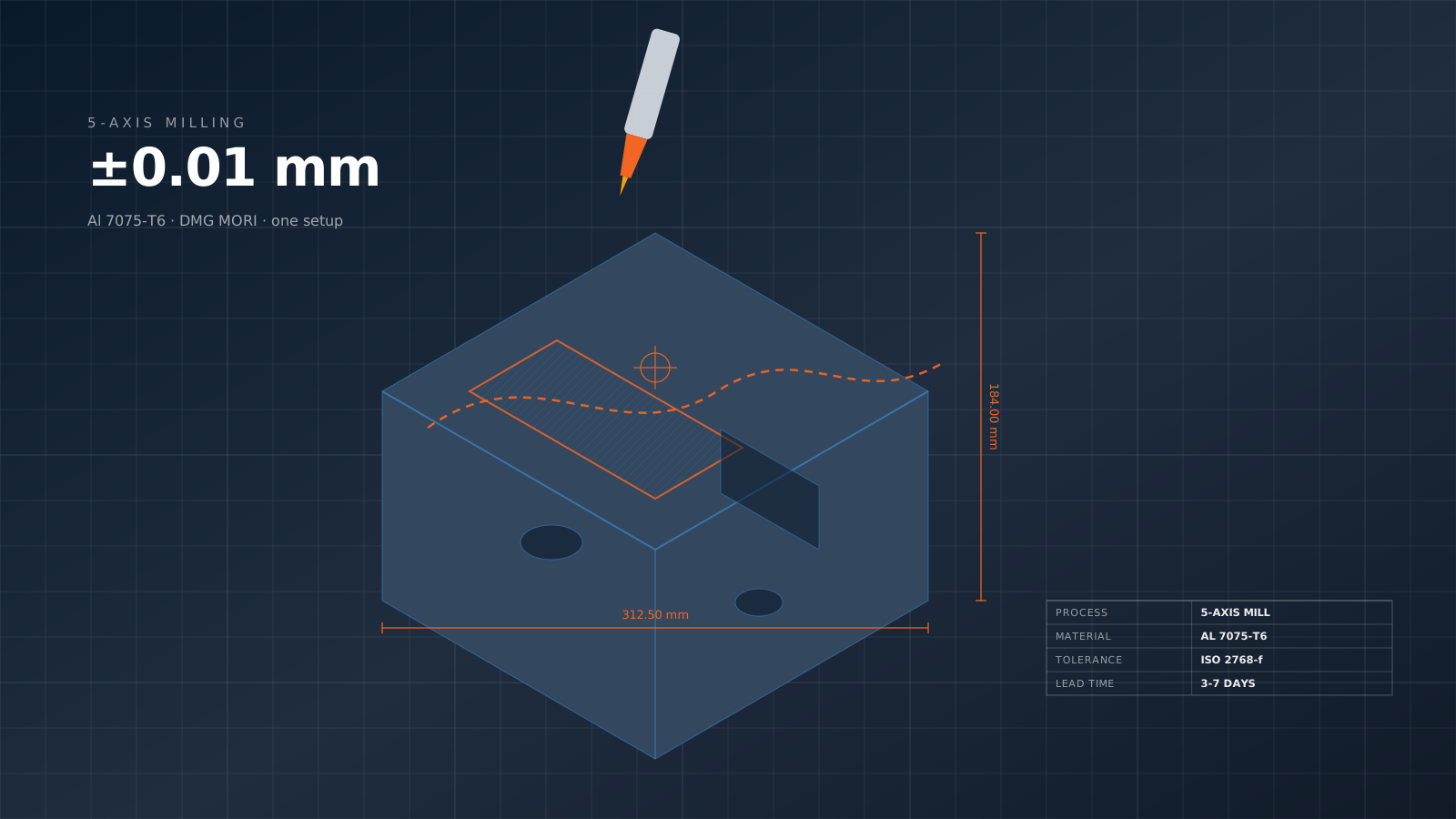
5-axis CNC milling drawing: Al 7075-T6 block with pockets, toolpath and dimensions
PEEK vs PPS

Both high-temp. Different tiers. Know when to pay up.

PEEK is the premium high-performance thermoplastic. PPS is one tier down but at 1/5 the cost. For many applications, PPS is the right choice — but PEEK's capabilities justify the premium for specific requirements.

Process comparisonsWuxi, ChinaMOQ 1 partDFM review included

Side-by-side summary.

PEEK

Polyetheretherketone. Premium engineering thermoplastic. 260°C continuous service. Excellent chemistry, biocompatible grades available. $120-180/kg unfilled.

PPS (Ryton)

Polyphenylene sulfide. Automotive-grade high-temperature thermoplastic. 220°C continuous. Inherently flame retardant. $15-25/kg glass-filled.

Feature-by-feature breakdown.

AttributePEEK unfilledPPS-GF40
Density1.30 g/cc1.66 g/cc
Tensile strength100 MPa160 MPa (GF)
Max continuous service260°C220°C
HDT (1.8 MPa)150°C (343°C GF)260°C
Flame ratingUL 94 V-0 naturalUL 94 V-0 natural
Biocompatible gradePEEK-OPTIMA availableNot implant-grade
MachinabilityExcellentGlass abrasive to tools
Moisture absorption0.5%<0.02%
Cost per kg (raw)$120-180 unfilled$15-25 GF
Cost finished partPremium50-70% of PEEK
Injection moldableYes (requires 390°C)Yes (standard)
Typical applicationsMedical, aerospace, semiconductorAutomotive under-hood, electrical

When to choose each.

Choose PEEK when:

Choose PPS (Ryton) when:

Get an instant quote

Send your CAD — we reply with detailed pricing, lead time, and DFM feedback within 4 working hours.

Talk to an engineer

WhatsApp our team directly. Most messages answered within 12 minutes during work hours.

Explore all services

CNC, 3D printing, injection molding, sheet metal, casting, finishing — one quality system, one partner.

Working on a live project? Send the STEP file and the two or three features you are unsure about — an engineer replies with DFM notes and a price, usually within four working hours.

FAQ

Both high-temp — questions

Can PPS replace PEEK in most applications?

For temperatures up to 220°C and most chemical environments: yes, PPS works. For 260°C continuous, biomedical implants, or ultra-pure applications: PEEK is required. Rule of thumb: if you're using PEEK "because we always did", evaluate PPS — often 70% cost reduction with acceptable performance. If PEEK-specific features matter (biocompatibility, 260°C, semiconductor-grade purity), stick with PEEK.

Why does PEEK cost 5-10× PPS?

PEEK manufacturing: complex synthesis, specialty raw materials, limited global production (Victrex, Solvay, Evonik main producers). Production scale: PEEK ~5,000 tonnes/year globally, PPS ~50,000 tonnes/year. PEEK processing: requires 390-400°C melt temperature (specialty equipment). PPS: standard injection molding at 320°C. Both are premium vs commodity plastics ($2-5/kg) but PEEK is clearly premium within premium.

PEEK-OPTIMA vs industrial PEEK?

PEEK-OPTIMA (Invibio proprietary medical grade): FDA 510(k) cleared for implantable medical devices. Certified biocompatibility. Premium cost: $300-400/kg raw material. Industrial PEEK: same polymer but not medical-certified. $120-180/kg. For medical implants, PEEK-OPTIMA required; for industrial applications, standard PEEK adequate. Don't pay PEEK-OPTIMA premium unless medical implant.

Filled vs unfilled considerations?

Unfilled PEEK: best machinability, dimensional stability, biocompatibility. PEEK-GF30: higher strength, glass fibers abrade tools (use PCD). PEEK-CF30: carbon filled, even higher strength, ESD-safe. Filled PPS: glass is nearly always added (PPS-GF40 standard) — unfilled PPS has modest mechanical properties. For high-performance PPS parts, GF40 or mineral-filled grades dominate.

Moisture sensitivity difference?

PEEK: 0.5% moisture absorption. Nylon 6/6 absorbs 8% — PEEK 16× more stable. Still, PEEK should be dried before injection molding. PPS: <0.02% moisture — essentially zero. PPS parts maintain dimensional stability in humid environments better than PEEK. For outdoor or high-humidity service requiring dimensional stability: PPS wins. For most indoor applications, PEEK moisture absorption isn't problematic.

Machining difficulty?

PEEK unfilled: machines well, similar to aluminum. Sharp carbide tooling, moderate speeds. PEEK-GF or CF filled: abrasive — use PCD (polycrystalline diamond) tooling for production. PPS-GF40: also abrasive, similar PCD recommendation. Both materials need: sharp tooling, adequate cooling (compressed air or mist), chip evacuation to prevent melting from friction. Standard practices work for both — no unusual considerations.

5-axis CNC milling drawing: Al 7075-T6 block with pockets, toolpath and dimensions

Send a CAD file. Get an engineering-reviewed quote.

No minimum quantity, free DFM feedback from a senior manufacturing engineer, and an NDA signed before file review on request.