
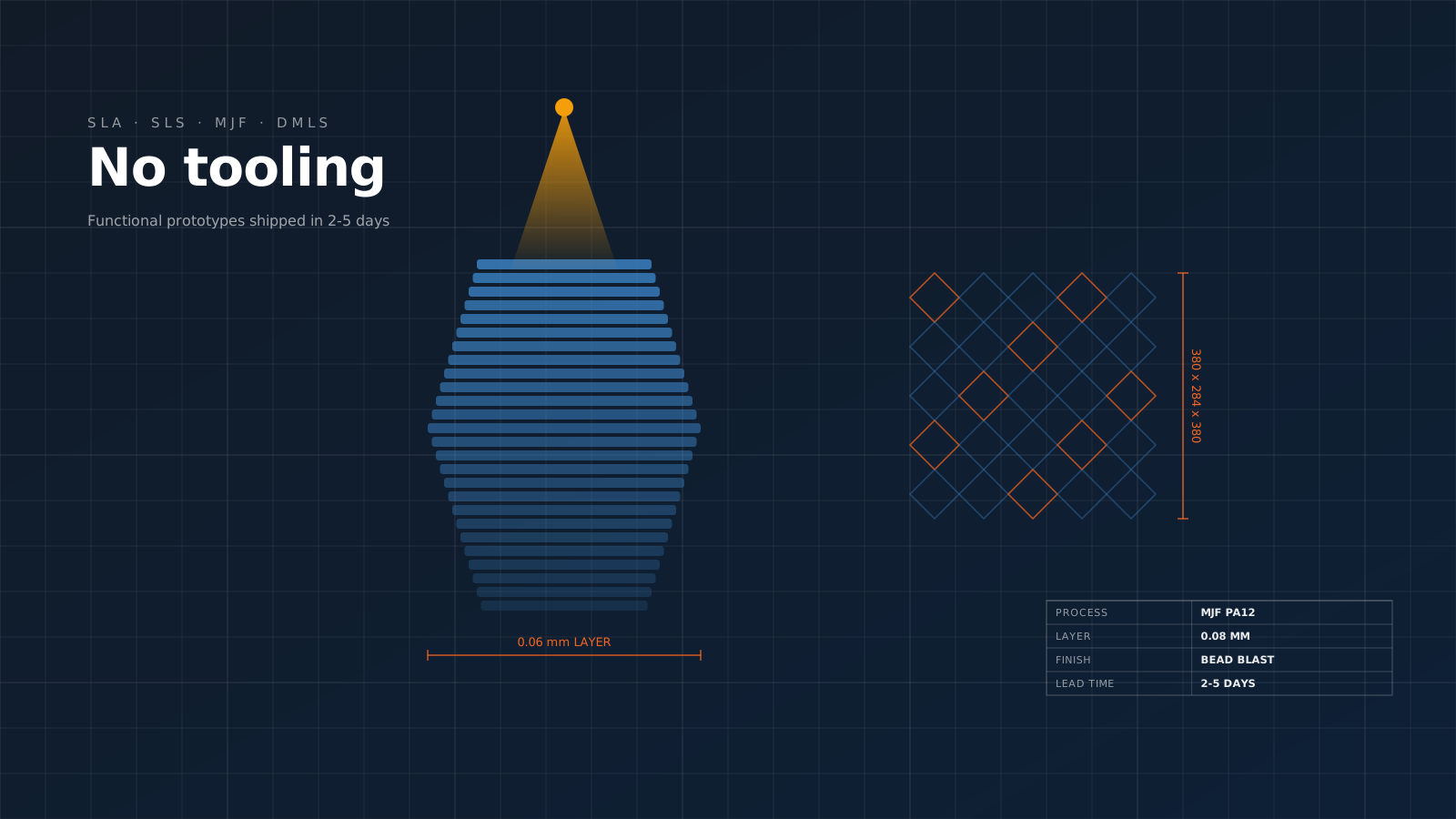
Patient-specific. ISO 10993 materials. Clinically ready.
Medical 3D printing for patient-specific applications: surgical guides, anatomical models, dental hardware, custom orthotics. ISO 10993 biocompatible materials, USP Class VI where applicable, ISO 13485-compatible documentation workflow.

Medical 3D printing
Medical applications require specific certified materials. Here are the medical-grade 3D printing options available.
Medical-grade 3D printing materials.
Medical PA12
Biocompatible PA12 nylon for external medical devices, orthotics, custom patient hardware.
Medical resins
Biocompatible SLA resins: surgical guides, dental models, orthodontic appliances.
Ti-6Al-4V Gr.23
ELI titanium implants via DMLS. Spine cages, cranial plates, orthopedic implants. Post-processed to finished implant.
PEEK medical
Implantable medical PEEK via FDM. Limited to specific licensed applications.
CoCr dental
Cobalt-chromium for dental crowns and bridges. Standard material for dental 3D printing.
Ti Gr.5 medical
Standard titanium for dental implants, non-permanent orthopedic. Less stringent than Gr.23.
316L Medical
316L stainless for non-permanent medical hardware, dental instruments.
Surgical guide resin
Clear biocompatible SLA resin specifically for surgical guides — autoclavable.
Medical applications require specific certified materials. Here are the medical-grade 3D printing options available.
Medical 3D printing applications.
Surgical guides
Patient-specific surgical guides from CT/MRI imaging data — accurate implant placement
Anatomical models
3D printed models from patient imaging for surgical planning, physician training
Dental crowns & bridges
CoCr and ceramic dental restorations via 3D printing
Orthodontic appliances
Clear aligners, retainers, orthodontic treatment devices
Cranial implants
Patient-specific titanium cranial plates for reconstruction
Spine cages
3D printed spine cage implants with porosity for osseointegration
Custom orthotics
Patient-specific foot orthotics, prosthetic socket liners
Bone scaffolds
Research bone tissue scaffolds with controlled porosity
Device prototypes
Medical device development prototypes in biocompatible materials
Get an instant quote
Send your CAD — we reply with detailed pricing, lead time, and DFM feedback within 4 working hours.
Talk to an engineer
WhatsApp our team directly. Most messages answered within 12 minutes during work hours.
Explore all services
CNC, 3D printing, injection molding, sheet metal, casting, finishing — one quality system, one partner.
Patient-specific — questions
ISO 10993 vs USP Class VI?
ISO 10993: international standard for biocompatibility testing of medical devices. Required for FDA submissions, CE marking. Comprehensive testing (cytotoxicity, sensitization, irritation, implantation). USP Class VI: United States Pharmacopeia classification. Older standard, still referenced but ISO 10993 is becoming universal. Both certify biocompatibility for specific uses. Specify which certification your application requires.
Regulatory pathway for 3D printed medical devices?
For patient-specific devices (surgical guides, anatomical models): typically Class I device, FDA 510(k) exempt. For implantable 3D printed devices (cranial plates, spine cages): Class II or III, 510(k) or PMA required. Manufacturing must comply with FDA 21 CFR Part 820 QSR, ISO 13485. We provide components under customer's QSR/ISO 13485 system — not manufacturers of complete medical devices ourselves. Our documentation supports customer QSR.
Patient-specific workflow?
Typical workflow: (1) Customer provides CT or MRI imaging data. (2) Imaging segmented and processed into 3D model of anatomy. (3) Surgeon reviews and approves model/guide design. (4) 3D printing in appropriate biocompatible material. (5) Post-processing (support removal, sterilization). (6) Packaging with unique patient identifier. We support steps 4-6, typically working with customer or partner who handles steps 1-3.
Sterilization compatibility?
Medical 3D printed parts must survive sterilization: autoclave (121 °C, 15 psi steam), gamma radiation, ethylene oxide (EtO). Compatibility: Ti, PEEK, 316L — all methods. Medical SLA resin: limited autoclave cycles, gamma OK. Medical PA12: gamma and EtO preferred over autoclave. Specify sterilization method — we select appropriate material and process.
Lead times for medical 3D printing?
Surgical guides from imaging: 5-7 days typical. Dental crowns: 1-3 days (standard production). Patient-specific implants: 2-4 weeks including design approval and regulatory process. For emergency cases (surgical rescheduling), rush turnaround possible. Documentation packages add 1-3 days.
Documentation requirements?
Medical 3D printing documentation: material certification (lot number, biocompatibility certification), process record (machine, operator, parameters), post-processing record, quality verification, patient identifier (if patient-specific). We provide documentation package compatible with customer's ISO 13485 QMS. For traceability required long-term retention, records archived for specified period.
Keep reading
Quote
Get a free CNC machining, 3D printing, injection molding quote from PifyC. Send CAD via WhatsApp or email — q…
Read more →Material-specific partsCNC machining for medical
CNC machining for medical device manufacturers. 316L, Ti Gr.23 ELI (ASTM F136), USP Class VI PEEK, medical-grade…
Read more →MachiningCNC machine
ISO 9001 certified CNC machining in Wuxi, China. 3, 4 and 5-axis milling, Swiss turning, 40+ materials, ±0.01 mm…
Read more →Additive manufacturing3D printing service
Industrial-grade 3D printing from Wuxi, Jiangsu, China: SLA, SLS, MJF and DMLS metal. Functional prototypes and …
Read more →Moulding & castingInjection molding
Plastic injection molding from China: rapid aluminum tooling in 14 days for 500–10,000 parts, production P20/H13…
Read more →Sheet metal & fabricationSheet metal
Precision sheet metal fabrication from Wuxi: 4 kW fiber laser cutting, Amada press brake bending (±0.1 mm), TIG/…
Read more →Finishing & treatmentFinishing services
Complete in-house surface finishing: Type II/III anodize, powder coating, electroplating, passivation, bead blas…
Read more →PifyCMaterials
PifyC's 50+ production-grade materials: aluminum, stainless steel, titanium, brass, copper, and engineering p…
Read more →
Send a CAD file. Get an engineering-reviewed quote.
No minimum quantity, free DFM feedback from a senior manufacturing engineer, and an NDA signed before file review on request.