
ISO 9001:2015ITAR RegisteredRoHS · REACHLead time from 3 business daysMOQ = 1 part
PifyC
Services
Materials
Industries
Applications
Resources
Locations
Company
Request a quote
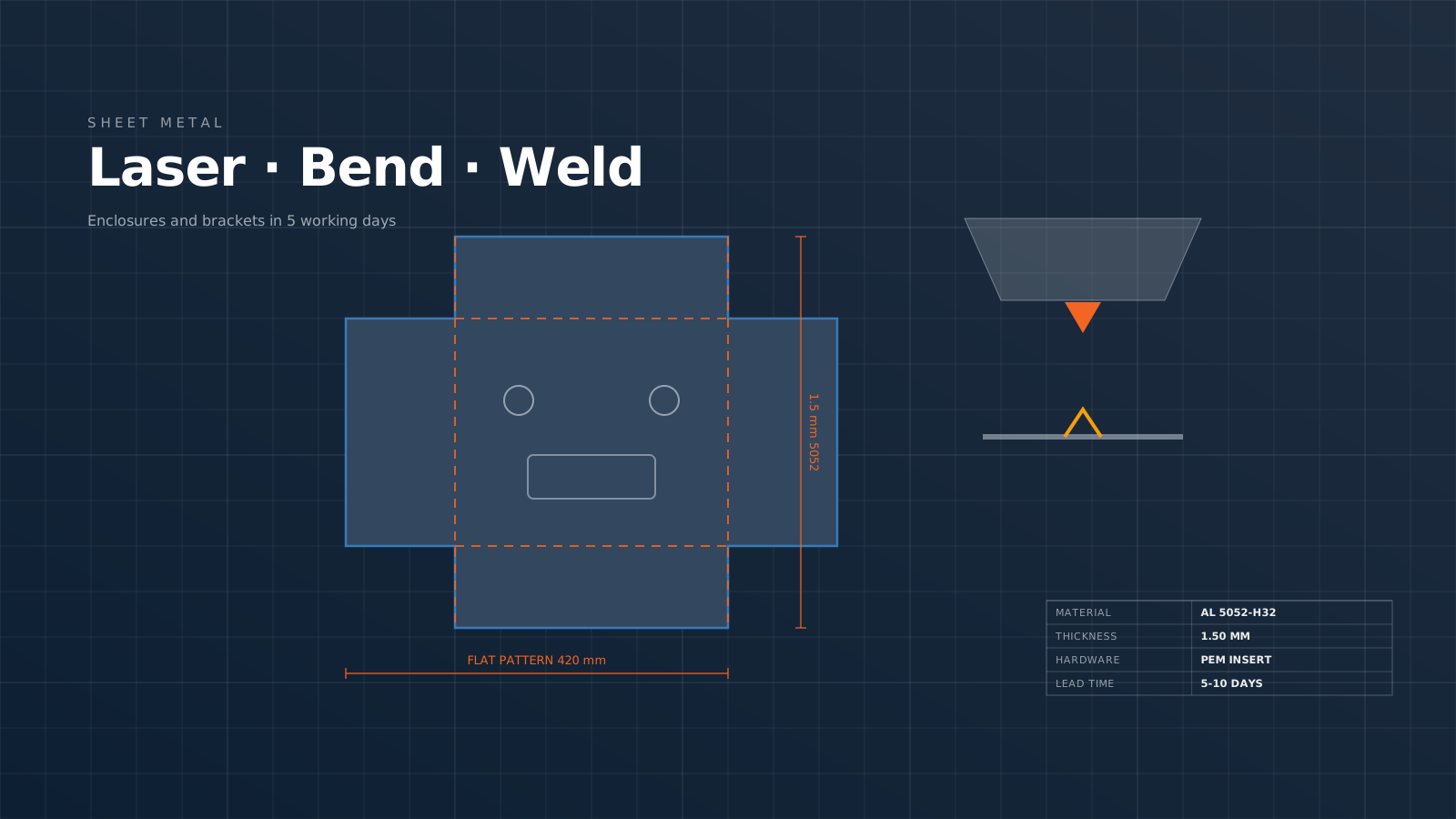
Sheet metal drawing: flat pattern with bend lines and press brake tooling
Laser vs Waterjet

Heat or pressure? Speed or thickness? Material matters.

Both cut flat sheet materials to precision shapes. Laser melts/vaporizes material with focused light (fast, heat-affected zone). Waterjet erodes material with pressurized water + abrasive (no heat, any material, thicker capable). Each wins in specific scenarios.

Process comparisonsWuxi, ChinaMOQ 1 partDFM review included

Side-by-side summary.

Laser Cutting

Fiber or CO2 laser melts/vaporizes material. Fast, precise, clean cuts on metals and some plastics. Heat-affected zone at cut edge. Standard for sheet metal fabrication.

Waterjet Cutting

High-pressure water (up to 600 MPa) with garnet abrasive erodes material. No heat. Cuts any material — metals, stone, glass, composites. Slower than laser on thin metal, faster on thick.

Feature-by-feature breakdown.

AttributeLaser CuttingWaterjet
Max thickness (steel)20–25 mm (fiber laser)150 mm+
Max thickness (aluminum)15–20 mm (fiber laser)150 mm+
Speed (thin metal)FastSlower
Speed (thick metal)Slow (near thickness limit)Faster (above 15 mm)
Heat-affected zoneYes (0.1–1 mm)None
Material stressThermal stress near cutNo thermal stress
Edge qualityClean on thin, dross on thickClean on all thicknesses
Precision±0.1 mm typical±0.2 mm typical
Material rangeMetals, some plasticsAny material (metals, stone, glass, composites)
Reflective materialsDifficult (copper, brass)Easy
Stacking multiple sheetsLimitedYes (multiple thin sheets)
Operating costModerate (consumables lower)Higher (garnet, water)
NoiseLowHigh (pumps + cutting)
Setup timeFastModerate

When to choose each.

Choose Laser Cutting when:

Choose Waterjet Cutting when:

Get an instant quote

Send your CAD — we reply with detailed pricing, lead time, and DFM feedback within 4 working hours.

Talk to an engineer

WhatsApp our team directly. Most messages answered within 12 minutes during work hours.

Explore all services

CNC, 3D printing, injection molding, sheet metal, casting, finishing — one quality system, one partner.

Working on a live project? Send the STEP file and the two or three features you are unsure about — an engineer replies with DFM notes and a price, usually within four working hours.
FAQ

Heat or pressure? Speed or thickness? Mate — questions

Which is faster?

Depends on thickness. Thin metal (< 6 mm): laser 3–5× faster. Medium (6–15 mm): roughly similar. Thick (> 15 mm): waterjet wins — can cut 150 mm steel that laser cannot reach. For high-volume production of thin-to-medium sheet metal parts, laser is standard. For thick plate work or heat-sensitive materials, waterjet dominates.

Heat-affected zone — does it matter?

Depends on downstream process. For welded parts: laser HAZ is not an issue since welding adds more heat. For heat-treated aluminum (7075-T6, 6061-T6): laser cut edge locally softens, potentially problematic for high-stress edge applications. For precision machined parts cut to shape: waterjet avoids edge softening. For general sheet metal fabrication, laser HAZ is negligible and doesn't affect performance.

What materials can waterjet cut that laser cannot?

Stone (granite, marble, limestone), glass, ceramics, composites (carbon fiber, fiberglass), cloth and fabric, wood and plywood, thick metals (> 20 mm), reflective metals (pure copper, polished aluminum), titanium (laser is possible but heat-sensitive), food-grade materials without contamination. Waterjet's key advantage: material-agnostic cutting.

Cost comparison?

Typical pricing for sheet metal cutting services: laser $1–5 per linear meter of cut (thin material), $3–10 per linear meter (thick material). Waterjet: $2–8 per linear meter (thin), $6–20 per linear meter (thick). Laser cheaper for thin metal production. Waterjet cheaper for thick material (despite higher hourly rate, it actually cuts faster and more effectively). For specific comparison, we quote both for same part.

Precision achievable?

Laser cutting: ±0.1 mm typical, ±0.05 mm possible on optimized material. Waterjet: ±0.2 mm typical, ±0.1 mm possible with specialized machines. Both adequate for most sheet metal and flat-stock applications. For precision prototype parts needing tighter than ±0.1 mm, CNC milling from flat stock may be better than either.

Surface finish of cut edge?

Laser: varies with thickness. Thin clean cuts (Ra 0.8 µm), thick cuts may have drag lines or dross (Ra 3–6 µm). Waterjet: clean uniform edge across all thicknesses (Ra 3–6 µm standard), can produce very smooth cuts with slower head speed. Both may require deburring for cosmetic applications. For mechanical functional parts, both produce adequate finish for assembly.

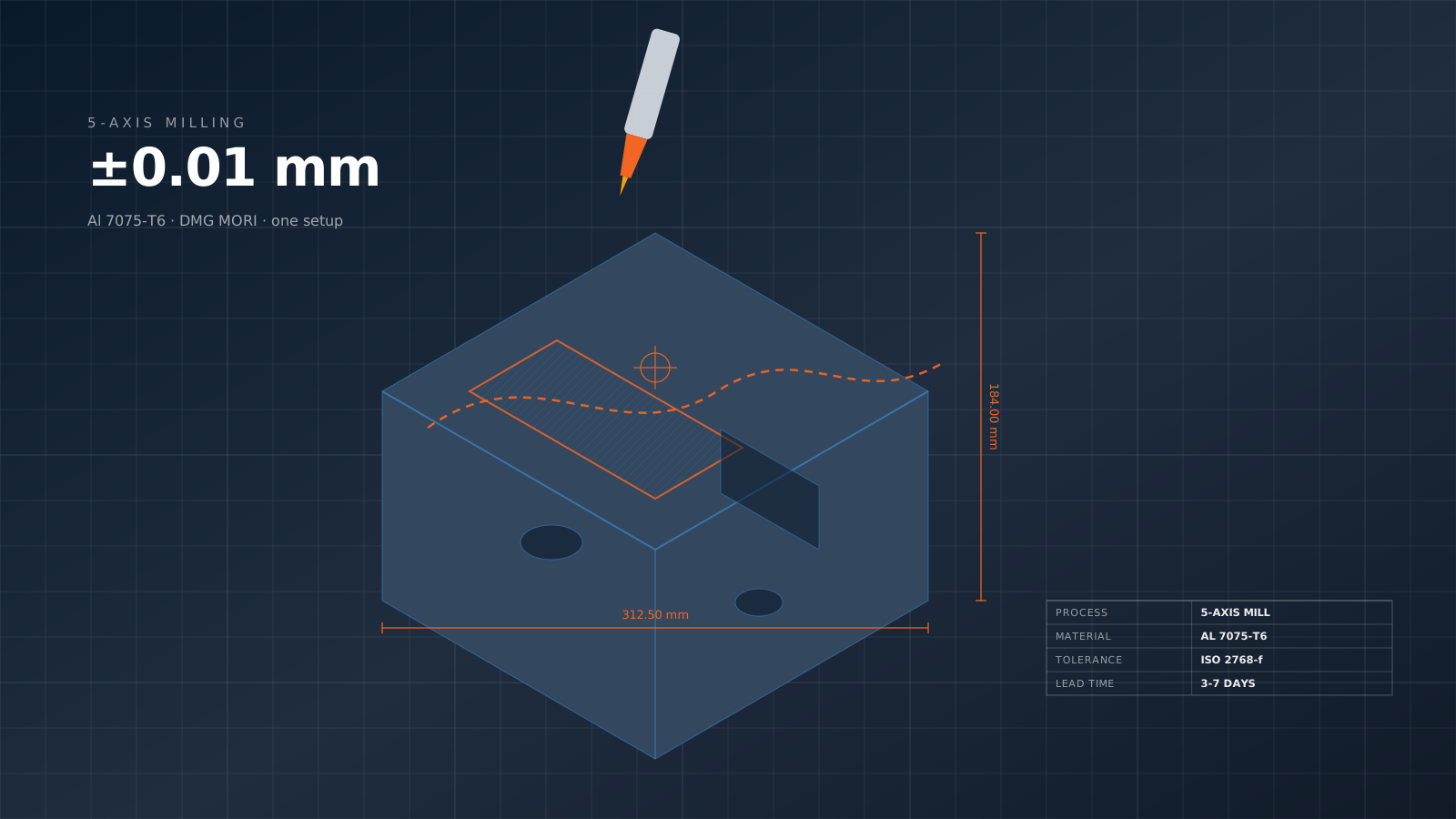
5-axis CNC milling drawing: Al 7075-T6 block with pockets, toolpath and dimensions

Send a CAD file. Get an engineering-reviewed quote.

No minimum quantity, free DFM feedback from a senior manufacturing engineer, and an NDA signed before file review on request.