
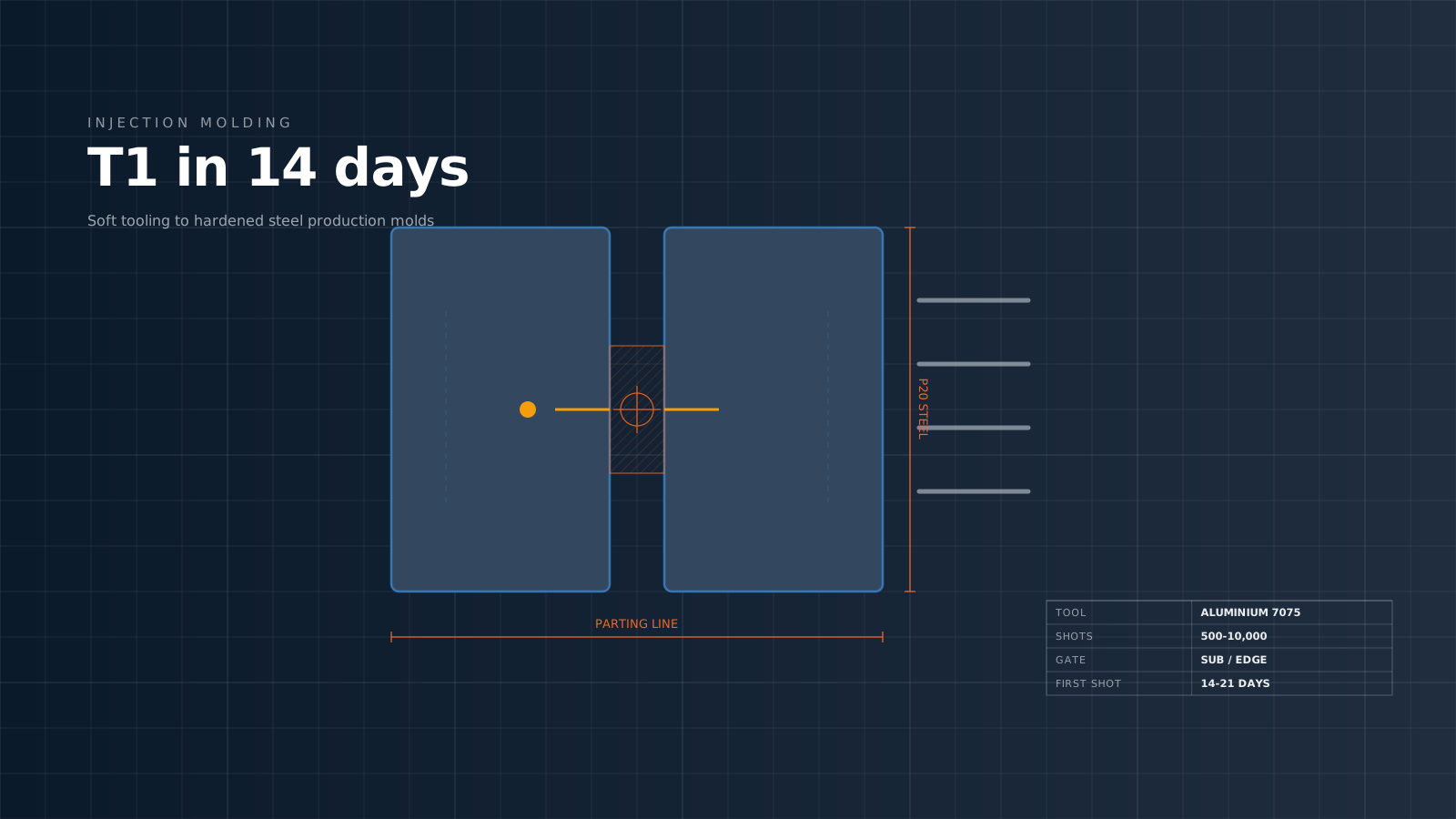
Metal inserts molded in. Strong threads. Single-piece function.
Insert molded parts: pre-placed metal components (threaded brass inserts, electrical contacts, magnets) with plastic molded around them. Stronger thread engagement than tapped plastic. Integrated electrical terminals. Simpler assembly than separate components.

Insert molded parts
Different insert types solve different assembly problems. Brass inserts for threads, electrical contacts for connections, magnets for closures — all molded into plastic in single operation.
Common insert types.
Brass threaded inserts
Heat-set or molded-in brass threaded inserts. Much stronger than threads tapped directly into plastic. Common sizes M2.5-M10.
Electrical contacts
Electrical contacts molded into plastic housing. Eliminates wire-termination steps in assembly.
Magnets
Rare earth magnets molded into plastic parts for closures, holding, positioning features.
Metal structural parts
Metal reinforcement molded into plastic for strength — load-bearing mounting points, hinges.
Bearing races
Rolling element bearing races molded into plastic housings for smooth rotation.
Electrical contact pins
Spring-loaded or fixed contact pins for electrical connectors and switches.
Strain relief wires
Pre-placed wires with integral strain relief and cable exit features.
PCB mounting inserts
PCB standoff inserts molded into housings for circuit board mounting.
Different insert types solve different assembly problems. Brass inserts for threads, electrical contacts for connections, magnets for closures — all molded into plastic in single operation.
Where insert molding wins.
Consumer electronics
Electronic device housings with integrated screw bosses and connector contacts
Automotive connectors
Automotive electrical connectors with integrated contact pins
Medical devices
Medical device housings with stronger threaded mounting points
Tool handles
Tools with metal-reinforced handles for structural strength
Electrical switches
Light switches, relays with contacts molded into plastic body
Appliance housings
Appliances with threaded inserts for repeatable assembly/disassembly
Industrial sensors
Sensor housings with integral electrical connections
Gear housings
Plastic gear boxes with bearing races molded into housings
Specialty assemblies
Complex assemblies where combining metal and plastic in single operation reduces assembly cost
Get an instant quote
Send your CAD — we reply with detailed pricing, lead time, and DFM feedback within 4 working hours.
Talk to an engineer
WhatsApp our team directly. Most messages answered within 12 minutes during work hours.
Explore all services
CNC, 3D printing, injection molding, sheet metal, casting, finishing — one quality system, one partner.
Metal inserts molded in — questions
Why stronger threads with brass inserts?
Plastic threads tapped directly into plastic: pull-out strength 50-100 N typical for M4 thread. Strip out on 5-10 assembly cycles of high-cycle use. Brass heat-set insert in plastic: pull-out strength 500-1000 N. Survives 100+ assembly cycles. For parts requiring repeated fastener installation (service covers, maintenance access), brass inserts are essential. Use brass inserts for: any thread experiencing > 1 removal cycle, any thread under significant load.
Heat-set vs insert molded?
Heat-set inserts: installed after molding via heat stake or ultrasonic. Flexible — same plastic part can accept different inserts depending on application. Insert molded: installed during molding — inserts placed in mold before injection. Stronger bond between insert and plastic (chemical bond). More expensive due to mold complexity and cycle time. For production: insert molding if volume justifies; heat-set for flexibility.
Electrical insert molding considerations?
Challenges: (1) Hot plastic can degrade electrical plating — specify plated-after-molding or plastic-compatible plating. (2) Electrical contacts must be exactly positioned in mold — automated placement preferred at volume. (3) Interface between metal contact and plastic needs seal to prevent moisture intrusion. (4) Thermal expansion mismatch can cause delamination at high temperature. All manageable with appropriate design and materials.
Tooling for insert molding?
Insert molding tooling cost: 1.2-1.5× standard injection tooling. Extra complexity: insert placement fixtures, possibly pneumatic inserts that retract during plastic injection. Automation of insert placement: important for high volume. For 10,000+ annual production, fully automated insert placement and handling integrated with injection molding cell.
Design considerations for inserts?
Key rules: (1) Minimum wall thickness around insert 2× insert diameter to prevent shrinkage voids. (2) Insert diameter should be 80-100% of hole diameter in plastic. (3) Knurled or undercut insert surface improves plastic-to-metal bond. (4) Insert should not sit flush with surface — slight recess prevents flash issues. (5) Consider differential thermal expansion in service — brass expands more than plastic.
Production economics?
Insert molding adds $0.05-0.30 per insert depending on volume and automation. Manual insert placement: $0.20-0.50 per insert. Automated placement: $0.05-0.15 per insert. For threaded inserts, cost comparable to secondary operation (heat-set) at mid volumes. Savings: eliminated secondary assembly operation + improved joint strength + cleaner appearance (no heat-set marks).
Keep reading
Quote
Get a free CNC machining, 3D printing, injection molding quote from PifyC. Send CAD via WhatsApp or email — q…
Read more →Moulding & castingOvermolded parts
Overmolded injection molded parts: 2K (two-shot) molding of rigid plastic with elastomer overmold. Soft-touch gr…
Read more →MachiningCNC machine
ISO 9001 certified CNC machining in Wuxi, China. 3, 4 and 5-axis milling, Swiss turning, 40+ materials, ±0.01 mm…
Read more →Additive manufacturing3D printing service
Industrial-grade 3D printing from Wuxi, Jiangsu, China: SLA, SLS, MJF and DMLS metal. Functional prototypes and …
Read more →Moulding & castingInjection molding
Plastic injection molding from China: rapid aluminum tooling in 14 days for 500–10,000 parts, production P20/H13…
Read more →Sheet metal & fabricationSheet metal
Precision sheet metal fabrication from Wuxi: 4 kW fiber laser cutting, Amada press brake bending (±0.1 mm), TIG/…
Read more →Finishing & treatmentFinishing services
Complete in-house surface finishing: Type II/III anodize, powder coating, electroplating, passivation, bead blas…
Read more →PifyCMaterials
PifyC's 50+ production-grade materials: aluminum, stainless steel, titanium, brass, copper, and engineering p…
Read more →
Send a CAD file. Get an engineering-reviewed quote.
No minimum quantity, free DFM feedback from a senior manufacturing engineer, and an NDA signed before file review on request.