
ISO 9001:2015ITAR RegisteredRoHS · REACHLead time from 3 business daysMOQ = 1 part
PifyC
Services
Materials
Industries
Applications
Resources
Locations
Company
Request a quote
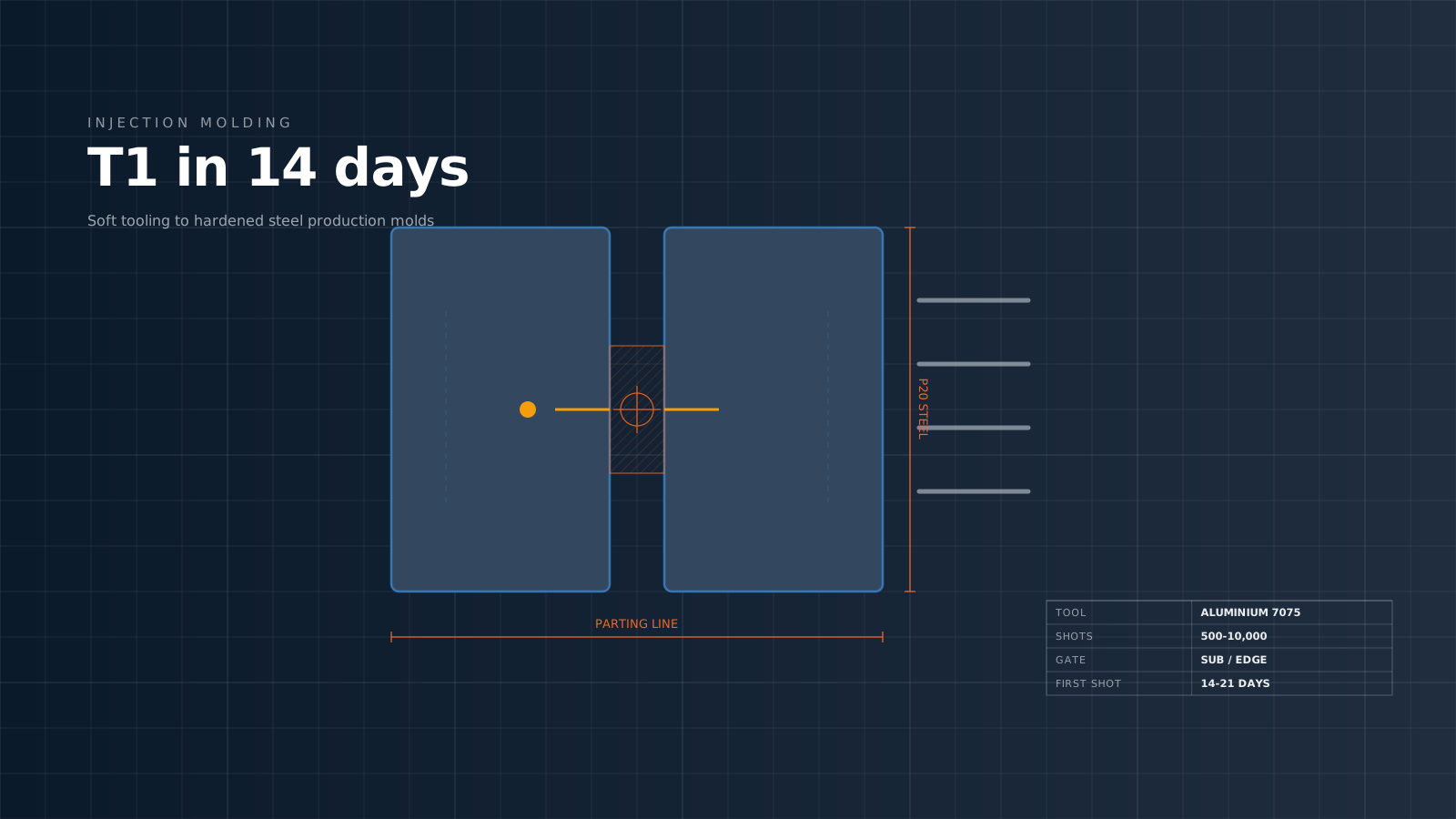
Injection mould drawing: two tool halves, cavity, gate and ejector pins
Forging vs Casting vs CNC

Press + flow. Pour + solidify. Cut + chip.

Metal parts can be made by forging (hot pressing to shape), casting (melting and pouring), or machining (cutting from solid). Each has a specific sweet spot for geometry, volume, and mechanical requirements.

Process comparisonsWuxi, ChinaMOQ 1 partDFM review included

Side-by-side summary.

Forging

Hot-press metal billet into dies. Grain flow follows part shape — excellent mechanical properties. High die cost, high-volume process. 1000+ parts economical.

Casting

Melt metal, pour into mold. Near-net-shape complex geometry possible. Moderate die cost (investment < die casting). Mechanical properties moderate — internal porosity possible.

Feature-by-feature breakdown.

AttributeForgingCasting (investment)CNC Machining
Tooling cost$50K-200K+ die$10K-50K mold
Per-part cost (1000 pcs)Low ($2-20)Low-moderate ($5-50)
Per-part cost (10 pcs)Not economicalHigh ($100-500)
Mechanical propertiesExcellent (grain flow)Moderate
Geometry complexityLimitedHigh
Surface finishRough (Ra 6-25 µm)Moderate (Ra 3-6 µm)
Tolerance±0.5-1 mm±0.1-0.3 mm
Lead time (first parts)8-16 weeks6-12 weeks
Production lead time3-8 weeks4-8 weeks
Volume economics1000+ pieces100-50,000 pieces
Material waste10-30%5-15%
Requires post-machiningOften yesOften yes

When to choose each.

Choose Forging when:

Choose Casting when:

Get an instant quote

Send your CAD — we reply with detailed pricing, lead time, and DFM feedback within 4 working hours.

Talk to an engineer

WhatsApp our team directly. Most messages answered within 12 minutes during work hours.

Explore all services

CNC, 3D printing, injection molding, sheet metal, casting, finishing — one quality system, one partner.

Working on a live project? Send the STEP file and the two or three features you are unsure about — an engineer replies with DFM notes and a price, usually within four working hours.
FAQ

Press + flow — questions

Why do forged parts have better properties?

Forging deforms metal at high temperature — grain structure flows to follow the part shape. Result: grain boundaries aligned with part contours, no weak directions perpendicular to load. Forged connecting rod has 2-3× fatigue life of cast equivalent. For high-stress rotating or cyclic loading (crankshafts, connecting rods, fasteners), forging is preferred. For static loading, casting may be adequate.

Investment casting vs die casting?

Investment (lost-wax): wax pattern + ceramic shell + metal pour. Expensive mold (pattern tooling), fine detail, best for aerospace and medical. Volumes 100-10,000 typical. Die casting (pressure): liquid metal injected into steel die. Fast cycle, high volume, limited to aluminum/zinc/magnesium. Volumes 10,000+ typical. For stainless or steel castings, investment casting. For aluminum at high volume, die casting.

When does CNC beat casting economically?

Below 100-500 parts (depending on part complexity): CNC usually cheaper than casting because casting has high tooling amortization. Simple CNC geometry: break-even even higher (1000+ parts). Complex CNC geometry (5-axis, multiple setups): casting wins at lower volumes. For unique one-off or low-volume parts, CNC is default choice.

Hybrid approach — cast then machine?

Very common. Cast near-net shape for cost-effective bulk, CNC critical features for tolerance. Example: cast engine block with investment casting for most geometry, CNC machine bearing journals, cylinder bores, mating surfaces. Reduces CNC material removal (cost savings), achieves CNC tolerance where needed. We coordinate hybrid casting + CNC workflows for many customers.

Forging vs machined from billet?

For high-strength applications like aerospace fasteners: forged often preferred. Billet machined parts start with bar stock — directional properties in rolling direction only. Forged parts have 3D grain flow following geometry. Fasteners, aerospace brackets, automotive connecting rods: forged. General machined parts: billet. Cost: forging $10-30K+ tooling vs billet minimal, so volume matters.

Powder metal (sintering) — another alternative?

Powder metal: metal powder compacted in die, sintered. Near-net shape, moderate mechanical properties, very high volume economical (100K+ parts). Used for: automotive bearings, small gears, porous metal (oil-impregnated bushings). Between casting and forging in properties. Tool cost similar to die casting. For high volumes of small precision parts without maximum mechanical requirements, powder metal is economical.

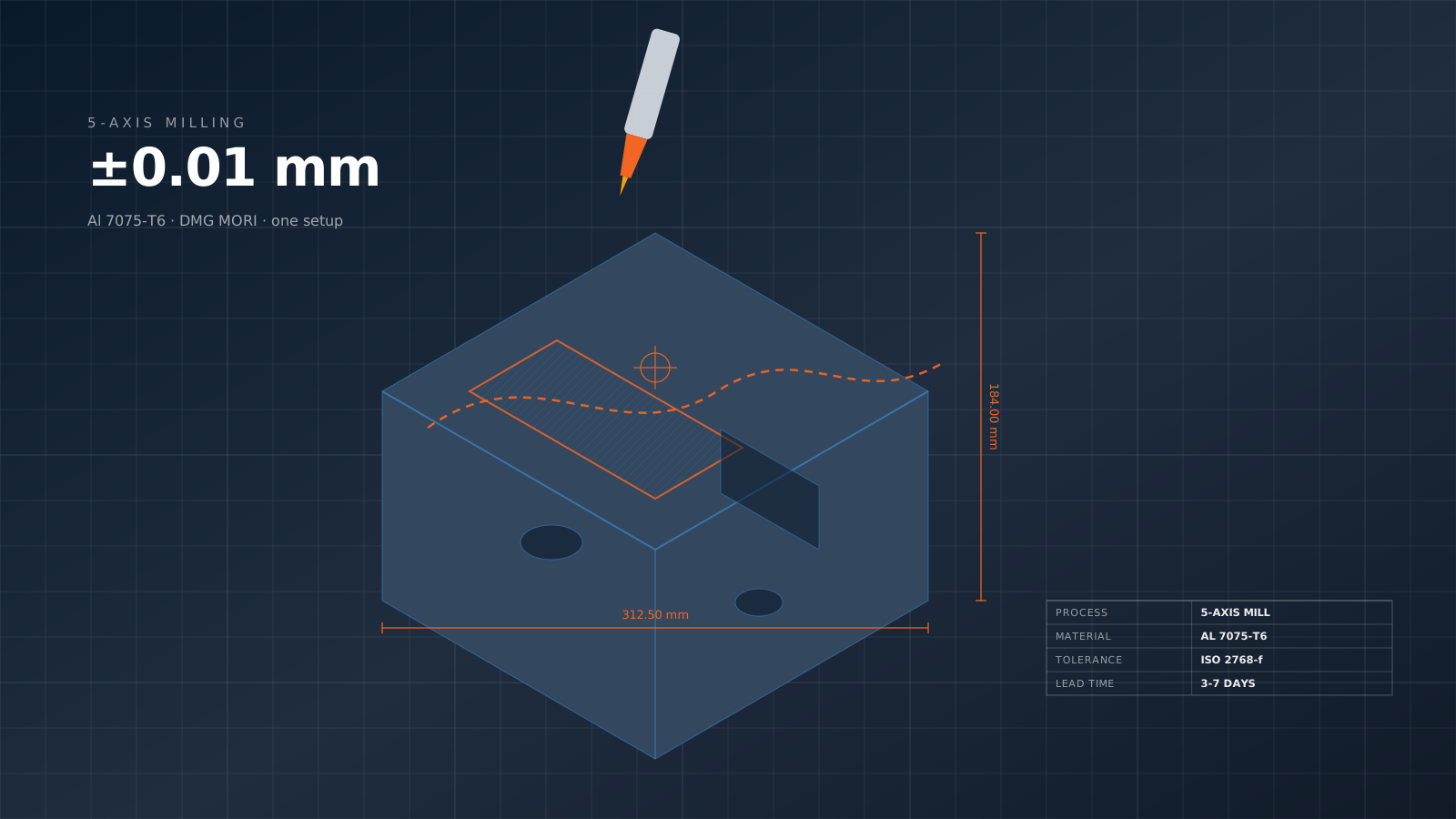
5-axis CNC milling drawing: Al 7075-T6 block with pockets, toolpath and dimensions

Send a CAD file. Get an engineering-reviewed quote.

No minimum quantity, free DFM feedback from a senior manufacturing engineer, and an NDA signed before file review on request.