
ISO 9001:2015ITAR RegisteredRoHS · REACHLead time from 3 business daysMOQ = 1 part
PifyC
Services
Materials
Industries
Applications
Resources
Locations
Company
Request a quote
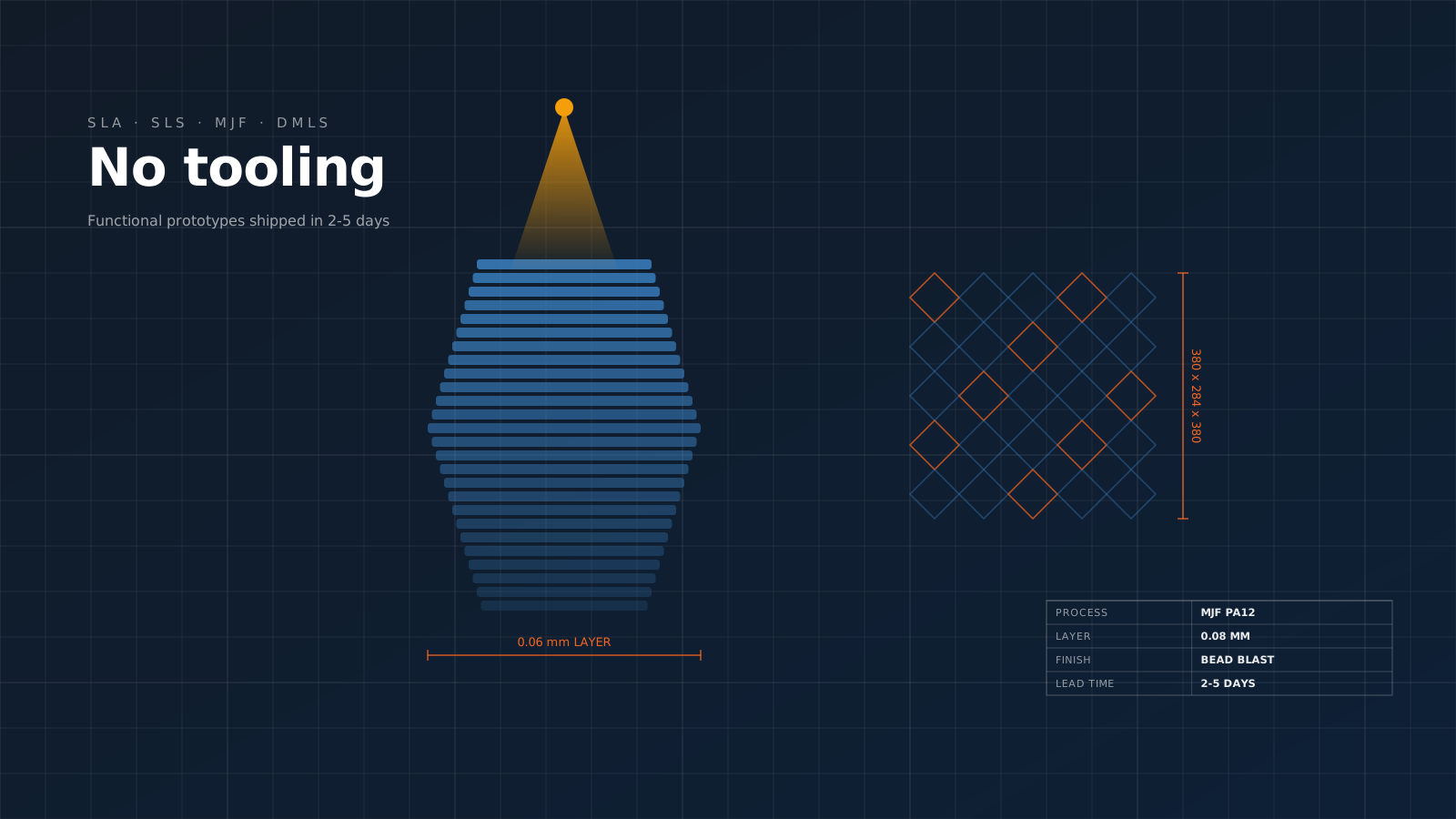
Additive manufacturing drawing: MJF layer stack, laser beam and lattice structure
FDM vs SLA

Plastic vs resin. Engineer vs precise. Different strengths.

FDM extrudes molten thermoplastic — durable engineering plastics, large parts, functional prototypes. SLA cures photopolymer resin — fine detail, smooth surface, visual quality. They solve different problems.

Process comparisonsWuxi, ChinaMOQ 1 partDFM review included

Side-by-side summary.

FDM (Fused Deposition)

Molten thermoplastic extruded layer by layer. ABS, PC, nylon, Ultem, PEEK. Durable functional parts. Large build volumes (914×610×914 mm industrial). Visible layer lines.

SLA (Stereolithography)

UV laser cures photopolymer resin. Fine detail (0.1 mm features), smooth surface (Ra 2-5 µm). Limited to photopolymers — brittle, UV-sensitive. Typical build size <500 mm.

Feature-by-feature breakdown.

AttributeFDMSLA
MaterialsEngineering thermoplasticsPhotopolymer resins
Typical tolerance±0.2-0.5 mm±0.05-0.1 mm
Surface finish (Ra)15-30 µm (layer lines)2-5 µm
Minimum feature size1.2 mm walls, 2 mm holes0.1 mm features, 0.5 mm holes
Max build size914×610×914 mm (industrial)500×500×500 mm (largest)
Max part durabilityProduction-grade (Ultem, PEEK)Prototype only (brittle)
UV stabilityGood for mostYellows and degrades
Temperature serviceUp to 260°C (PEEK)80-120°C typical
Speed per cm³ModerateSlow (laser traces)
Typical cost per part$30-500$30-500
Lead time3-7 days2-4 days
Best useFunctional testing, production partsVisual prototypes, master patterns

When to choose each.

Choose FDM (Fused Deposition) when:

Choose SLA (Stereolithography) when:

Get an instant quote

Send your CAD — we reply with detailed pricing, lead time, and DFM feedback within 4 working hours.

Talk to an engineer

WhatsApp our team directly. Most messages answered within 12 minutes during work hours.

Explore all services

CNC, 3D printing, injection molding, sheet metal, casting, finishing — one quality system, one partner.

Working on a live project? Send the STEP file and the two or three features you are unsure about — an engineer replies with DFM notes and a price, usually within four working hours.
FAQ

Plastic vs resin — questions

Is FDM production-capable?

Industrial FDM with engineering materials: yes. Ultem 9085 FDM parts are FAA-certified for aircraft interior production (not just prototypes). Ultem 1010 meets USP Class VI for medical. PEEK FDM for aerospace structural applications. Desktop FDM (hobbyist machines): no — not production quality. For FDM production: industrial machines only (Stratasys Fortus, BigRep, Markforged).

Why are SLA parts fragile?

Standard SLA photopolymer resins are thermoset — cured permanently into rigid brittle structure. Unlike thermoplastics (ABS, PC), SLA resins don't yield gracefully — they fracture. Tough SLA resins exist (Formlabs Tough, Siraya Tenacious, etc.) with some improvement, but still inferior to thermoplastic toughness. For handling, drop-testing, impact loading: use FDM (ABS or PC) or SLS/MJF nylon.

Surface finish difference significant?

Very. FDM layer lines are visible from 1 meter away — clearly "3D printed" appearance. Ra 15-30 µm typical. Post-processing: vapor smoothing (ABS with acetone) improves significantly. SLA layer lines virtually invisible, surface looks injection-molded. Ra 2-5 µm native, can polish to optical clarity. For cosmetic prototypes: SLA wins. For functional prototypes: FDM layer lines acceptable.

Large parts FDM advantage?

Industrial FDM: up to 914×610×914 mm in single build. Some large-format FDM goes to 2 meters. SLA: typically 500×500×500 mm maximum (largest commercial machines). For parts larger than SLA envelope: FDM or segmented build (print sections, bond). FDM is the primary large-part 3D printing process.

UV degradation in SLA?

Most SLA resins yellow and become brittle with UV exposure. Indoor storage: 1-3 year useful life. Outdoor exposure: days to weeks. For UV-stable SLA, specialty resins available but limited range. For long-service parts requiring UV stability: FDM (ABS, PC, ASA — latter specifically UV-stable), SLS/MJF (nylon UV-stable with additives), or conventional manufacturing. Don't use SLA for long-term outdoor applications.

Cost comparison realistic?

Similar cost per volume for typical parts. Small FDM ABS part: $30-80. Same part in SLA: $30-100. Medium FDM: $100-300. SLA: $100-400. Large FDM: $300-1500. Large SLA: $500-3000 (where possible). Material cost drives difference — Ultem FDM is expensive ($200-500/kg), premium SLA resins $100-300/kg. For prototype validation, both cost similar total. Choose based on properties needed, not cost.

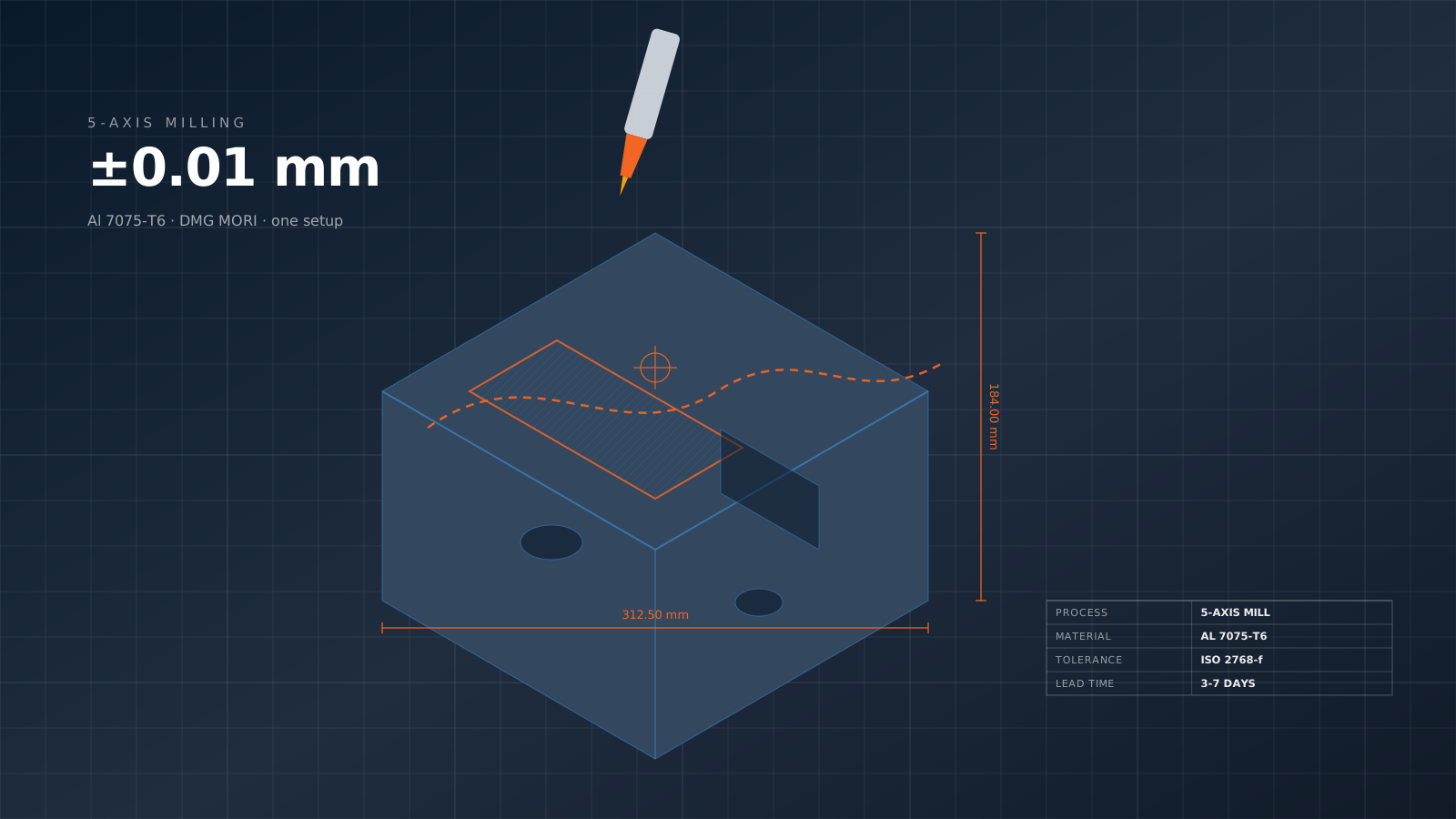
5-axis CNC milling drawing: Al 7075-T6 block with pockets, toolpath and dimensions

Send a CAD file. Get an engineering-reviewed quote.

No minimum quantity, free DFM feedback from a senior manufacturing engineer, and an NDA signed before file review on request.