
ISO 9001:2015ITAR RegisteredRoHS · REACHLead time from 3 business daysMOQ = 1 part
PifyC
Services
Materials
Industries
Applications
Resources
Locations
Company
Request a quote
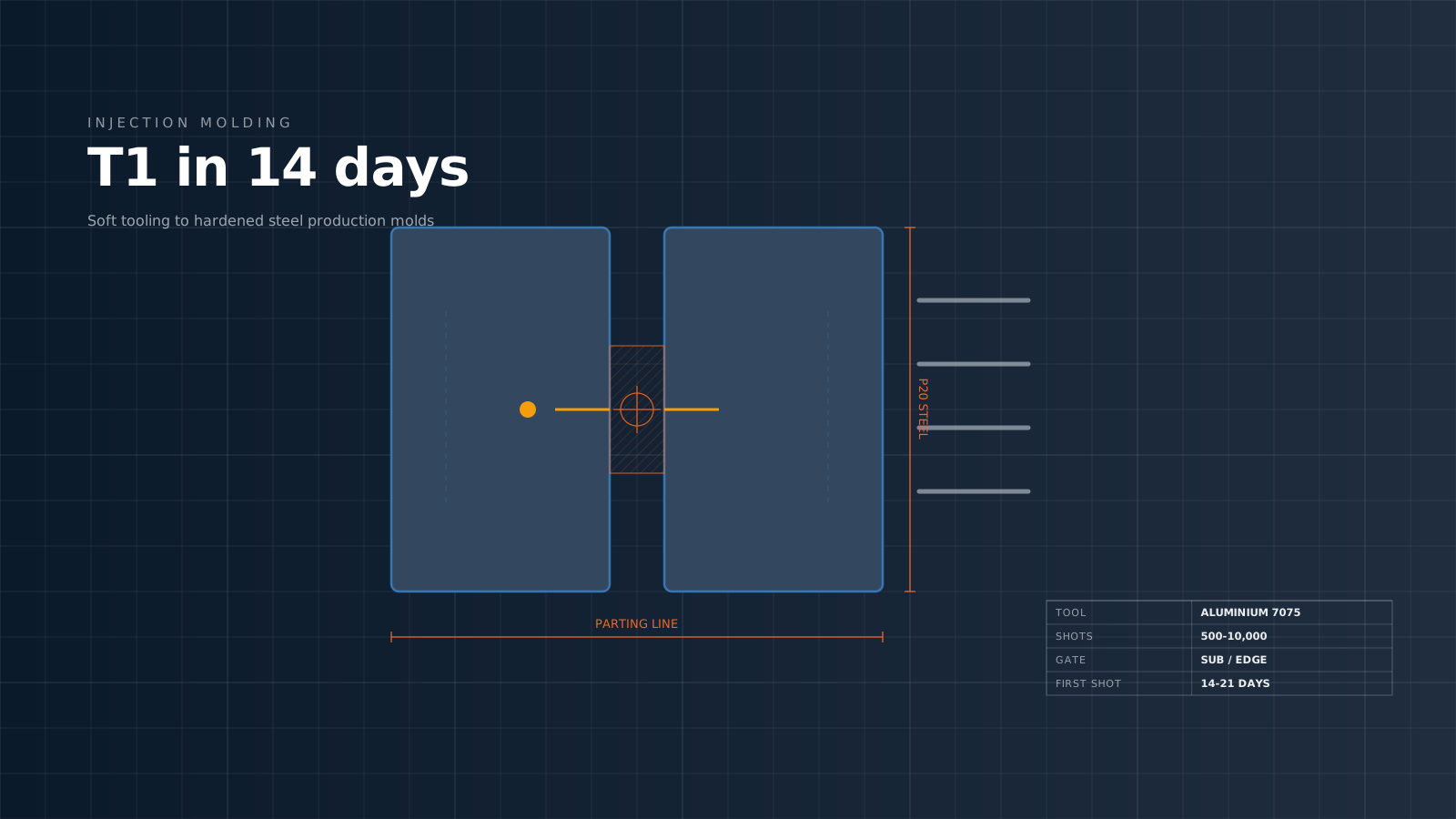
Injection mould drawing: two tool halves, cavity, gate and ejector pins
Die Cast vs Investment Cast

Aluminum, zinc. Steel, nickel. Different metals.

Die casting is high-volume production for aluminum and zinc. Investment casting handles steel, stainless, superalloys with geometry flexibility. Different metals, different volumes, different applications.

Process comparisonsWuxi, ChinaMOQ 1 partDFM review included

Side-by-side summary.

Die Casting

Molten metal injected into reusable steel mold at high pressure. Aluminum, zinc, magnesium. Production volumes 10,000+. Very high production rate. Low per-part cost.

Investment Casting

Lost-wax process. Fresh ceramic mold each part. Works with steel, stainless, superalloys, bronze, aluminum. Volumes 100-100,000. Moderate per-part cost. Complex geometry.

Feature-by-feature breakdown.

AttributeDie castingInvestment casting
MetalsAl, Zn, Mg (not steel)Steel, stainless, Ni alloys, Al
Production volume10,000+ economical100-100,000
Surface finish (Ra)1.6-3.2 µm1.6-3.2 µm
Dimensional tolerance±0.2% typical±0.3-0.5%
Minimum wall thickness0.5-1.0 mm1-3 mm
Geometry complexityComplex (limited undercuts)Very complex
Tooling cost$20,000-100,000$3,000-30,000
Cycle time30-90 secondsHours to days
Tool life500,000-2M partsPattern only (wax)
Cost per part (high vol)Very lowModerate
Lead time for tooling8-16 weeks3-6 weeks
Typical applicationsAuto, consumer elec, motor housingsTurbine blades, aerospace, gun parts

When to choose each.

Choose Die Casting when:

Choose Investment Casting when:

Get an instant quote

Send your CAD — we reply with detailed pricing, lead time, and DFM feedback within 4 working hours.

Talk to an engineer

WhatsApp our team directly. Most messages answered within 12 minutes during work hours.

Explore all services

CNC, 3D printing, injection molding, sheet metal, casting, finishing — one quality system, one partner.

Working on a live project? Send the STEP file and the two or three features you are unsure about — an engineer replies with DFM notes and a price, usually within four working hours.
FAQ

Aluminum, zinc — questions

Why can't die casting handle steel?

Die casting operates at 600-700°C for aluminum. Steel melts at 1400-1500°C. At steel temperatures, standard die casting dies (made of tool steel) soften and erode rapidly. Tooling life would be days rather than years. Specialty materials (molybdenum tooling, ceramic tooling) can die-cast steel but are commercial rarities. For production steel castings: investment casting is the established process.

Die casting vs permanent mold?

Permanent mold: metal poured by gravity into reusable steel mold. Lower pressure than die casting, slower cycle, simpler equipment. Used for aluminum parts that are too large or too heavy-section for die casting, or low-medium volume (5,000-50,000). Die casting: high-pressure injection, faster cycle, more detail. Both for aluminum/zinc. For very high volume with high detail: die casting. For mid-volume aluminum: permanent mold often more economical.

Tooling lead time realistic?

Die casting tool: 8-16 weeks from design to first article. Complex tools with slides: up to 20 weeks. Investment casting: pattern tool 4-6 weeks (metal die to make wax patterns). First parts 2-3 weeks after pattern tool complete. Die casting's longer lead time reflects hardened steel tooling with complex cooling channels. For rapid start-up programs, investment casting often preferred despite higher per-part cost.

Finish machining with each process?

Die castings: surface finish good as-cast, bearing bores and mating surfaces require CNC finish. Standard integration with CNC secondary operations. Investment castings: similar — good as-cast finish, precision features machined. Near-net-shape both processes — reduce machining time significantly vs starting from billet. Typical secondary CNC: 10-20% of part volume removed to achieve final tolerances.

Materials specific strengths?

Die casting: A380 aluminum (highest volume — automotive parts). A356 aluminum (stronger, more ductile). ZA-8 zinc (for pressure-tight parts). AZ91 magnesium (lightest metal castings). Investment casting: 17-4 PH stainless (high strength), 316L stainless (corrosion), Inconel 718/625 (aerospace), carbon steel 4140 (structural), CoCr (medical dental). Match material to application — process availability varies by material.

Cost break-even analysis?

Die casting: tooling $30K, per-part cost $0.50-5. Break-even vs CNC at ~5,000 parts. Very high volume (100K+ parts/year) amortizes tool cost to negligible per-part. Investment casting: tooling $8K, per-part cost $5-50. Break-even vs CNC at ~200-500 parts. For 1,000 parts: investment casting often competitive with CNC. Volumes determine process selection.

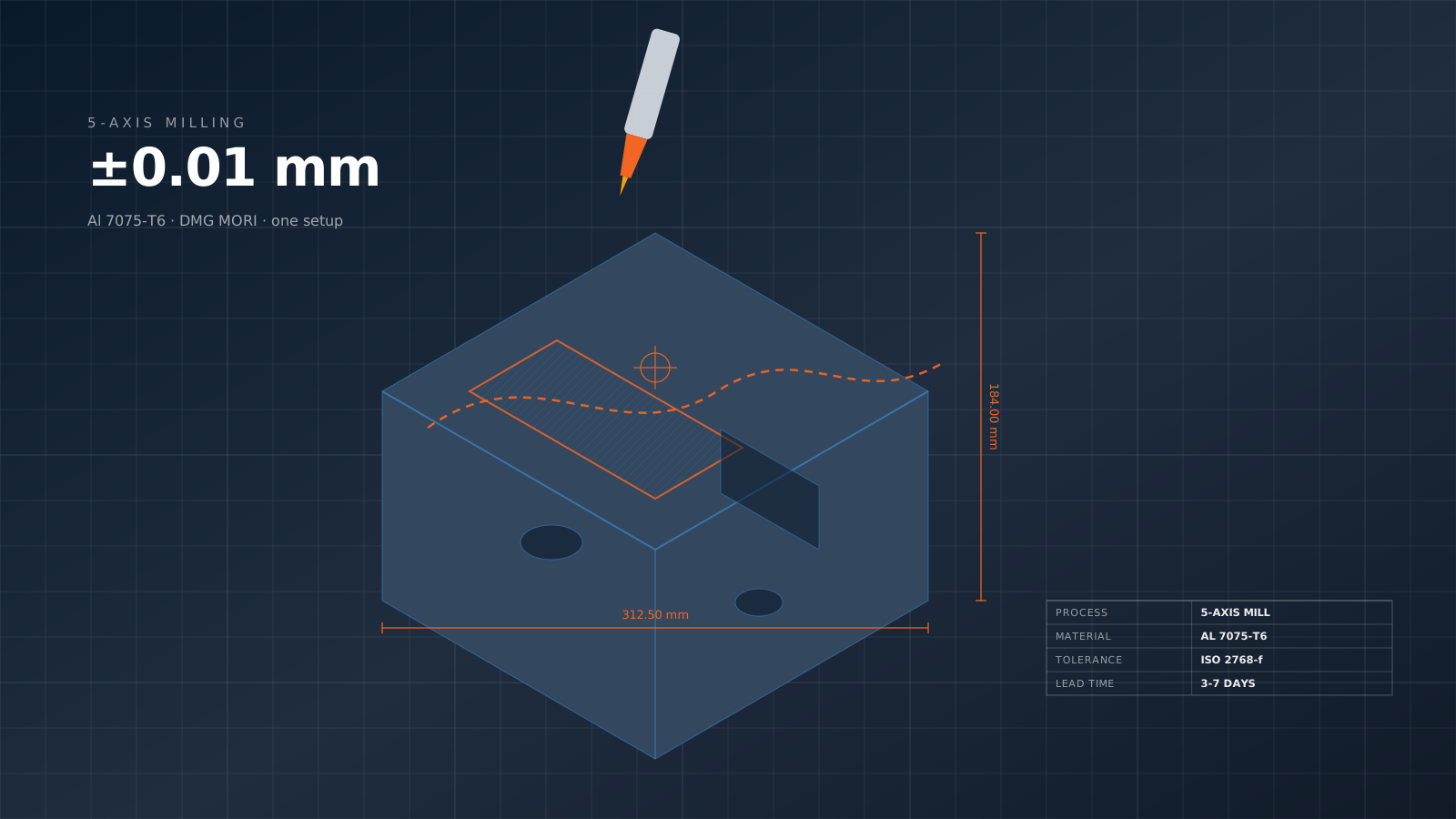
5-axis CNC milling drawing: Al 7075-T6 block with pockets, toolpath and dimensions

Send a CAD file. Get an engineering-reviewed quote.

No minimum quantity, free DFM feedback from a senior manufacturing engineer, and an NDA signed before file review on request.