Key principles.
Affects everything
Build orientation determines surface finish, mechanical properties, support needs. Plan deliberately.
Metal yes, polymer no
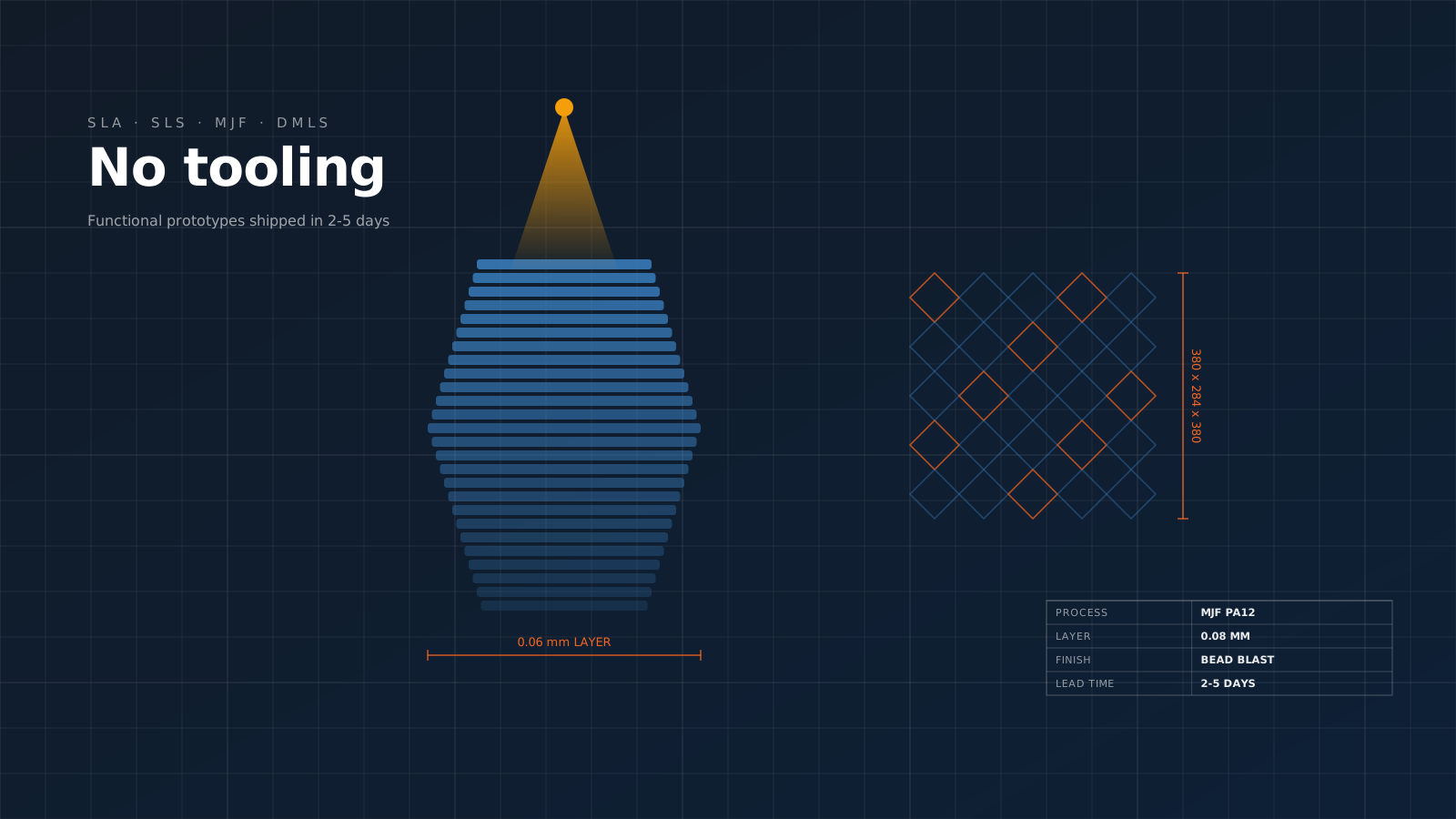
SLS/MJF: powder supports part, no supports needed. DMLS: requires support structures for overhangs.
Hollow parts
Powder must escape from hollow parts. Drain holes (3-5 mm minimum) required.
0.5-1 mm
Minimum walls: SLS 0.8 mm, MJF 0.5 mm, DMLS 0.5 mm. Practical considerations vary.
5:1 typical
Tall thin features 5:1 aspect typical. Above this risks distortion during build.
Bead blast, polish
Standard finish: rough as-built. Bead blast for matte, vapor smooth (some materials), or CNC for tight tolerance.
FAQ
Complex geometry impossible to machine. Topology-optimized lightweight parts. Lattice structures. Custom anatomical implants.
SLS/MJF: ±0.2 mm typical. DMLS: ±0.2 mm. Post-machining critical features achieves ±0.025 mm.
SLS/MJF: PA12 (most common), PA11, TPU, glass-filled. DMLS: titanium, Inconel, aluminum, stainless 316L.
For complex geometry: powder bed often cheaper. For simple geometry at volume: CNC cheaper.
Z-direction (between layers) typically 80-90% of X/Y direction strength. Orient parts considering load direction.
As-built Ra 5-15 µm typical. Smoother after bead blast (Ra 3-6 µm). Critical features: post-machining.
Get an instant quote
Send your CAD — we reply with detailed pricing, lead time, and DFM feedback within 4 working hours.
Talk to an engineer
WhatsApp our team directly. Most messages answered within 12 minutes during work hours.
Explore all services
CNC, 3D printing, injection molding, sheet metal, casting, finishing — one quality system, one partner.
Working on a live project? Send the STEP file and the two or three features you are unsure about — an engineer replies with DFM notes and a price, usually within four working hours.