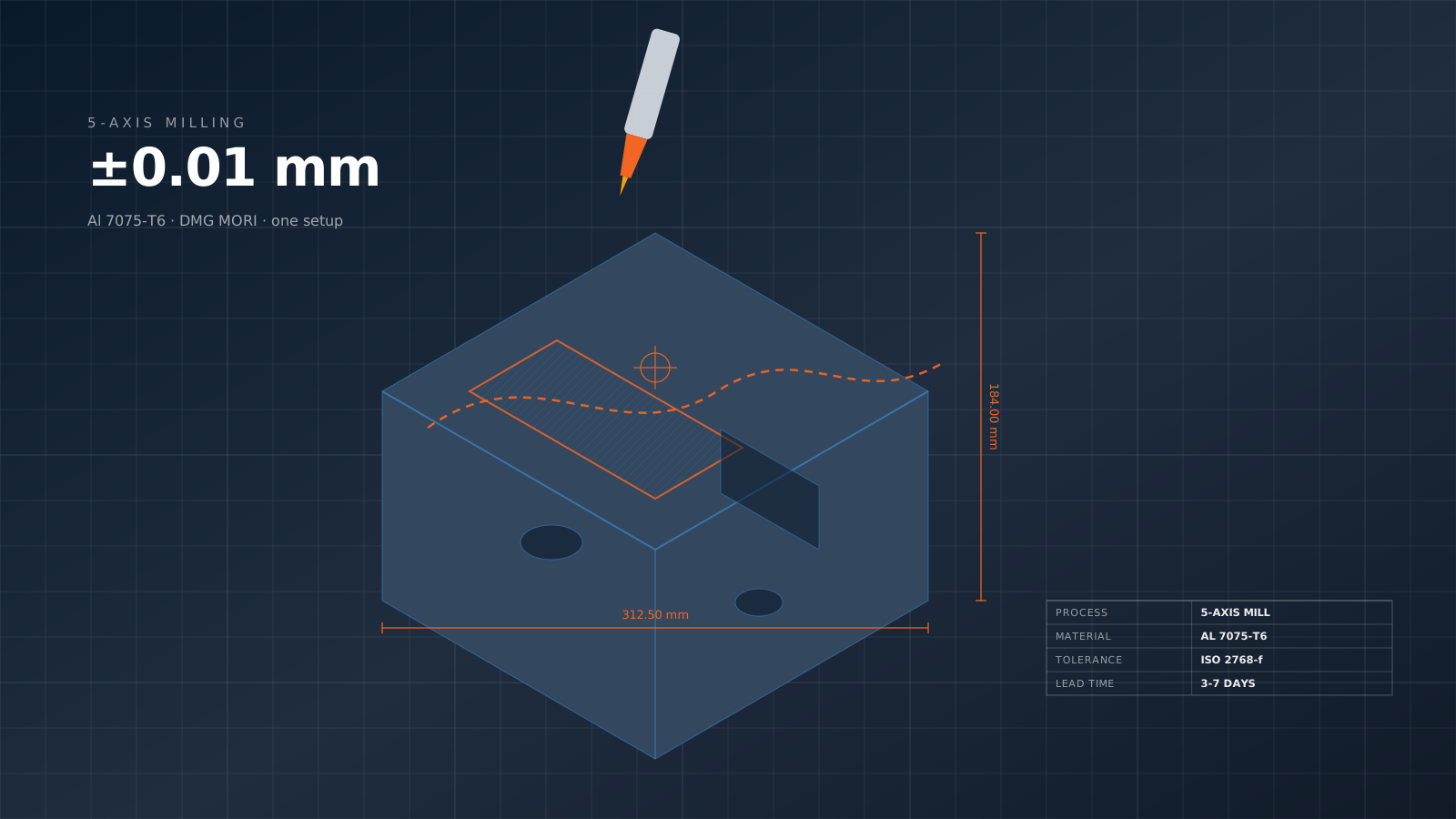
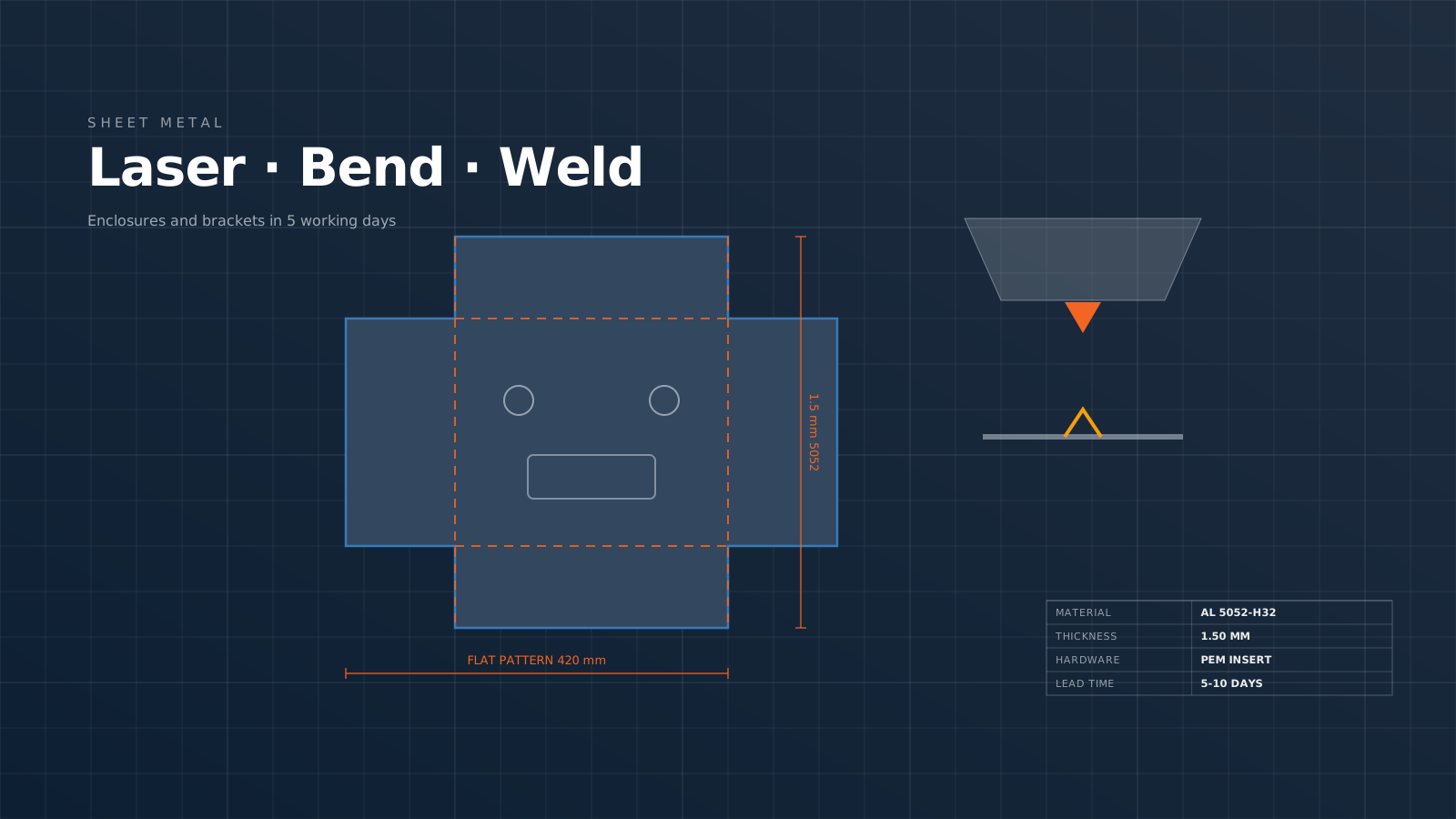
CNC vs sheet metal decision.
Tight tolerance, complex
±0.025 mm tolerance, complex 3D geometry, internal features, threaded holes — CNC territory.
Large area, low cost
Large flat surfaces, enclosures, brackets, low-cost high-volume — sheet metal wins.
Best of both
Sheet metal main structure + CNC inserts/features. Common for enclosures with precision mounting points.
100mm² area threshold
Below ~100mm² total: CNC competitive. Above: sheet metal usually cheaper for similar geometry.
Combining processes effectively.
Threaded inserts
Sheet metal panel with PEM inserts pressed in. Provides threaded mounting in thin sheet.
Machined precision feature
CNC bracket welded or fastened to sheet metal panel. Provides precision feature on cheap structure.
Mixed parts
CNC parts welded into sheet metal frame. Common for industrial equipment.
Adhesive-mounted
CNC features bonded to sheet metal with structural adhesive. No welding heat distortion.
Multiple panels
Sheet metal panels with CNC connecting brackets. Common for cabinets and enclosures.
Structure + cover
CNC frame structure with sheet metal cover panels. Common for vehicle bodies, equipment housings.
Make assembly easier.
Tolerance allocation: assign tight tolerance to CNC features, looser to sheet metal. Sheet metal ±0.5 mm, CNC ±0.05 mm typical.
Mating features: CNC creates precise mating surface, sheet metal provides bulk. Pin holes, threaded inserts, locating features all CNC.
Heat affected zone: welding sheet metal to CNC creates HAZ. Specify CNC features 5-10 mm from weld edge.
Handling: hybrid assemblies need handling fixtures — design protective features (chamfered edges, no sharp protrusions).
Hybrid cost benefits.
Hybrid saves cost
Common hybrid products
FAQ
Hybrid wins when part has both bulk geometry and precision features. Pure CNC for small precision parts (<100mm). Pure sheet metal for low-precision panels. Hybrid for medium-to-large parts with precision mounting needs.
Yes — common technique. Use TIG for precision. Account for heat affected zone (5-10 mm). Plan precise CNC features away from welds. Sheet metal can warp from welding heat — fixture during welding.
Standard solution. PEM inserts (self-clinching) provide threaded mounting in thin sheet. Various sizes (M3-M10), various sheet thicknesses. We install PEM hardware as standard.
Structural adhesives (3M, Loctite, Lord) bond CNC to sheet metal without heat distortion. Suitable for: lower stress, environmentally protected, dissimilar metals.
Typical: sheet metal portion 30-40% of cost, CNC portion 50-60%, assembly 10-20%. Optimize by minimizing CNC mass while keeping CNC for precision features.
CNC features ±0.025 mm. Sheet metal positions ±0.5 mm typical, ±0.2 mm with care. Hybrid: CNC tolerance preserved, sheet metal locations to ±0.3 mm.
Get an instant quote
Send your CAD — we reply with detailed pricing, lead time, and DFM feedback within 4 working hours.
Talk to an engineer
WhatsApp our team directly. Most messages answered within 12 minutes during work hours.
Explore all services
CNC, 3D printing, injection molding, sheet metal, casting, finishing — one quality system, one partner.
Working on a live project? Send the STEP file and the two or three features you are unsure about — an engineer replies with DFM notes and a price, usually within four working hours.