
ISO 9001:2015ITAR RegisteredRoHS · REACHLead time from 3 business daysMOQ = 1 part
PifyC
Services
Materials
Industries
Applications
Resources
Locations
Company
Request a quote
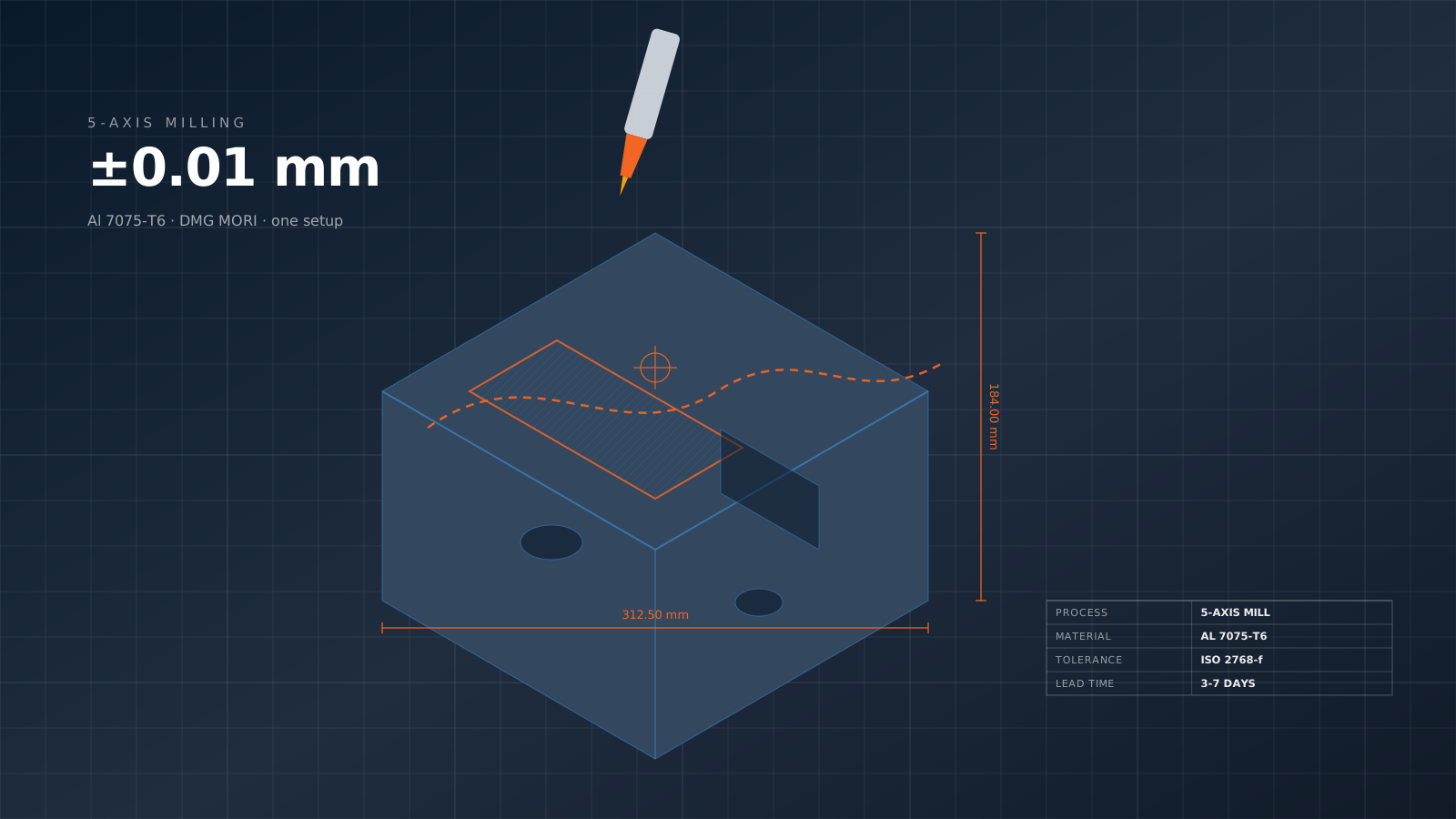
5-axis CNC milling drawing: Al 7075-T6 block with pockets, toolpath and dimensions
Copper vs Aluminum

Higher conductivity. Lower weight + cost. Pick your trade-off.

Copper conducts heat 2.4× better than aluminum. Aluminum weighs 1/3 as much and costs 1/3. For most heat sinks, aluminum is adequate. For high-performance or compact applications, copper earns its premium.

Process comparisonsWuxi, ChinaMOQ 1 partDFM review included

Side-by-side summary.

Copper (C101 / OFE)

391 W/m·K thermal conductivity. 8.96 g/cc density. Premium for high heat flux, compact heat sinks, thermal spreaders. More difficult to machine, much heavier than aluminum.

Aluminum 6063 / 6061

201 W/m·K (6063) thermal conductivity. 2.70 g/cc density. Standard for LED luminaires, general electronics, consumer heat sinks. Easy to machine, easy to extrude, cheap.

Feature-by-feature breakdown.

AttributeCopper C101Aluminum 6063
Thermal conductivity391 W/m·K201 W/m·K
Density8.96 g/cc2.70 g/cc
Specific thermal conductivity44 W·m²/kg74 W·m²/kg
Cost per kg raw$10-15$3-5
Cost per finished kg part~3× aluminumReference
MachinabilityModerate (gummy)Excellent
ExtrudabilityDifficult (hot extrude only)Excellent (cold)
CorrosionOxidizes (dull brown)Passive oxide (stable)
Electrical conductivity100% IACS (highest)62% IACS
Typical applicationsCPU cooling, high-powerLED, general, consumer
Fins minimum thickness0.5 mm0.8 mm
Emissivity (bare)0.03 (polished)0.1 (bare aluminum)

When to choose each.

Choose Copper (C101 / OFE) when:

Choose Aluminum 6063 / 6061 when:

Get an instant quote

Send your CAD — we reply with detailed pricing, lead time, and DFM feedback within 4 working hours.

Talk to an engineer

WhatsApp our team directly. Most messages answered within 12 minutes during work hours.

Explore all services

CNC, 3D printing, injection molding, sheet metal, casting, finishing — one quality system, one partner.

Working on a live project? Send the STEP file and the two or three features you are unsure about — an engineer replies with DFM notes and a price, usually within four working hours.

FAQ

Higher conductivity — questions

Is copper really worth 3× cost?

Depends on thermal need. Thermal conductivity difference: 2.4× (copper better). Price difference: 3× (copper more). For most applications, aluminum is adequate — use bigger aluminum heat sink at same effective thermal performance for lower cost. Copper wins when: (1) Space constrained (can't make heat sink bigger). (2) Heat flux so high that even larger aluminum can't keep up. (3) Thermal margin matters (safety factor). (4) Aesthetic appeal in premium product.

Hybrid copper-aluminum heat sinks?

Common compromise. Copper base plate (direct contact with heat source) + aluminum fins (convective cooling). Copper spreads heat efficiently to fins; aluminum fins provide cheap large surface area. Common in CPU coolers. Manufacturing: copper base CNC machined, fins extruded aluminum, soldered or epoxy bonded. Best thermal performance per dollar for many applications.

Weight constraints?

Aluminum is 1/3 copper weight. For aerospace, handheld devices, portable equipment: aluminum wins on weight. Copper heat sink for 100W CPU weighs 1-2 kg. Equivalent aluminum: 0.4-0.7 kg. For desktop applications, weight not critical — copper fine. For mobile devices, aluminum required and performance compromised accordingly (smaller heat sink, lower sustained power).

Extrusion considerations?

Aluminum: extrudes easily cold or warm. Complex fin profiles with thin walls. 80% of aluminum heat sinks are extruded profiles. Copper: extrudes only hot (high temperature, high pressure). Limited to simpler profiles, thicker walls. Much higher cost. Most copper heat sinks are CNC machined from plate, not extruded. This contributes to copper cost premium — no cheap extrusion process.

Thermal paste compatibility?

Both materials work with standard thermal interface materials (TIM). Thermal paste: silicone-based, thermal grease, thermal pads. Both interface well. Copper: slightly better wetting with thermal paste. For liquid-metal TIM (gallium-based): must not contact aluminum (corrodes aluminum). Copper compatible with all standard TIMs.

Oxidation and surface treatment?

Copper: oxidizes to dull brown over time. Oxide layer has lower thermal conductivity than bare copper. For long-term performance: nickel plating on copper (3-5 µm) maintains surface integrity. Aluminum: forms passive oxide immediately, stable long-term. For both: anodize aluminum or nickel plate copper for outdoor service. Black anodize adds ~3-5°C cooling via radiation enhancement.

5-axis CNC milling drawing: Al 7075-T6 block with pockets, toolpath and dimensions

Send a CAD file. Get an engineering-reviewed quote.

No minimum quantity, free DFM feedback from a senior manufacturing engineer, and an NDA signed before file review on request.