
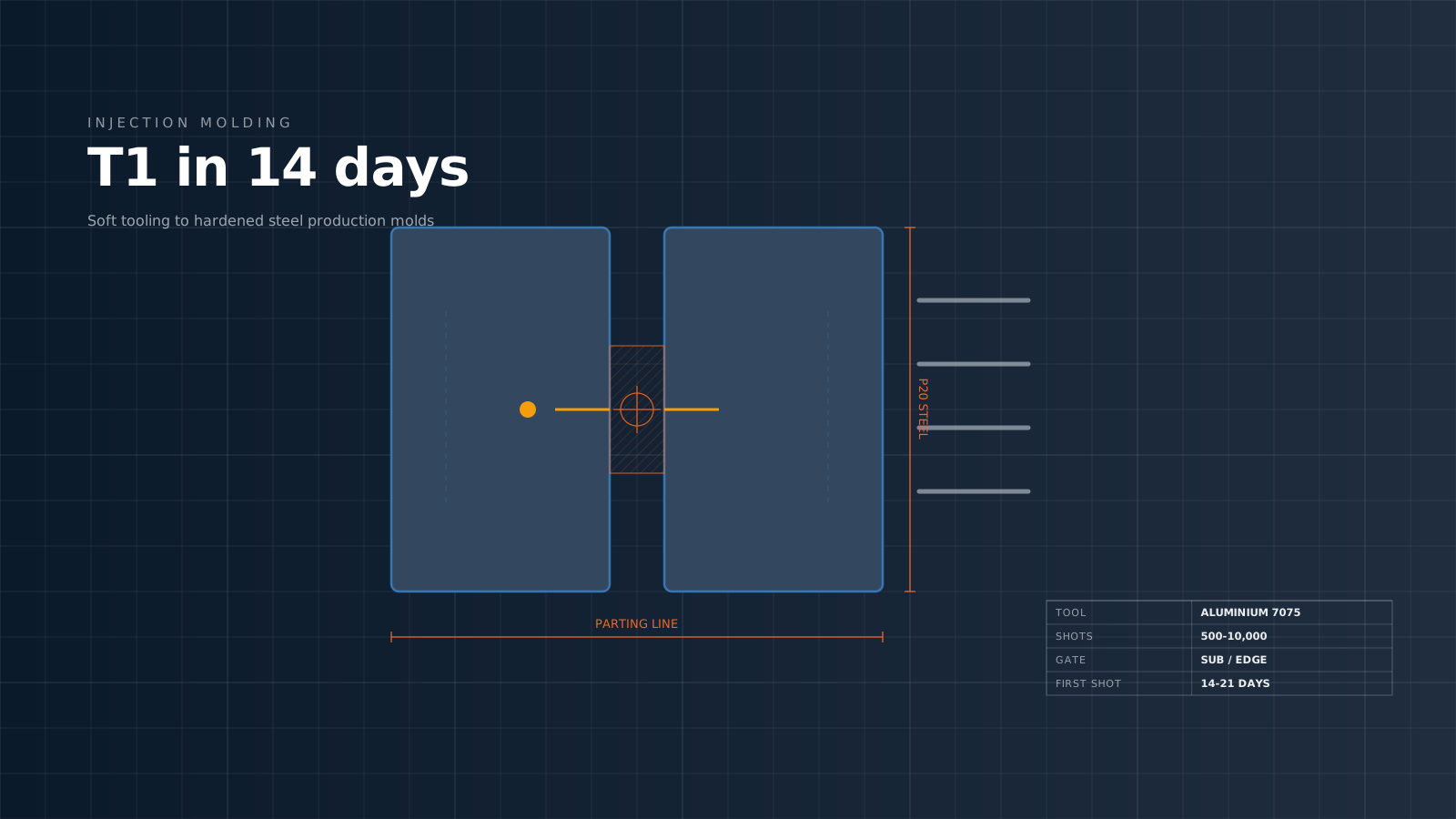
Thermosets. Silicones. Large structural.
Compression molding for thermoset materials not suitable for injection molding. Phenolic, epoxy, polyester thermosets. Silicone rubber (HTV). Composite SMC/BMC for structural applications. Larger part sizes possible, lower tooling cost than injection.

Compression molded parts
Compression molding handles materials injection molding cannot — particularly thermosets that cure rather than melt, and very large parts beyond injection press size.
Compression molding material families.
Phenolic
Phenol-formaldehyde molding for electrical insulators, automotive brake linings, ashtrays, and kitchen appliance handles.
Epoxy
Epoxy compression molded parts for aerospace, electrical insulation, high-temperature applications.
Polyester (unsaturated)
Low-cost thermoset for building components, bathroom fixtures, automotive body panels.
Silicone HTV
High-temperature vulcanized silicone for gaskets, seals, baby products, medical grade.
EPDM rubber
EPDM rubber for automotive weather strips, outdoor seals, roofing.
SMC
Pre-impregnated glass-reinforced polyester for automotive panels, electrical enclosures.
BMC
Bulk-form glass-polyester for complex geometry. Electrical, automotive, industrial.
Melamine
Decorative laminate molding for consumer products, tableware, industrial surfaces.
Compression molding handles materials injection molding cannot — particularly thermosets that cure rather than melt, and very large parts beyond injection press size.
Where compression molding wins.
Electrical insulators
Phenolic and polyester electrical insulators for transformers, switchgear
Automotive body panels
SMC body panels for specialty vehicles — lighter than steel, cheaper than carbon fiber
Silicone gaskets
Custom silicone gaskets too large for injection molding tooling
Appliance handles
Phenolic handles for cookware, laundry appliances — heat resistant
Brake linings
Asbestos-free brake friction materials molded from phenolic composite
Electrical switchgear
Arc chutes, insulator plates in switchgear — thermoset required
Bathroom fixtures
Vanity tops, shower pans in cultured marble (polyester composite)
Ammunition shells
Phenolic shotgun shells — combustible at specific temperature
Billiard balls
Phenolic billiard balls — dimensional stability and specific weight
Get an instant quote
Send your CAD — we reply with detailed pricing, lead time, and DFM feedback within 4 working hours.
Talk to an engineer
WhatsApp our team directly. Most messages answered within 12 minutes during work hours.
Explore all services
CNC, 3D printing, injection molding, sheet metal, casting, finishing — one quality system, one partner.
Thermosets — questions
Compression vs injection molding?
Injection molding: thermoplastic melts in barrel, injects into cold mold, cools and solidifies. Cycle 20-90 seconds. Compression molding: material placed in heated mold, pressed, cures via heat + time. Cycle 2-15 minutes. Injection is faster, lower cost for high volume, limited to thermoplastics. Compression handles thermosets, has lower tooling cost, allows larger parts, lower volume economics.
Why thermosets instead of thermoplastics?
Thermosets offer: higher heat resistance (phenolic: continuous 150°C; thermoplastics: 80-130°C typical). Better chemical resistance for some chemistries. Higher stiffness at elevated temperature. Better electrical insulation. Cannot be remelted (once cured, stays cured). For heat-critical, structural, or electrical applications where thermoplastics reach their limits, thermosets extend capability.
Tooling cost comparison?
Compression mold tooling: $5,000-20,000 for typical parts. Injection mold tooling: $15,000-80,000. Compression tooling simpler (no runners, no gates, less complex design). Lower tooling cost makes compression economical at lower volumes — below 1,000 pieces annually. For higher volume, injection molding amortizes faster.
Part size limits?
Compression molding handles larger parts than injection: up to 2m × 2m practical maximum. Injection molding limited by press size and clamp tonnage — typically < 1m in any dimension without massive machines. For large parts (automotive body panels, bathroom fixtures, industrial covers), compression molding enables sizes impossible for injection.
Production economics?
Compression molding sweet spot: 500-10,000 parts annually. Below 500: CNC or casting often cheaper. Above 10,000: injection molding typically better (faster cycle, lower per-part cost). For complex thermoset parts, compression remains optimal across all production volumes because thermosets cannot be injection molded.
Lead times?
Compression mold tooling: 6-10 weeks. First article production: 1-2 weeks after tool. Production delivery: 2-4 weeks per order. Compression molding cycle times are slower than injection — 2-15 minute cure times mean lower per-day output. Plan longer lead times for compression programs vs injection programs.
Keep reading
Quote
Get a free CNC machining, 3D printing, injection molding quote from PifyC. Send CAD via WhatsApp or email — q…
Read more →Moulding & castingRapid injection molding
Rapid injection molding service: 14-day aluminum tooling, 5,000-20,000 shot life, all standard thermoplastics. P…
Read more →MachiningCNC machine
ISO 9001 certified CNC machining in Wuxi, China. 3, 4 and 5-axis milling, Swiss turning, 40+ materials, ±0.01 mm…
Read more →Additive manufacturing3D printing service
Industrial-grade 3D printing from Wuxi, Jiangsu, China: SLA, SLS, MJF and DMLS metal. Functional prototypes and …
Read more →Moulding & castingInjection molding
Plastic injection molding from China: rapid aluminum tooling in 14 days for 500–10,000 parts, production P20/H13…
Read more →Sheet metal & fabricationSheet metal
Precision sheet metal fabrication from Wuxi: 4 kW fiber laser cutting, Amada press brake bending (±0.1 mm), TIG/…
Read more →Finishing & treatmentFinishing services
Complete in-house surface finishing: Type II/III anodize, powder coating, electroplating, passivation, bead blas…
Read more →PifyCMaterials
PifyC's 50+ production-grade materials: aluminum, stainless steel, titanium, brass, copper, and engineering p…
Read more →
Send a CAD file. Get an engineering-reviewed quote.
No minimum quantity, free DFM feedback from a senior manufacturing engineer, and an NDA signed before file review on request.