
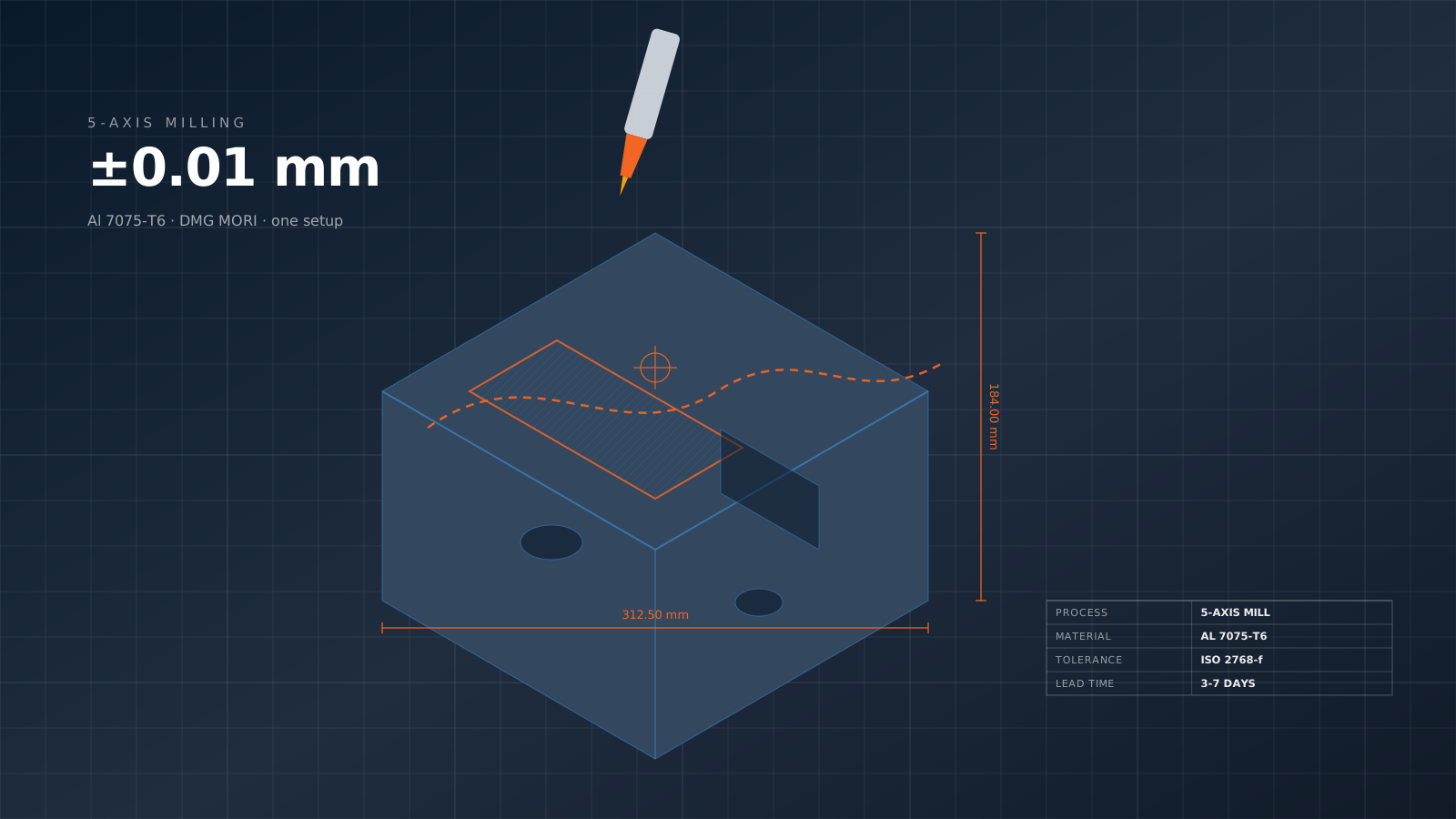
Precision for the small stuff. ±0.005 mm.
Swiss-type turning with sliding guide bushing — eliminating deflection on slender parts. The right process for medical bone screws, RF connector pins, watch arbors, and any precision turned part where conventional turning chatters.
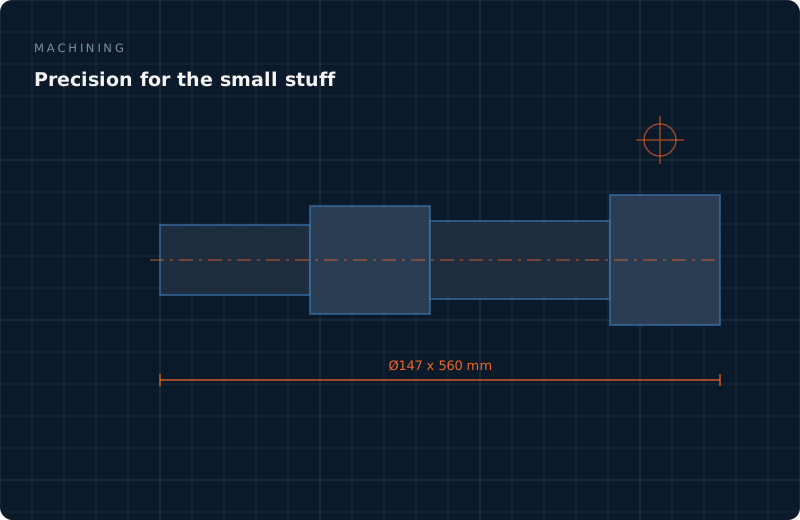
CNC Swiss machining
Conventional turning holds bar stock in a chuck — the part cantilevers from that grip. For slender parts, the cantilever deflects under cutting forces, causing chatter, taper, and tolerance loss. Swiss turning eliminates this: the bushing supports stock right at the cutting zone.
The guide bushing advantage.
No deflection
Bar stock supported at the cutting zone. Parts with 20:1 length-to-diameter ratios maintain straightness and tolerance.
Live tooling
Milling spindles for cross-drilling, flats, and tapping — complete parts in single setup without transfer.
Bar-fed automation
Feed new stock automatically from long bars. Run 8+ hours unattended for production volumes.
Sub-spindle pickup
Second spindle receives finished part for back-end operations, eliminating separate setup.
Tight tolerances
±0.005 mm diameter, 0.005 mm concentricity, Ra 0.4 µm single-pass surface finish.
Fast cycle times
Multi-axis simultaneous cutting reduces cycle time 40–60% vs conventional turning for complex parts.
Conventional turning holds bar stock in a chuck — the part cantilevers from that grip. For slender parts, the cantilever deflects under cutting forces, causing chatter, taper, and tolerance loss. Swiss turning eliminates this: the bushing supports stock right at the cutting zone.
Where Swiss CNC wins.
Medical bone screws
Titanium bone screws, pedicle screws, cannulated screws. Tight thread tolerance, polished shaft, full traceability.
Dental implants
Dental implant screws, abutments, healing caps. Thread profile tolerance critical for osseointegration.
RF connector pins
SMA, SMB, MMCX connector center conductors. Gold-plated BeCu with sub-micron concentricity for RF performance.
Electrical contact pins
Automotive connector pins, industrial terminal pins, spring-loaded contacts. High-volume precision turning.
Watch components
Watch arbors, balance wheel staffs, winding stems, escape wheel pivots. Micron-precision horology parts.
Micro-fluidic fittings
HPLC fittings, microfluidic connectors, fluid handling ferrules. Burr-free flow paths for lab equipment.
Hydraulic spools
Servo valve spools, proportional valve components. Sub-micron concentricity for leak-free operation.
Aerospace hardware
Flight control pivot pins, hinge pins, fastener studs, bushings. Full AS9100 workflow with FAI.
Surgical instruments
Bone pins, forceps shafts, trocars, guide wires. Passivated and electropolished per medical standards.
Swiss vs standard turning.
| Criterion | Standard Turning | Swiss Turning |
|---|---|---|
| Part diameter | 5–300 mm | 0.5–32 mm |
| Part length | 20–500 mm | 5–250 mm (in single pass) |
| Length/diameter ratio | up to 3:1 without tailstock | up to 20:1 in guide bushing |
| Tolerance | ±0.025 mm typical | ±0.005 mm typical |
| Surface finish | Ra 1.6 µm single-pass | Ra 0.4 µm single-pass |
| Concentricity | 0.025 mm typical | 0.005 mm typical |
| Setup cost | Lower | Higher |
| Sweet spot volume | 100–10,000 parts | 1,000–500,000 parts |
| Best for | Large, short, simple turned parts | Small, long, complex precision parts |
Precision for the small stuff — questions
What is Swiss-type CNC and why is it different?
Swiss-type CNC turning supports the workpiece close to the cutting tool through a sliding guide bushing, eliminating deflection that plagues long slender parts in conventional lathes. The bar stock slides through the bushing as cutting progresses, maintaining rigidity even on parts 10+ diameters long. Essential for small precision turned parts where conventional turning would flex and chatter.
What size range does Swiss machining cover?
Bar diameter 0.5 mm to 32 mm typical. Part length to 250 mm in single pass (longer with intermediate operations). Swiss shines for parts under 20 mm diameter with features requiring ±0.005 mm — bone screws, RF connector pins, watch arbors, fluidic connectors, hypodermic needle components.
What tolerances can Swiss machining hold?
Diameter tolerance ±0.005 mm standard, ±0.002 mm on critical features with tight thermal control. Concentricity 0.005 mm achievable in single setup. Surface finish Ra 0.4 µm single-pass, Ra 0.1 µm with polishing tools. For gauge-quality parts, Swiss delivers closer to lapping/grinding quality without secondary operations.
What volumes does Swiss machining target?
Sweet spot: 1,000 to 500,000 parts per year. Below 500 parts, conventional CNC turning is often cheaper due to setup costs. Above 500K, dedicated screw machines or cam-operated automatics take over. Swiss fills the precision mid-volume gap better than any other process.
What materials does Swiss CNC handle?
Steels: 303, 304, 316L, 17-4 PH, 4140, D2, H13. Aluminum: 6061, 7075, 2024. Brass: C360 (fastest), C260. Copper: C145 tellurium (free-cutting). Titanium: Ti Gr.2, Gr.5, Gr.23. Precious metals: platinum, gold alloys for dental and jewelry. Plastics: PEEK, PTFE, Delrin, Ultem for medical.
Can Swiss machines do live tooling for milling features?
Yes — modern Swiss machines have live tooling spindles for cross-drilling, milling flats, slotting, and tapping cross-threads. Complete parts with turning + milling features in one setup, eliminating transfer to second machine. This is where Swiss truly excels: complex small parts finished complete without handling.
Keep reading
Quote
Get a free CNC machining, 3D printing, injection molding quote from PifyC. Send CAD via WhatsApp or email — q…
Read more →MachiningCNC turning
Precision CNC turning in Wuxi: 10 conventional lathes and 4 Citizen Swiss-type lathes. Diameters 2–450 mm, lengt…
Read more →MachiningCNC machine
ISO 9001 certified CNC machining in Wuxi, China. 3, 4 and 5-axis milling, Swiss turning, 40+ materials, ±0.01 mm…
Read more →MachiningTapping services
CNC tapping services for internal threads in any material. Standard tapping for production volumes, thread milli…
Read more →MachiningReaming services
CNC reaming services for precision hole diameters. H7 tolerance bores, ±0.005 mm diameter, Ra 0.4 µm surface fin…
Read more →MachiningThread rolling
Thread rolling: cold-formed threads with superior strength, surface finish, and fatigue life. Standard for produ…
Read more →MachiningSwiss screw machining
Swiss-type CNC screw machining: small-diameter precision parts (< 32 mm), tolerances to ±0.005 mm, long length-t…
Read more →MachiningHoning and lapping
Honing and lapping services: bore honing for hydraulic cylinders, flat lapping for precision surfaces. Sub-micro…
Read more →Send a CAD file. Get an engineering-reviewed quote.
No minimum quantity, free DFM feedback from a senior manufacturing engineer, and an NDA signed before file review on request.