
ISO 9001:2015ITAR RegisteredRoHS · REACHLead time from 3 business daysMOQ = 1 part
PifyC
Services
Materials
Industries
Applications
Resources
Locations
Company
Request a quote
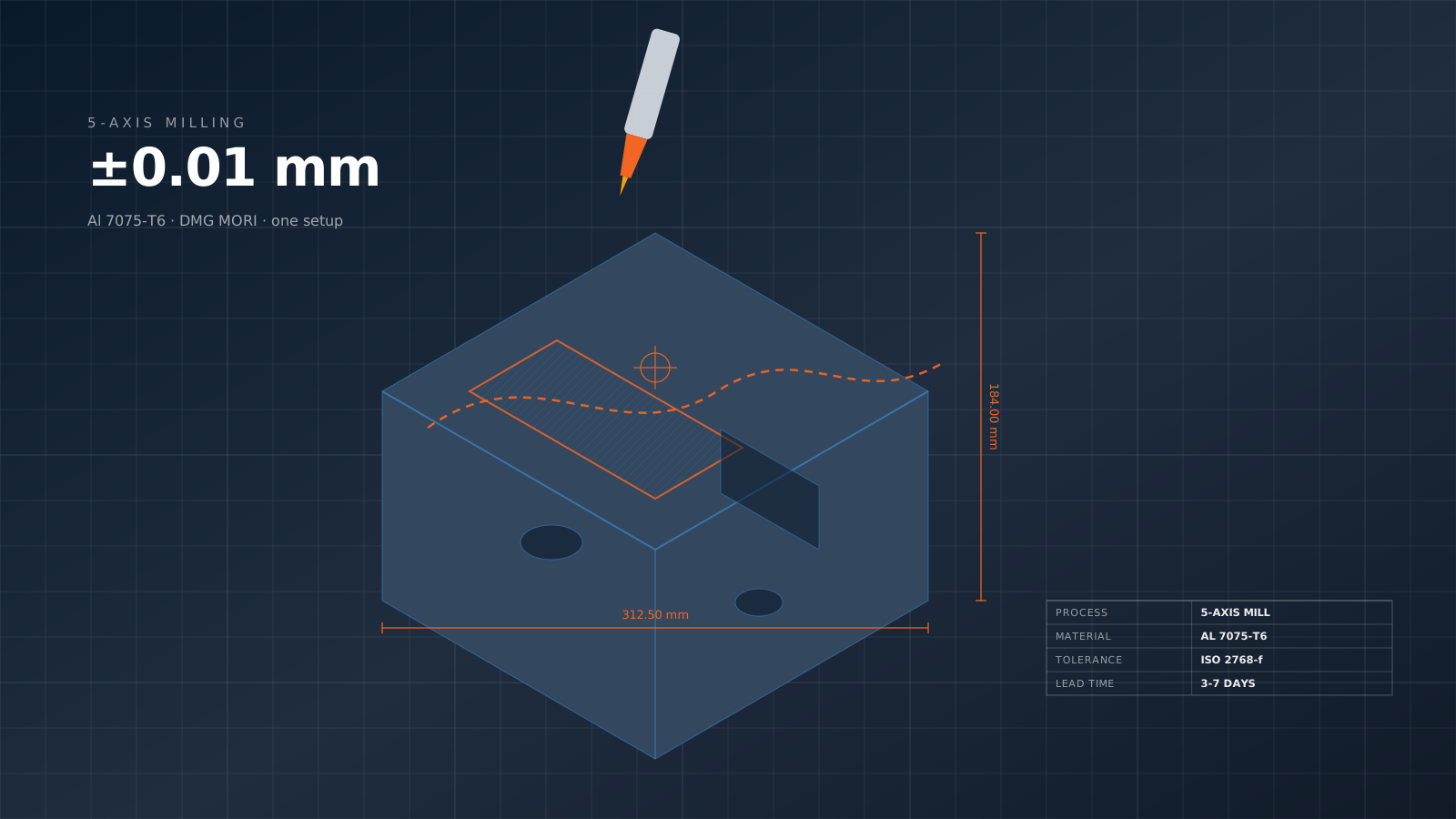
5-axis CNC milling drawing: Al 7075-T6 block with pockets, toolpath and dimensions
Brass vs Bronze

Copper + zinc. Copper + tin. Different properties.

Brass is copper-zinc alloy. Bronze is primarily copper-tin alloy. Despite both being copper-based and gold-appearing, they have distinctly different mechanical, corrosion, and application characteristics.

Process comparisonsWuxi, ChinaMOQ 1 partDFM review included

Side-by-side summary.

Brass (Copper-Zinc)

Copper + 5-40% zinc. Yellow-gold color. Excellent machinability (C360 is the standard free-cutting brass). Widely used for fittings, valves, decorative. Cheaper than bronze.

Bronze (Copper-Tin)

Copper + 5-20% tin, sometimes with aluminum, nickel, silicon. Reddish-gold color. Better saltwater corrosion resistance. Standard for bearings, marine, ship propellers.

Feature-by-feature breakdown.

AttributeBrass (C360 free-cut)Bronze (C932 bearing)
CompositionCu-35Zn-3PbCu-7Sn-3Zn-7Pb
Density (g/cc)8.498.93
Tensile strength (MPa)338241
Yield strength (MPa)207124
Machinability rating100 (best of brass)90
Saltwater corrosionPoor (dezincification)Excellent
Ambient appearanceYellow-goldReddish-gold
Friction/wearAverageExcellent (self-lubricating)
Cost per kg$6-10$12-25
Electrical conductivity28% IACS12% IACS
Typical applicationsFittings, valves, decorativeBearings, marine, propellers

When to choose each.

Choose Brass (Copper-Zinc) when:

Choose Bronze (Copper-Tin) when:

Get an instant quote

Send your CAD — we reply with detailed pricing, lead time, and DFM feedback within 4 working hours.

Talk to an engineer

WhatsApp our team directly. Most messages answered within 12 minutes during work hours.

Explore all services

CNC, 3D printing, injection molding, sheet metal, casting, finishing — one quality system, one partner.

Working on a live project? Send the STEP file and the two or three features you are unsure about — an engineer replies with DFM notes and a price, usually within four working hours.

FAQ

Copper + zinc — questions

Why does brass corrode in saltwater?

Brass contains zinc which selectively dissolves in saltwater — called dezincification. Zinc leaches out leaving weakened spongy copper structure. Over time, brass parts weaken and fail. Bronze (no zinc, or small amount with tin protection) doesn't suffer dezincification. For any saltwater or chloride environment, specify bronze. For naval brass (C464 with tin added), some dezincification resistance but still inferior to bronze.

Naval brass — is it brass or bronze?

Naval brass (C464) is technically brass (zinc > tin in composition) but with 0.5-1.5% tin added for improved saltwater resistance. Middle ground: better than regular brass in saltwater, inferior to true bronze. Used in: above-waterline marine fittings, where cost matters but some saltwater exposure expected. Below-waterline or immersed: specify true bronze.

Bronze for bearings — why?

Bronze has excellent properties for plain bearings: (1) Lower friction against steel than brass. (2) Better wear resistance under load. (3) Tin content provides solid-lubricant effect. (4) Retains strength at elevated temperature. Leaded bearing bronze (C932, C954): lead content (5-15%) acts as additional solid lubricant. For bushings, gears, worm gear wheels running against steel, bearing bronze is standard.

Decorative brass vs bronze?

Brass: bright yellow-gold, polishes to mirror finish, tarnishes over time. Bronze: reddish-gold with warmer tone, develops patina over time (often desirable for sculpture). For jewelry and bright decorative: brass. For sculpture and architectural: bronze. For aged/weathered appearance: bronze. Both can be lacquered to prevent tarnishing.

Free-cutting brass C360 — why so machinable?

C360 brass contains 3% lead which acts as chip breaker during machining. Lead particles act as cutting fluid, produce clean short chips, enable fast cutting speeds. Machinability rating 100 (best reference) means: cuts 2-3× faster than steel, finer finish, longer tool life. Issue: lead is regulated (RoHS, environmental concerns). Alternatives: C370 (similar with less lead), bismuth brass (lead-free), silicon brass.

Which is cheaper?

Brass generally cheaper due to zinc (cheap) vs tin (expensive). Free-cut brass C360: $6-10/kg. Bearing bronze C932: $12-25/kg. Aluminum bronze C954: $15-30/kg. Phosphor bronze: $15-25/kg. For cost-driven non-corrosion applications: brass. For marine or bearing applications: bronze worth premium. For decorative: either, specify based on appearance.

5-axis CNC milling drawing: Al 7075-T6 block with pockets, toolpath and dimensions

Send a CAD file. Get an engineering-reviewed quote.

No minimum quantity, free DFM feedback from a senior manufacturing engineer, and an NDA signed before file review on request.