Question 1 — Can it be machined at all?
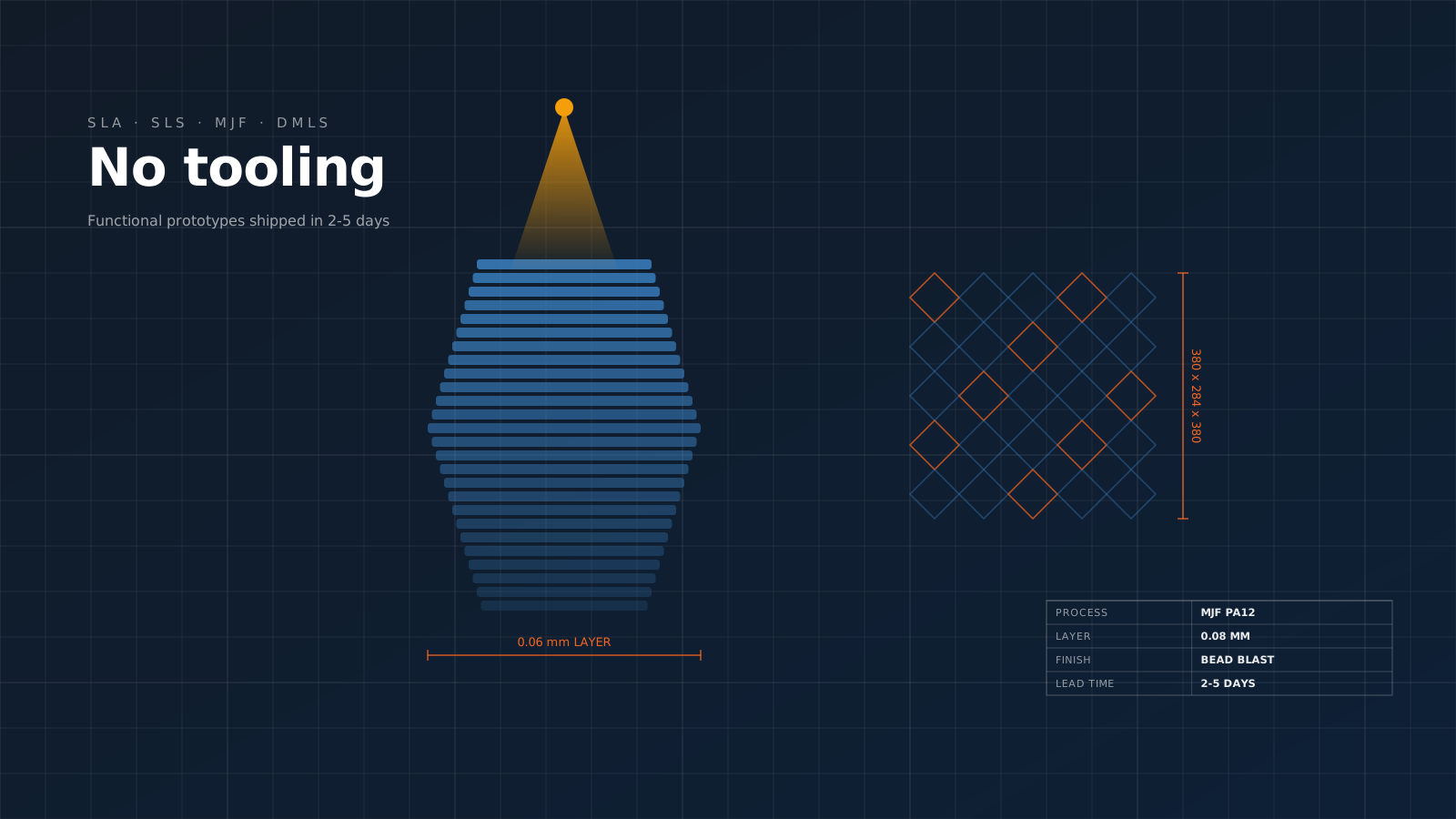
Internal lattices, conformal cooling channels, organic generative-design shapes, anatomical implants — these are 3D-only territory. CNC requires tool access, so anything with hidden internal geometry is impossible to machine. If your part has features a 4 mm tool can not reach, the answer is 3D.
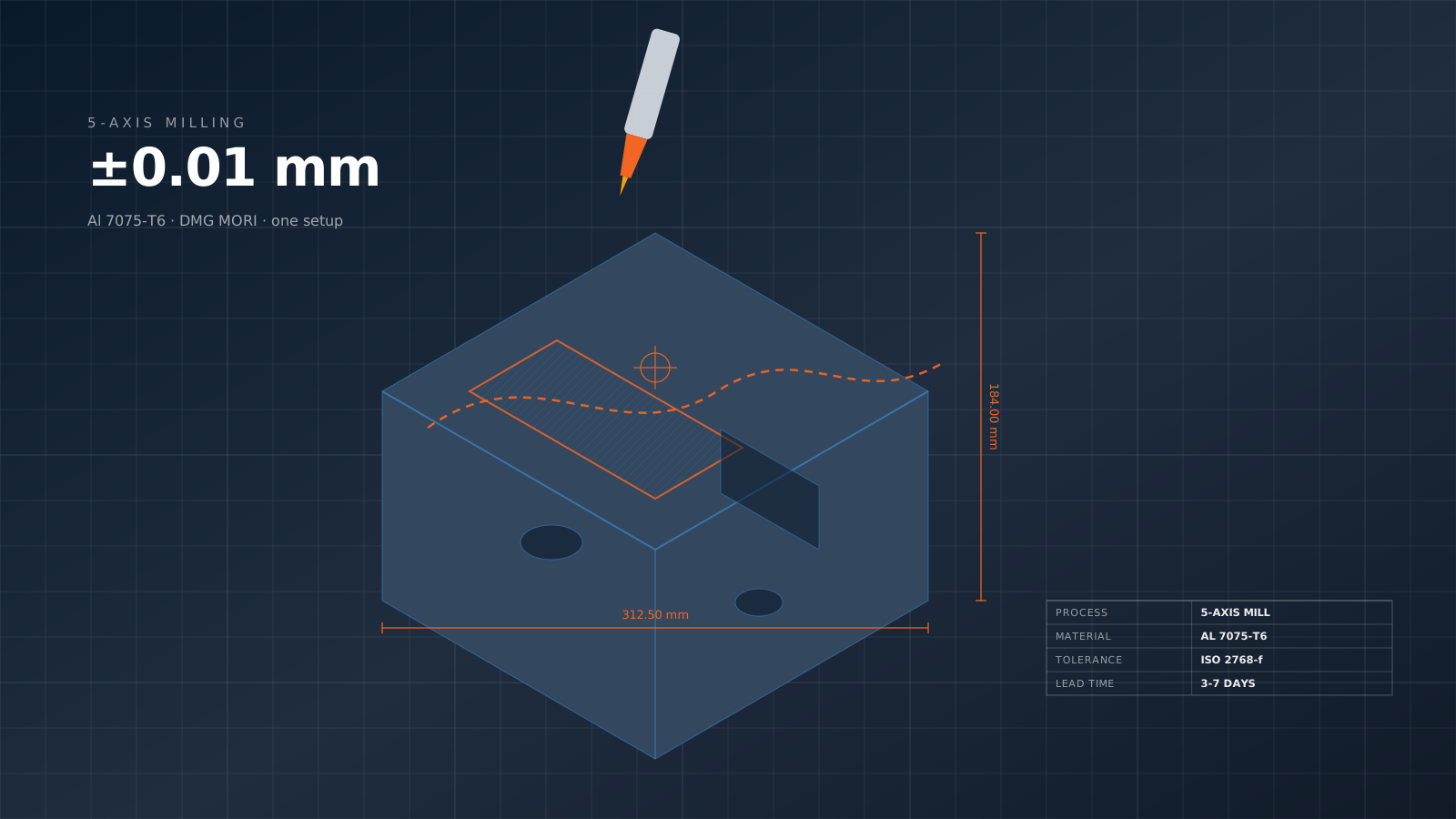
If the part is prismatic (mostly flat surfaces, holes, pockets, edges), CNC will be cheaper, faster, and tighter tolerance.
Question 2 — What quantity?
1-10 parts: 3D printing wins almost always (no setup, no fixturing). 10-100 parts: depends on geometry — simple parts go CNC, complex stay 3D. 100-1000 parts: CNC dominant unless geometry forces 3D. 1000+: CNC for now, until carbon fiber composite 3D printing matures (a few years out for production volumes).
Question 3 — Mechanical requirements
DMLS metal parts approach 90% of wrought material strength after heat treatment — close enough for most structural applications. SLS PA12 nylon hits 80-85% of injection-molded nylon strength. SLA resin parts are weakest, fine for visual prototypes but not load-bearing.
If you need full wrought-material strength (aerospace structural, high-cycle fatigue parts), CNC from billet stock. Otherwise, modern 3D printing is genuinely production-grade.
Quick decision
Visual model only: SLA. Functional prototype with moving parts: SLS or MJF. Metal end-use part with complex geometry: DMLS. Metal end-use part with simple geometry: CNC. Anything in production volumes above 1000 units: CNC, then injection mold once volumes justify tooling.
Have a part in mind?
Send us your CAD — quote with detailed pricing and DFM feedback within 4 working hours. No forms, no signup.
From the blog
How tight is too tight? A real-world CNC tolerance guide for 2026
Specifying ±0.005 mm because "tighter is safer" can multiply your part cost by 5-10×. Here is what tolerance you actuall...
6061 vs 7075 aluminum: when paying 3× for 7075 actually pays back
7075-T6 has 80% higher yield than 6061-T6 and costs 3× more. Here is the practical decision tree we walk customers throu...
Anodize Type II or Type III? A finish guide for engineers
Type II is for color, Type III is for wear. The hard part is knowing which trade-offs you are making with each....
Upload a CAD file. Get an engineering-reviewed quote in under 24 hours.
No minimum quantity. Free DFM feedback from a senior manufacturing engineer. NDA signed before file review on request.
Working on a live project? Send the STEP file and the two or three features you are unsure about — an engineer replies with DFM notes and a price, usually within four working hours.