
The workhorse metal for precision CNC.
Lightweight. Corrosion resistant. Machines beautifully. Anodizes in any color. 6061-T6 is our most-used alloy across every industry — 7075-T6 takes over when strength-to-weight matters. Both in continuous stock.
At a glance
- Density
- 2.70 g/cc
- Yield strength
- 276 MPa
- Tensile strength
- 310 MPa
- Elongation
- 17 %
- Hardness
- 95 HB
- Melting point
- 582–652 °C
- Thermal cond.
- 167 W/m·K
- Machinability
- Excellent
Key data
- Density
- 2.70 g/cc
- Yield strength
- 276 MPa
- Tensile strength
- 310 MPa
- Elongation
- 17 %
- Hardness
- 95 HB
- Melting point
- 582–652 °C
- Thermal cond.
- 167 W/m·K
- Machinability
- Excellent
Choosing the right aluminum alloy.
| Alloy | Yield | Machinability | Weldability | Corrosion | Cost vs 6061 | Best for |
|---|---|---|---|---|---|---|
| 6061-T6 | 276 MPa | Excellent | Excellent (TIG, MIG) | Good | 1.0× (baseline) | General purpose, brackets, frames |
| 7075-T6 | 503 MPa | Good | Poor (not recommended) | Fair (needs coating) | ~1.8× | Aerospace, racing, robotics |
| 2024-T3 | 324 MPa | Good | Poor | Fair (needs clad) | ~1.6× | Aircraft fuselage, high-fatigue |
| 5052-H32 | 193 MPa | Good | Excellent | Excellent (marine) | ~0.9× | Sheet metal, marine, chassis |
| 5083-H116 | 228 MPa | Good | Excellent | Excellent (marine) | ~1.1× | Marine plate, pressure vessels |
| MIC-6 Tooling | 160 MPa | Excellent (stable) | Fair | Good | ~1.4× | Jigs, fixtures, mold plates |
Four alloys cover 95% of applications. The right choice depends on three questions: strength, weldability, and corrosion environment.
Where aluminum excels.
Aerospace brackets
7075-T6 structural — brackets, fittings, spars
Consumer unibody
6061-T6 laptop, speaker, device enclosures
Robot chassis
6061 chassis plates, 7075 joint housings
Heat sinks
6063 extrusion + CNC fins; exceptional thermal conductivity
Automotive
5052/6061 brackets, 7075 racing components
Marine hardware
5083 sheet and plate, 6061-T6 fittings
Optical mounts
6061 anodized — kinematic, thermally stable
Bicycle components
6061/7075 frames, brackets, handlebars
Defense hardware
7075 structural, 6061 general
The workhorse metal for precision CNC — questions
Which aluminum alloy should I choose?
Al 6061-T6 by default: good strength, excellent machinability, welds and anodizes well, affordable. Al 7075-T6 when strength-to-weight is critical (aerospace, racing, robotics) — 80% stronger but poorer corrosion resistance and 1.8× the cost. Al 5052 for sheet metal, marine and chemical environments. Al 2024-T3 for high-fatigue aircraft applications.
What tempers do you stock?
6061-T6 (default), 6061-T651 (stress-relieved for tight-tolerance work), 7075-T6, 7075-T7351 (better stress-corrosion resistance), 2024-T3 (rolled sheet), 2024-T351 (plate), 5052-H32 (sheet metal), 5083-H116 (marine plate).
Can you anodize aluminum parts in-house?
Yes. Anodize Type II (decorative, 10–25 µm) in clear, black, grey, gold, red, blue, and color-matched custom. Anodize Type III (hardcoat, 25–50 µm) for wear resistance. Chromate conversion coating (MIL-DTL-5541) available. Parts can be masked for selective anodize.
What tolerances can you hold on aluminum?
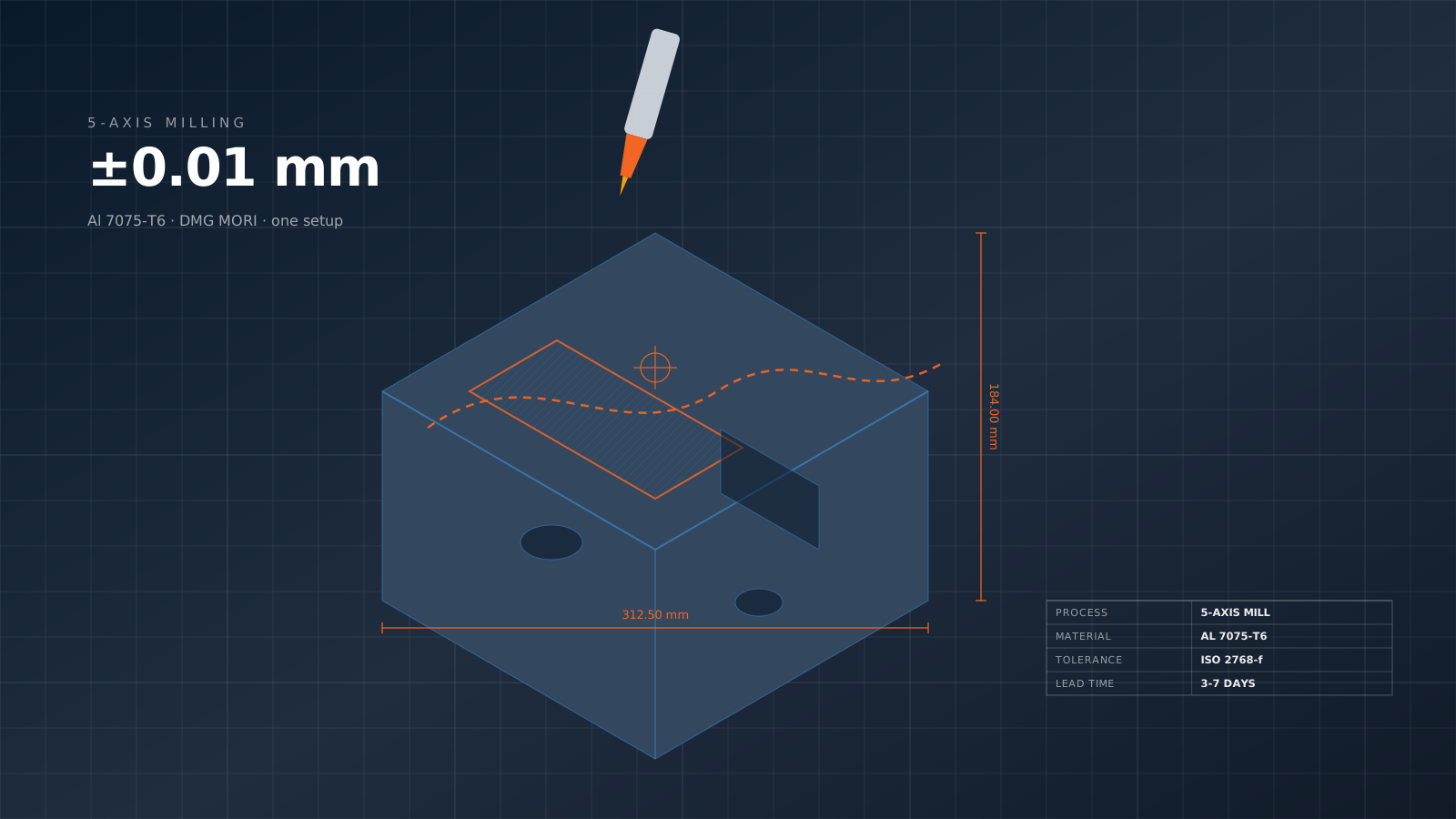
Standard: ±0.1 mm (ISO 2768-m). Precision: ±0.025 mm (ISO 2768-f). Tight-tolerance with 5-axis: ±0.01 mm on critical features. For thin-wall aluminum (< 1.5 mm), stress-relieved stock and careful fixturing maintain flatness better than 0.05 mm.
Why is 7075 more expensive than 6061?
7075 is zinc-aluminum-magnesium alloy versus 6061's silicon-magnesium. 7075 requires more controlled heat treatment, stricter temper control, and yields higher strength (503 MPa vs 276 MPa). Raw material cost is roughly 1.8× 6061, plus machining is slightly slower due to higher hardness. For parts where strength matters, the premium is worth it; for structural brackets where 6061 is sufficient, 7075 is overspecified.
Keep reading
Quote
Get a free CNC machining, 3D printing, injection molding quote from PifyC. Send CAD via WhatsApp or email — q…
Read more →MetalsTungsten parts
Precision CNC machining of pure tungsten and tungsten heavy metal (W-Ni-Fe, W-Ni-Cu). Extreme density (19.3 g/cc…
Read more →MetalsInvar 36
Precision CNC machining of Invar 36 (FeNi36). Lowest thermal expansion of any metal (1.2 ppm/°C at 20°C). Precis…
Read more →MetalsMolybdenum parts
Precision CNC machining of pure molybdenum and TZM alloy. High-temperature service to 1800 °C, nuclear & aer…
Read more →MetalsBeryllium copper parts
Precision CNC machining of beryllium copper (C17200, C17510). Spring-temper conductive alloy, non-sparking, non-…
Read more →MetalsAlloy steel
Precision CNC machining of alloy and tool steels: 4140 (chromoly), 4340 (Ni-Cr-Mo), A2, D2, H13, O1 tool steels.…
Read more →MetalsNitinol shape memory
Precision machining of Nitinol (NiTi shape memory alloy). Shape memory effect, superelasticity, biocompatibility…
Read more →MetalsInconel Hastelloy
Precision CNC machining of nickel superalloys: Inconel 625, 718, X-750, Hastelloy C-276. High-temperature and co…
Read more →Send a CAD file. Get an engineering-reviewed quote.
No minimum quantity, free DFM feedback from a senior manufacturing engineer, and an NDA signed before file review on request.